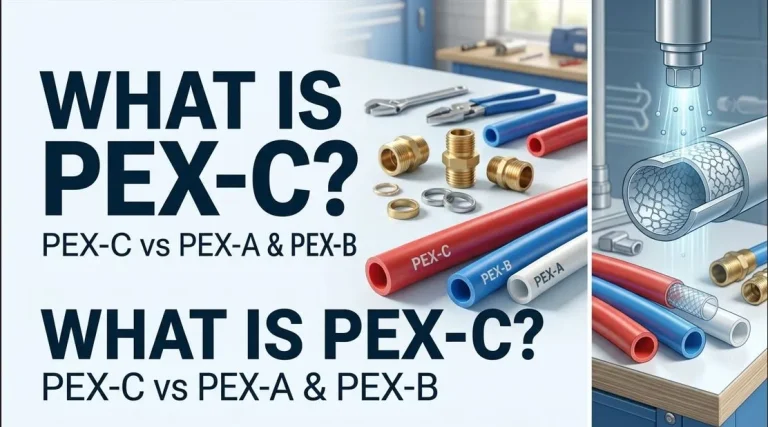
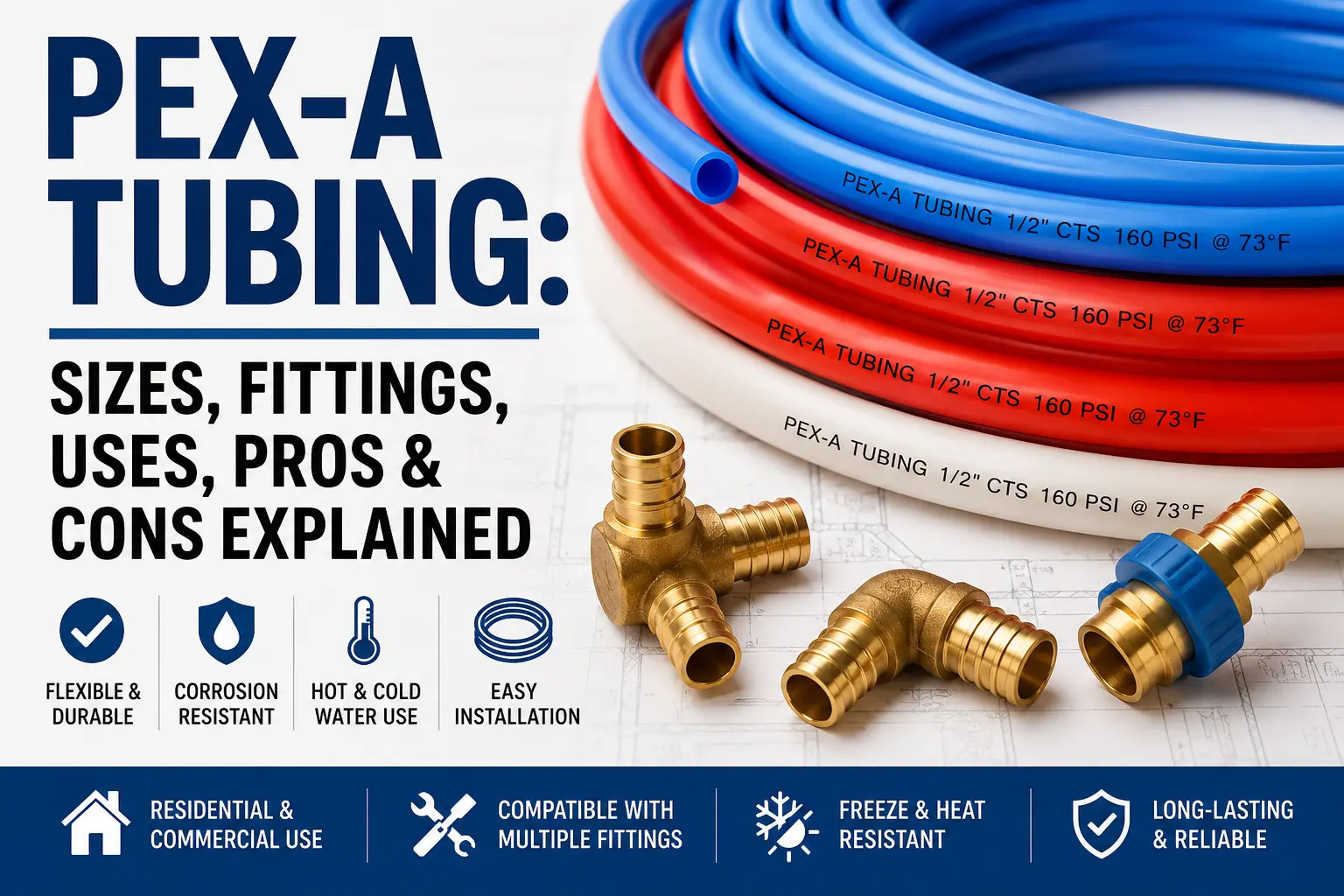
PEX-A Tubing: Sizes, Fittings, Uses, Pros & Cons Explained
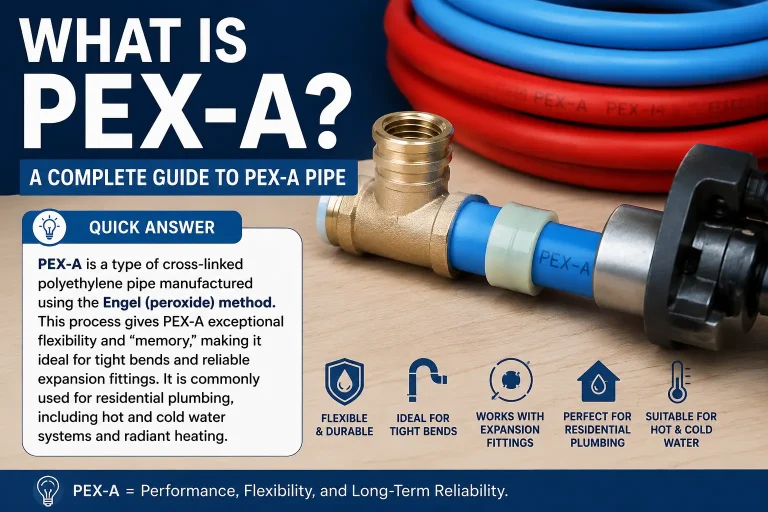
If you’re researching PEX-A tubing, the short answer is simple: PEX-A is a flexible type of cross-linked polyethylene tubing made using the peroxide, or Engel, manufacturing method. Its flexibility makes it useful for residential plumbing, water distribution, radiant heating, and other approved piping applications.
But there is more to choosing PEX-A than seeing the letter “A” on the pipe.
PEX-A can make tight routing easier, reduce the number of fittings needed, and work with several connection systems. However, the tubing’s actual pressure rating, temperature rating, UV resistance, certifications, and approved fittings depend on the specific product.
This guide explains what PEX-A tubing is, how it compares with PEX-B and PEX-C, what fittings it uses, how much flexibility it offers, and what to check before installing it.
What Is PEX-A Tubing?
PEX-A is cross-linked polyethylene tubing manufactured using the peroxide, or Engel, method.
During manufacturing, polyethylene molecules become cross-linked. That molecular structure gives PEX its combination of flexibility, strength, and resistance to temperature and pressure.
The “A” in PEX-A refers to the manufacturing method. It does not mean that PEX-A is automatically a higher-quality pipe than every PEX-B or PEX-C product.
Current guidance from Viega makes this distinction particularly important: PEX-A, PEX-B, and PEX-C are manufacturing classifications rather than quality grades. The specific product’s tested performance, certifications, ratings, bend radius, and fitting compatibility matter more than the letter alone.
PEX-A is especially known for its flexibility and elastic memory. That makes it a popular choice when an installation requires long, sweeping runs or tight routing around obstacles.
PEX-A Tubing at a Glance
| Feature | PEX-A |
|---|---|
| Material | Cross-linked polyethylene |
| Manufacturing method | Peroxide / Engel |
| Flexibility | Generally very high |
| Common connection method | ASTM F1960 expansion |
| Other connections | Product-specific |
| Potable-water use | Available in approved products |
| Hot-water use | Available in approved products |
| Radiant/hydronic use | Specific products available |
| Kink repair | Possible with some products; follow manufacturer instructions |
| Freeze resistance | Flexible and resilient, but not freeze-proof |
| Common sizes | 1/2″, 3/4″, 1″, and larger |
| UV exposure | Product-specific |
| Pressure/temperature rating | Product-specific |
The table gives you the quick version. The details below are where the important plumbing decisions happen.
How Is PEX-A Made?
PEX starts with polyethylene. Manufacturers then cross-link the polymer chains to create the finished PEX material.
PEX-A uses the peroxide or Engel method, where cross-linking occurs during the extrusion process. PEX-B generally uses a silane or moisture-cure process, while PEX-C uses electron-beam irradiation.
The manufacturing process affects characteristics such as flexibility and elastic memory. However, installers should not use the A/B/C label as a substitute for checking the actual product specifications.
Viega’s current technical guidance recommends looking at the product’s tested performance, including pressure and temperature ratings, resistance classifications, bend radius, and connection compatibility.
Why Is PEX-A So Flexible?
Flexibility is one of PEX-A’s biggest selling points.
A flexible pipe can bend around corners instead of requiring a fitting at every change in direction. Fewer connections can mean fewer potential leak points and a cleaner installation.
PEX-A also has strong elastic memory. When the tubing expands, it tends to return toward its original size. This property is the basis for ASTM F1960 expansion connections used with compatible PEX-A systems.
Uponor explains that its PEX-A tubing uses this shape memory in its ProPEX expansion system: the pipe and expansion ring are expanded, the fitting is inserted, and the tubing contracts around the fitting.
That is one reason PEX-A and expansion fittings are so closely associated in residential plumbing.
PEX-A vs PEX-B vs PEX-C
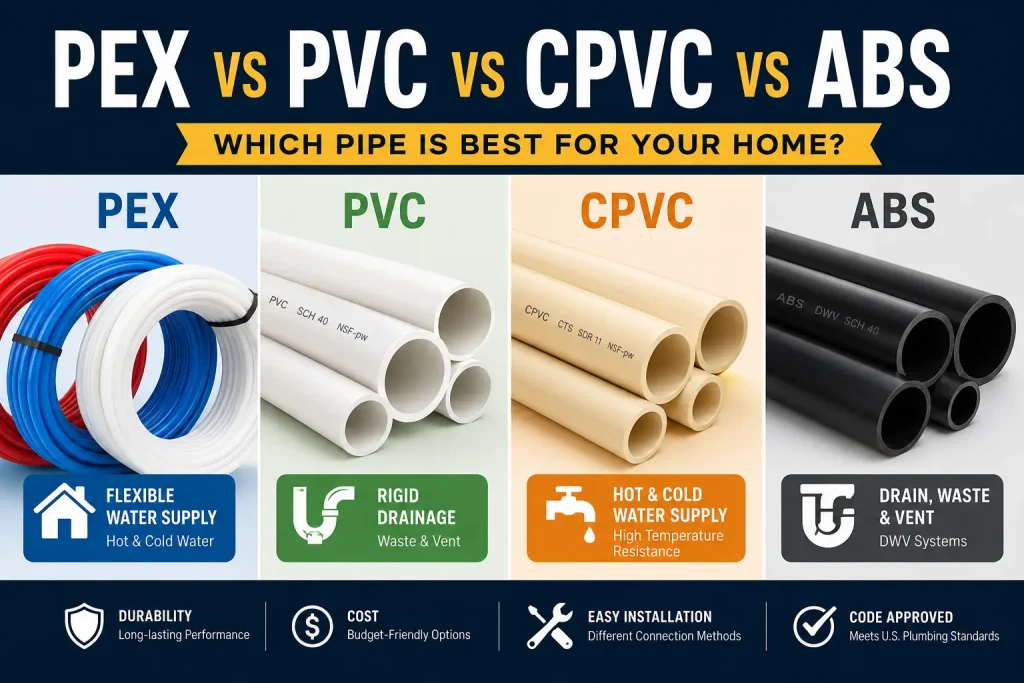
One of the most common questions is whether PEX-A is better than PEX-B or PEX-C.
There is no universal answer.
The three labels identify manufacturing methods. They do not create a simple “good, better, best” ranking. Product specifications and the requirements of the installation matter more.
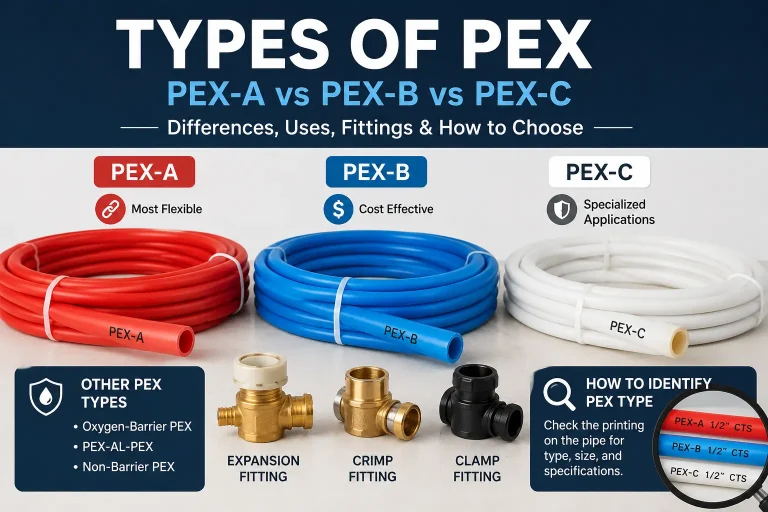
| Factor | PEX-A | PEX-B | PEX-C |
|---|---|---|---|
| Manufacturing | Peroxide / Engel | Silane / moisture cure | Electron beam |
| General flexibility | High | Moderate to high | Product-specific |
| Elastic memory | Strong characteristic | Product-specific | Product-specific |
| Common advantage | Flexible routing | Broad plumbing availability | Product-specific performance |
| Expansion connections | Common | Product-dependent | Product-dependent |
| Kink repair | Possible with approved products | Generally not treated the same way | Generally not treated the same way |
| Selection priority | Ratings + compatibility | Ratings + compatibility | Ratings + compatibility |
For a detailed comparison, see our guide to PEX-A vs PEX-B.
The important takeaway is this:
Choose the pipe based on the application and the complete piping system, not simply because the label says PEX-A.
What Fittings Can You Use With PEX-A?
PEX-A does not automatically mean “expansion fittings only.”
The connection methods available depend on the specific tubing and fitting system.
For example, current SharkBite PEX-A product information lists compatibility with ASTM F1960 expansion fittings, ASTM F1807 brass barb fittings, ASTM F2159 plastic barb fittings, and certain push-to-connect systems.
That does not mean every PEX-A tube is approved for every fitting on the market.
Always check the tubing manufacturer’s installation instructions and the fitting manufacturer’s approved compatibility.
Common PEX-A connection methods include:
- ASTM F1960 expansion fittings
- ASTM F1807 crimp-style barb fittings, where approved
- ASTM F2159 plastic barb fittings, where approved
- Certain clamp/cinch systems, depending on the product
- Certain push-to-connect systems, depending on the product
- Other proprietary or manufacturer-specific systems
This is one of the biggest practical rules to remember:
The PEX type does not tell you the entire connection system.
Check the tubing, fitting, tool, and installation instructions together.
Does PEX-A Require Expansion Fittings?
No.
PEX-A is particularly well suited to expansion connections because of its elastic memory, but some PEX-A products are approved for other connection methods as well.
For example, SharkBite lists specific PEX-A tubing products for ASTM F1960 expansion and several barb and push-to-connect systems.
At the same time, manufacturers can limit compatibility to particular fittings or systems.
If you want to use an expansion connection, look for an ASTM F1960-listed system and follow its installation instructions.
Uponor’s ProPEX system is an example of an ASTM F1960 expansion system designed specifically around PEX-A’s shape memory.
How Does a PEX-A Expansion Connection Work?
The basic process is straightforward:
- Cut the PEX-A tubing squarely.
- Place the appropriate expansion ring on the tubing.
- Expand the pipe and ring with the approved expansion tool.
- Insert the compatible fitting.
- Allow the tubing to contract around the fitting.
- Inspect the finished connection according to the manufacturer’s instructions.
The exact number of expansion cycles, tool requirements, ring requirements, and insertion procedure can vary by system.
Don’t improvise here. A plumbing connection is not the place for the “close enough” method.
Can You Crimp PEX-A?
Some PEX-A tubing can be used with crimp fittings, but you must verify the specific product’s approval.
This is an important distinction.
The fact that a tube is PEX-A does not automatically approve it for every ASTM connection method. SharkBite, for example, specifically lists certain PEX-A products for ASTM F1807 brass barb and ASTM F2159 plastic barb fittings.
If you’re comparing connection tools, our guide to the best crimping tool for PEX can help with the tool side of the decision.
Can You Repair a Kinked PEX-A Tube?
One of PEX-A’s useful characteristics is its thermal memory.
Some PEX-A products allow an installer to repair an accidental kink with controlled heat according to the manufacturer’s instructions.
Uponor specifically identifies kink repair as a characteristic of its PEX-A pipe and explains that controlled heat can restore a kinked section.
However, don’t treat this as permission to heat any PEX tubing with a heat gun.
Follow the manufacturer’s repair procedure for the exact pipe you are installing.
If the tubing has severe damage, deformation, scorching, cuts, or other defects, replacement may be more appropriate than attempting a repair.
PEX-A Tubing Sizes
PEX-A is available in several nominal sizes, with 1/2-inch, 3/4-inch, and 1-inch being common sizes in residential plumbing.
Larger sizes are also available for suitable applications.
The right size depends on the flow requirement, fixture demand, pipe length, pressure, fittings, and the plumbing design.
Don’t size a water line simply by looking at what size pipe is already installed. A repipe can be an opportunity to correct undersized or poorly designed sections.
Manufacturers publish dimensional information for their products. For example, SharkBite provides product-specific size and dimensional information for its PEX-A tubing.
Common PEX-A sizes
| PEX-A size | Common application examples |
|---|---|
| 1/2 inch | Fixture branches and individual supplies |
| 3/4 inch | Larger branches and residential distribution |
| 1 inch | Main distribution and higher-demand applications |
| 1-1/4 inch and larger | Larger systems where design requirements call for it |
These are general application examples, not a substitute for hydraulic sizing or local code requirements.
PEX-A Temperature and Pressure Ratings
Never assume that every PEX-A product has the same pressure and temperature rating.
The rating belongs to the specific tubing product.
For example, one current SharkBite PEX-A product lists a maximum working temperature of 200°F at 80 psi and a maximum working pressure of 160 psi at 33°F to 70°F.
Uponor publishes different rating information for its PEX products, including 200°F at 80 psi, 180°F at 100 psi, and 160 psi at 73.4°F for specified products and conditions. It also states that domestic hot-water system operation should not exceed its specified limits.
So don’t copy a pressure rating from one brand onto another.
Check the print line, specification sheet, and installation manual for the exact product.
How to Read the Markings on PEX-A Tubing
Take a look at the printing on the side of the tube.
It contains useful information.
PEX tubing sold for plumbing applications can carry a four-digit designation code under ASTM F876. That code provides information related to characteristics such as chlorine resistance, UV resistance, and hydrostatic design stress.
Viega’s technical explanation notes that the designation code is a better indicator of tested performance than simply assuming one PEX manufacturing type is superior to another.
When buying PEX-A, look for information such as:
- Manufacturer
- Tubing size
- ASTM standards
- NSF listings or potable-water marking where applicable
- Pressure and temperature information
- Designation code
- Application limitations
- UV exposure rating
If you cannot determine what a marking means, check the manufacturer’s documentation instead of guessing.
Is PEX-A Safe for Drinking Water?

Approved PEX-A tubing can be used for potable water, but not every piece of PEX tubing should be assumed to be approved for drinking-water applications.
Look for the appropriate certification or listing on the specific product.
NSF explains that NSF/ANSI/CAN 61 addresses the health effects of materials that contact drinking water. Products that meet the relevant requirements can carry markings such as NSF-61 or NSF-pw, depending on the certification and product.
That distinction matters.
Don’t choose tubing based only on:
“It’s PEX, so it must be safe.”
Choose a product that is listed and approved for your intended potable-water application.
For more information, see our guide on whether PEX is safe for drinking water.
Is PEX-A Safe for Hot Water?
Approved PEX-A tubing can be used for hot-water distribution when the product’s temperature and pressure ratings meet the requirements of the installation.
Again, the product rating matters.
Don’t use a generic PEX temperature number from an unrelated product. Manufacturers publish their own specifications, and the permitted operating conditions can vary.
For domestic hot water, also consider the water heater’s temperature, system pressure, local plumbing code, and any required temperature-control devices.
Does PEX-A Freeze?
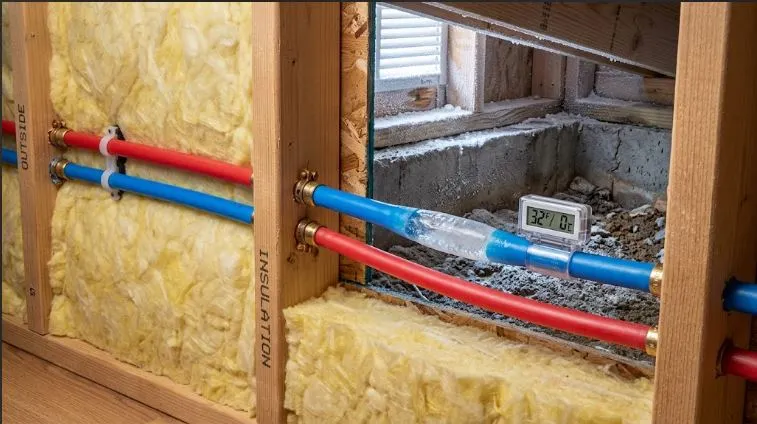
PEX-A can freeze.
It is not freeze-proof.
However, its flexibility gives it an advantage over rigid piping when water inside the pipe freezes and expands. PEX-A can tolerate significant expansion and contraction, depending on the system and conditions.
Uponor states that its PEX-A can expand substantially and describes the material as resilient during freeze/thaw conditions.
That does not mean you should intentionally leave PEX-A exposed to freezing temperatures.
Protect plumbing from freezing whenever possible.
For a deeper look at the subject, see Does PEX Pipe Freeze?.
Can PEX-A Be Used Outdoors?
PEX-A should not be treated as permanently sun-proof tubing.
UV exposure can degrade plastics, and allowable exposure depends on the specific product.
For example, Uponor currently lists one-month UV resistance for its white AquaPEX and six-month UV resistance for its red and blue AquaPEX products.
That is a good example of why you should never assume that all PEX-A products share the same UV rating.
If tubing will see sunlight during construction or installation, check the manufacturer’s stated UV-exposure limit and protect the pipe as required.
Does PEX-A Come in Red and Blue?
Yes.
PEX-A tubing can come in red, blue, white, and other colors depending on the manufacturer and product.
Color usually helps installers identify a line. Red is commonly associated with hot water and blue with cold water, but color alone does not determine the tubing’s material or performance.
Fine Homebuilding notes that PEX is available in multiple colors and that color does not itself indicate a difference in the material.
Some manufacturers deliberately offer red and blue tubing to make hot- and cold-water identification easier. Uponor, for example, markets red and blue AquaPEX for this purpose.
PEX-A for Potable Water vs. Hydronic Heating
Not all PEX applications use the same type of tubing.
For potable water, select tubing listed for drinking-water applications.
For hydronic heating and cooling, the system may require oxygen-barrier PEX.
Oxygen-barrier tubing is designed to limit oxygen diffusion into certain closed-loop hydronic systems. Uponor, for example, offers hePEX oxygen-barrier PEX for hydronic heating and cooling applications.
So if you’re installing radiant floor heating, don’t simply grab the same PEX-A tubing you would use for a drinking-water line.
Match the tubing to the system.
Where Is PEX-A Tubing Used?
Depending on the product’s listing and approval, PEX-A can be used in applications such as:
- Hot- and cold-water distribution
- Residential plumbing
- Whole-house repiping
- Manifold plumbing
- Water service
- In-slab plumbing
- Underground applications
- Radiant heating
- Hydronic heating and cooling
- Certain fire-sprinkler systems
- Other manufacturer-approved applications
Uponor lists applications including plumbing, radiant heating and cooling, hydronic piping, water service, and fire safety systems for its PEX products.
The key phrase is manufacturer-approved.
A tubing product designed for one application is not automatically approved for another.
PEX-A Pros and Cons

Pros of PEX-A
High flexibility: PEX-A can make routing around obstacles easier.
Fewer fittings: Long flexible runs can reduce the number of directional connections.
Expansion compatibility: Its elastic memory makes it particularly suited to ASTM F1960 expansion systems.
Kink repair potential: Certain PEX-A products allow approved heat-based kink repair.
Freeze resilience: Its flexibility can help it tolerate freeze/thaw conditions better than rigid piping.
Corrosion resistance: PEX does not corrode like metallic pipe.
Lightweight: Coils are easier to handle than many rigid piping materials.
Cons of PEX-A
Higher material cost in some markets: PEX-A can cost more than some alternatives.
Expansion tools can add cost: An expansion-based system requires the appropriate tools and fittings.
UV limitations: PEX should not receive uncontrolled long-term sunlight exposure.
Compatibility matters: You cannot assume every fitting or connection method works with every PEX-A product.
Thermal expansion: PEX expands and contracts more than rigid metal piping, so proper support and installation matter.
Product differences: Ratings, certifications, UV limits, and approved applications vary between manufacturers.
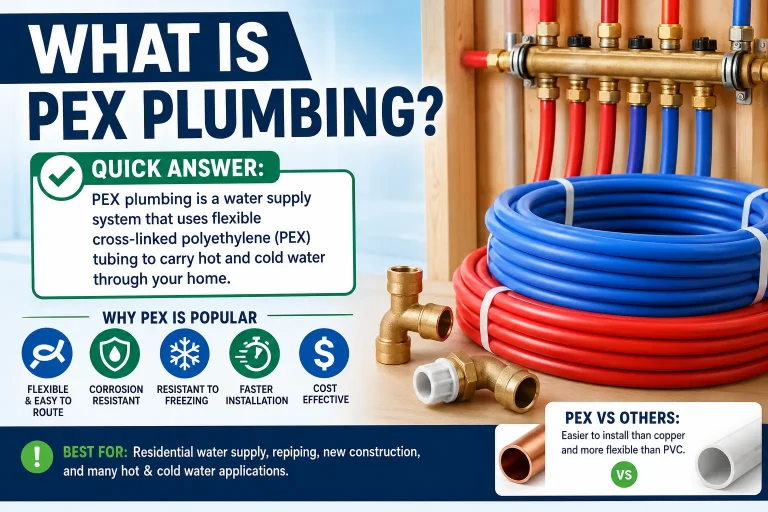
Is PEX-A Better Than Copper?
Not automatically.
PEX-A offers advantages such as flexibility, lighter weight, and the ability to make long runs with fewer connections.
Copper has its own characteristics, including rigidity, long-established use, and different temperature and installation considerations.
The better material depends on the project.
For a modern residential repipe where flexibility and installation speed matter, PEX can be very attractive. For other applications, copper or another approved material may make more sense.
If you’re comparing materials for a repiping project, also see our guide to PEX vs. Copper.
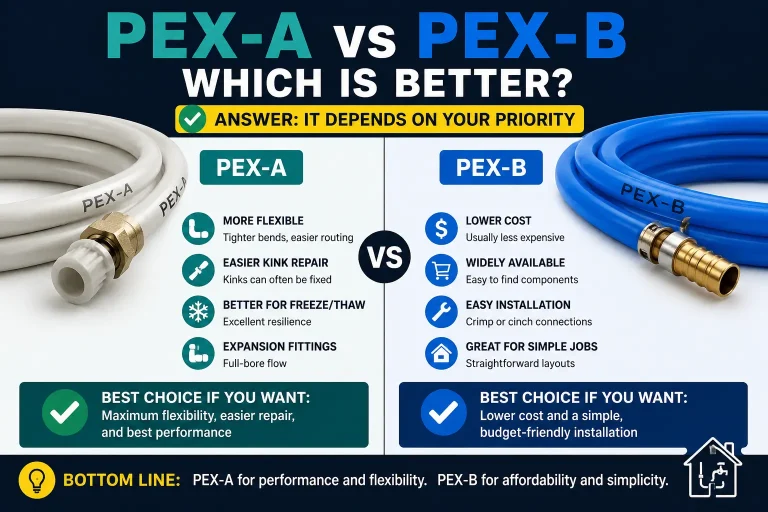
Is PEX-A Better Than PEX-B?
PEX-A is generally more flexible, which can make it attractive for tight routing and expansion systems.
But “better” depends on what you’re trying to accomplish.
Viega specifically recommends comparing tested product performance and compatibility instead of treating A, B, and C as quality grades.
If the installation does not benefit from PEX-A’s particular characteristics, a different PEX product may offer better value.
The smartest approach is to compare:
- Bend radius
- Pressure rating
- Temperature rating
- Chlorine resistance
- UV rating
- Potable-water certification
- Fitting compatibility
- Warranty
- Local code requirements
- Material and tool cost
How to Choose PEX-A Tubing
Before buying a coil, check these points.
1. Confirm the application
Is it for potable water, hot water, radiant heating, water service, or another application?
2. Check the listing
Make sure the exact product is approved for the intended use.
3. Check the pressure and temperature rating
Don’t rely on generic PEX specifications.
4. Check fitting compatibility
Know which connection systems the tubing manufacturer approves.
5. Check UV exposure limits
Especially important if the pipe will be exposed during construction.
6. Check the required size
Use the plumbing design and flow requirements rather than simply matching an existing pipe.
7. Check the warranty
Read the actual warranty conditions, especially when tubing and fittings must be used as a complete system.
8. Follow the installation manual
The manufacturer’s instructions are more useful than a random internet comment from someone who once wrestled a coil of PEX through an attic.
The Bottom Line
PEX-A tubing is a flexible, versatile piping material that can be an excellent choice for residential plumbing when the product matches the application.
Its biggest advantages are flexibility, elastic memory, and compatibility with expansion systems. Those characteristics can make installation easier and reduce the need for some fittings.
But don’t choose PEX-A simply because the letter “A” sounds like a gold medal.
Check the actual product.
Look at its pressure and temperature ratings, potable-water certification, UV exposure rating, designation code, approved applications, and fitting compatibility. Then install the tubing according to the manufacturer’s instructions and local plumbing requirements.
For homeowners and plumbers, that approach is much more useful than simply asking whether PEX-A is “better” than another type of PEX.
The right PEX is the one that is tested, listed, sized, and connected correctly for the job.