PEX Pipe Sizes: Complete Size Chart
PEX pipe comes in several nominal sizes, from small tubing to large supply lines. Common U.S. PEX sizes include 3/8-inch, 1/2-inch, 3/4-inch, and 1-inch tubing. However, the nominal size is not the same as the actual outside diameter. Use the PEX pipe size chart below to compare outside diameter, inside diameter, wall thickness, and common uses.
PEX Pipe Sizes: Quick Answer
PEX pipe is available in several nominal sizes. The most common residential sizes are 1/2 inch, 3/4 inch, and 1 inch. The right size depends on water demand, pipe length, available pressure, and local plumbing code.
| Nominal PEX Size | Outside Diameter | Common Application |
|---|---|---|
| 3/8 inch | 0.500 in | Small branches and specialized uses |
| 1/2 inch | 0.625 in | Individual fixture branches |
| 3/4 inch | 0.875 in | Larger branches and distribution lines |
| 1 inch | 1.125 in | Larger water distribution systems |
Important: PEX nominal size is not its actual outside diameter. For example, standard 1/2-inch CTS PEX has an average outside diameter of 0.625 inches. Always check the manufacturer’s dimensions and use an accepted plumbing sizing method before installation.
Dimensions shown are typical reference values for U.S. CTS PEX tubing. Other dimensional standards may differ.
PEX Pipe Size Chart in Inches
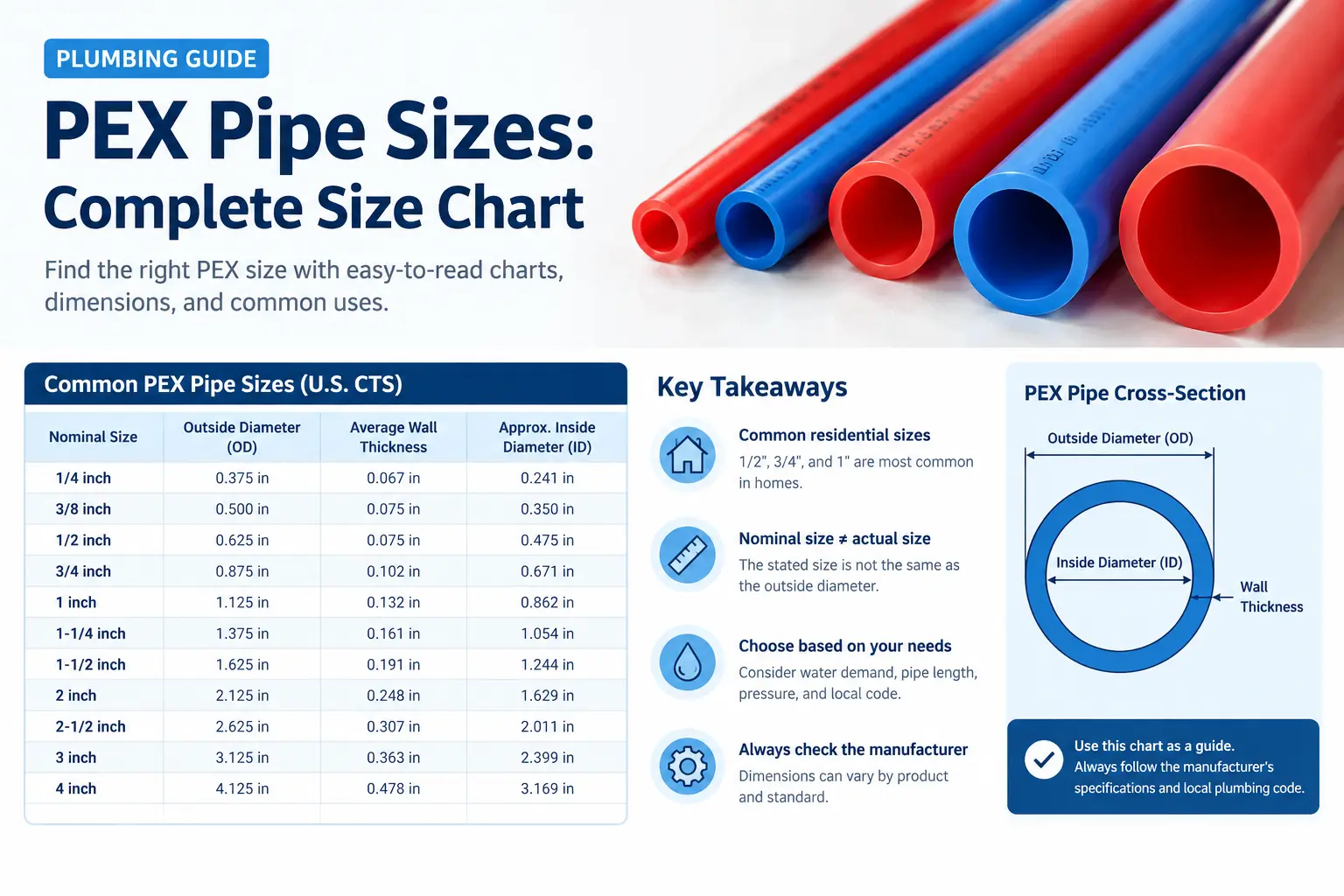
The following chart shows common sizes for U.S. Copper Tube Size (CTS) PEX tubing. It includes average outside diameter (OD), average wall thickness, and approximate inside diameter (ID).
| Nominal PEX Size | Outside Diameter (OD) | Average Wall Thickness | Approx. Inside Diameter (ID) |
|---|---|---|---|
| 1/4 inch | 0.375 in | 0.067 in | 0.241 in |
| 3/8 inch | 0.500 in | 0.075 in | 0.350 in |
| 1/2 inch | 0.625 in | 0.075 in | 0.475 in |
| 5/8 inch | 0.750 in | 0.088 in | 0.574 in |
| 3/4 inch | 0.875 in | 0.102 in | 0.671 in |
| 1 inch | 1.125 in | 0.132 in | 0.862 in |
| 1-1/4 inches | 1.375 in | 0.161 in | 1.054 in |
| 1-1/2 inches | 1.625 in | 0.191 in | 1.244 in |
| 2 inches | 2.125 in | 0.248 in | 1.629 in |
| 2-1/2 inches | 2.625 in | 0.307 in | 2.011 in |
| 3 inches | 3.125 in | 0.363 in | 2.399 in |
| 4 inches | 4.125 in | 0.478 in | 3.169 in |
Important: These are reference dimensions for CTS PEX tubing. The inside diameters are calculated from the average outside diameter and average wall thickness. Actual dimensions may vary within the product standard’s tolerances. Always check the manufacturer’s specifications before buying fittings or installing tubing.
PEX Pipe Size Chart in Millimeters
If you work with metric measurements, the following chart converts the nominal sizes and outside diameters into millimeters.
| Nominal Size | Approx. Outside Diameter |
|---|---|
| 1/4 inch | 9.53 mm |
| 3/8 inch | 12.70 mm |
| 1/2 inch | 15.88 mm |
| 5/8 inch | 19.05 mm |
| 3/4 inch | 22.23 mm |
| 1 inch | 28.58 mm |
| 1-1/4 inches | 34.93 mm |
| 1-1/2 inches | 41.28 mm |
| 2 inches | 53.98 mm |
| 2-1/2 inches | 66.68 mm |
| 3 inches | 79.38 mm |
| 4 inches | 104.78 mm |
These metric values are conversions of the listed inch measurements. They do not mean that every metric PEX product follows the same dimensions. Metric PEX systems may use different sizing standards.
What Are the Most Common PEX Pipe Sizes?
The best PEX size depends on the plumbing system and its water demand. Some sizes are more common in residential plumbing than others.
3/8-Inch PEX
3/8-inch PEX is smaller than the tubing commonly used for main residential water distribution. It may be used in specialized applications or certain fixture connections when the system design allows it.
Its smaller inside diameter limits the amount of water it can carry compared with larger tubing under similar conditions. Check the fixture requirements and the tubing manufacturer’s instructions before using it.
1/2-Inch PEX
1/2-inch PEX is a common choice for residential plumbing branches. These branches may supply individual fixtures, such as bathroom sinks and toilets, when the design allows.
Despite its name, 1/2-inch CTS PEX has an average outside diameter of 0.625 inches. Its average inside diameter is about 0.475 inches.
This difference matters when you compare PEX tubing with other pipe materials or select compatible fittings.
3/4-Inch PEX
3/4-inch PEX is often used for larger branches and water distribution lines. It has a larger inside diameter than 1/2-inch PEX.
A larger tube can reduce friction losses when other conditions are similar. It may be helpful when a line supplies more than one fixture or covers a longer distance.
However, 3/4-inch PEX is not automatically the right choice for every installation. The required size depends on flow demand, available pressure, pipe length, and fitting restrictions.
1-Inch PEX
1-inch PEX may be used for larger distribution systems and certain building supply applications. It can carry more water than smaller tubing under comparable conditions.
The correct size still depends on the number of fixtures, expected demand, developed length, and available pressure. Follow an accepted plumbing sizing method instead of choosing a size based on diameter alone.
Larger PEX Sizes
PEX products are also available in larger sizes for certain commercial, water service, hydronic, and other applications. These products may follow different dimensional standards.
Before using larger tubing, confirm that it is approved for the intended application. Check the pressure rating, temperature limits, connection system, and local plumbing code.
How to Choose the Right PEX Pipe Size
Choosing the right PEX size helps a plumbing system deliver enough water to the fixtures. An undersized line can increase friction losses and reduce flow when demand is high. An oversized line may add cost and may not solve the problem you are trying to fix.
Consider these factors before selecting a size.
1. Water Demand
Start by identifying the fixtures supplied by the pipe. One fixture may need less flow than a branch that supplies several fixtures at once.
Consider how the plumbing system will be used. A bathroom with a shower, sink, and toilet may have different demands from a line that serves one sink.
2. Pipe Length
Longer pipes create more friction loss than shorter pipes of the same size under comparable flow conditions.
A long run may need a larger tube than a short run with similar demand. Include the full developed length when sizing a plumbing line.
3. Available Water Pressure
Available pressure affects how well water reaches each fixture. Pressure can drop as water moves through pipes, fittings, valves, and other components.
A larger PEX line may reduce friction loss. However, it cannot always fix low incoming pressure or a problem with the water supply.
4. Fittings and Valves
Fittings can restrict flow, depending on their design and connection method. A system with many fittings may have greater pressure losses than a simple run.
Check the fitting manufacturer’s specifications. Consider the full system rather than the tubing size alone.
5. Local Plumbing Code
Plumbing codes and accepted sizing methods vary by location and application. Some installations require specific calculations or professional review.
Follow the applicable code and manufacturer instructions. For a whole-house system or a major repiping project, a licensed plumber can help confirm the correct size.
What Size PEX Pipe Do You Need for Each Fixture?
There is no single PEX size that works for every fixture in every home. The correct choice depends on the fixture’s demand, pipe length, pressure, and the design of the plumbing system.
| Plumbing Application | Common Sizing Consideration |
|---|---|
| Bathroom sink | A smaller fixture branch may be suitable, depending on the design |
| Toilet | Often supplied by a 1/2-inch branch when permitted by the system design |
| Shower | May use 1/2-inch or larger tubing, depending on flow demand and run length |
| Kitchen sink | Size depends on the fixture, expected flow, and pipe length |
| Multiple fixtures | May require a larger branch based on combined demand |
| Main water distribution | Requires a system-level sizing calculation |
| Building water service | Requires sizing based on demand, length, pressure, and applicable code |
This table is a general guide, not a substitute for plumbing calculations. For example, a high-flow shower or a long run may need a different size from a standard fixture with lower demand.
1/2-Inch vs. 3/4-Inch PEX: What Is the Difference?
The main difference is the tubing’s diameter and its ability to carry water under comparable conditions.
| Feature | 1/2-Inch PEX | 3/4-Inch PEX |
|---|---|---|
| Average outside diameter | 0.625 in | 0.875 in |
| Approx. inside diameter | 0.475 in | 0.671 in |
| Common use | Individual fixture branches | Larger branches and distribution |
| Flow potential | Lower under comparable conditions | Higher under comparable conditions |
| Material cost | Usually lower per foot | Usually higher per foot |
| Best choice | When the system design supports it | When demand and pressure losses justify it |
3/4-inch PEX has a larger inside diameter than 1/2-inch PEX. This can help reduce friction losses and support greater flow under comparable conditions.
Still, a larger pipe does not guarantee higher water pressure at a fixture. Incoming pressure, pipe length, fittings, elevation, and total demand also affect performance.
Choose the size that meets the plumbing system’s design requirements. Do not increase the size without checking whether the change will solve the actual problem.
PEX Pipe Size vs. PEX Fitting Size
PEX tubing and its fittings must be compatible. The nominal size printed on the tubing is important, but the connection method also matters.
Common PEX connection systems include:
- Crimp fittings: Use a compatible fitting and crimp ring with the correct tool.
- Clamp fittings: Use an approved fitting and clamp system.
- Expansion fittings: Use compatible expansion tubing, fittings, and tools as specified by the manufacturer.
Do not assume that every fitting works with every PEX product. Some systems have specific requirements for tubing type, fitting design, and connection tools.
For example, a fitting labeled for 1/2-inch PEX is intended for the compatible nominal tubing size, not tubing with an outside diameter of exactly 1/2 inch. Always confirm the connection system’s specifications.
Read our guide to PEX pipe fittings to learn more about common fitting types and connections.
Are PEX-A, PEX-B, and PEX-C the Same Size?
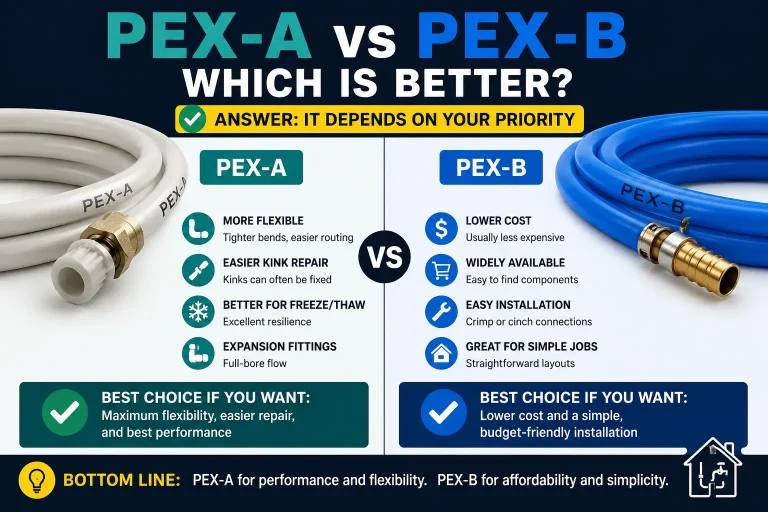
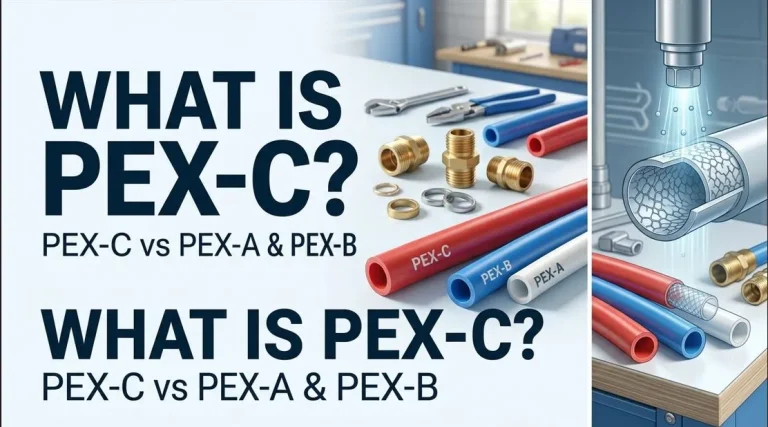
PEX-A, PEX-B, and PEX-C describe different methods used to manufacture cross-linked polyethylene tubing. These labels do not, by themselves, tell you the tubing’s nominal size.
Many residential PEX products use common CTS dimensions. However, you should not assume that every product has the same dimensions or works with the same fittings.
Before selecting a replacement tube, check its markings and technical specifications. Confirm the nominal size, dimensional standard, pressure rating, temperature rating, and approved connection method.
You can also read our guide to PEX-A vs. PEX-B for a closer look at their differences.
How to Measure and Identify PEX Pipe Size
If the tubing markings are missing or hard to read, you can use a few steps to identify its size.
- Read the printed markings. Look for the nominal size, manufacturer, standard, and product information along the tube.
- Measure the outside diameter. Use calipers on a straight section of tubing, away from fittings and bends.
- Compare the measurement with a size chart. Check the dimensions for the correct standard, such as CTS.
- Confirm the product specifications. Use the manufacturer’s data to verify the size before buying fittings or making a repair.
For example, standard 1/2-inch CTS PEX has an average outside diameter of 0.625 inches. A measurement near this value may indicate 1/2-inch CTS tubing, but it is not conclusive without checking the product standard.
Do not identify the tube by measuring the outside of a fitting. The fitting’s shape and dimensions may differ from those of the tubing.
Common PEX Pipe Sizing Mistakes
Avoid these common mistakes when planning or repairing a PEX plumbing system.
- Confusing nominal size with outside diameter: A 1/2-inch CTS PEX tube has an average outside diameter of 0.625 inches.
- Ignoring inside diameter: The inside diameter affects flow and friction loss.
- Choosing a size based on one fixture alone: A branch may supply several fixtures at once.
- Ignoring pipe length: Longer runs can have greater friction losses.
- Mixing incompatible fittings: The tubing, fitting, and connection method must be compatible.
- Assuming a larger pipe fixes low pressure: The cause may be the incoming supply, a restriction, or another system issue.
- Ignoring local code: The final design must meet the rules that apply to the installation.
Taking time to check the tubing specifications and system demand can help prevent costly mistakes.
Final Thoughts
The right PEX pipe size depends on more than the number printed on the tubing. Nominal size, inside diameter, pipe length, water demand, available pressure, and fitting restrictions all affect plumbing performance.
Use the PEX pipe size chart to compare common dimensions. Then check the product specifications and apply an accepted sizing method before installation.
For a new plumbing system or a major repair, confirm that the selected tubing and fittings meet local code and manufacturer requirements. This helps you choose a suitable PEX size and build a reliable water distribution system.