Cost of Repiping a House With PEX: 2026 Guide
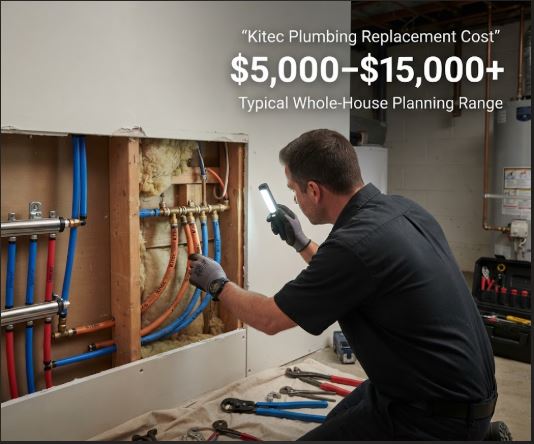
Repiping a house with PEX usually costs several thousand dollars. The final price depends on your home’s size, number of bathrooms, pipe access, labor rates, and repair work. For many homeowners, a planning budget of $4,000 to $15,000 is a useful starting point, but simple projects may cost less and complex jobs may cost more.
PEX is a flexible plastic pipe used to carry hot and cold water through homes. It often costs less to install than copper because it is flexible and needs fewer connections in many layouts. However, pipe material is only one part of the total bill.
This guide explains the cost of repiping a house with PEX, including labor, materials, permits, drywall repairs, and foundation access. You will also learn how to estimate your project and compare plumbing quotes.
How Much Does It Cost to Repipe a House With PEX?
The cost to repipe a house with PEX depends on the home’s layout and the amount of work required. A small, single-story home with accessible pipes may cost much less than a large, two-story house with finished walls.
For early budgeting, use these broad planning ranges:
| Project type | Preliminary PEX repiping budget |
|---|---|
| Small home with one bathroom | $3,000–$6,000 |
| Home with two bathrooms | $4,000–$9,000 |
| Home with three bathrooms | $5,000–$12,000 |
| Large home with four or more bathrooms | $8,000–$15,000+ |
These are planning estimates, not verified averages for every home type. They illustrate how project size and complexity can change the budget. Your actual quote may fall outside these ranges.
For context, Angi’s 2026 guide reports a broad national range of $1,500 to $15,000 for house repiping across different materials and projects. That range is not specific to PEX alone.
Important: These budgets assume a residential water-supply repipe. They do not automatically include sewer lines, drain pipes, major slab excavation, extensive remodeling, or water-main replacement.
PEX Repiping Cost by House Size
Your home’s square footage provides a useful starting point. However, two houses of the same size can have very different plumbing costs.
A home with three bathrooms, a laundry room, and a kitchen may need more pipe and labor than a home with one bathroom. The number of floors and the location of existing pipes also affect the price.
The following table provides preliminary budgeting ranges for planning a whole-house PEX repipe.
| Home size | Preliminary budget range |
|---|---|
| 1,000 sq. ft. | $3,000–$6,000 |
| 1,500 sq. ft. | $4,000–$8,000 |
| 2,000 sq. ft. | $5,000–$11,000 |
| 2,500 sq. ft. | $6,000–$13,000 |
| 3,000 sq. ft. | $7,000–$15,000+ |
These ranges are broad planning allowances, not a statistically verified national price table. They assume a typical residential supply-line project, but the exact inclusions may differ. Confirm labor, permits, pipe removal, and wall repairs with your contractor.
A large home with accessible plumbing may cost less than a smaller home with pipes buried in concrete. Always consider the full project scope instead of relying on square footage alone.
Why does house size affect the cost?
Larger homes often need longer pipe runs and more connections. They may also have more bathrooms, kitchens, and water-using appliances.
Multistory homes can require extra work to reach fixtures on upper floors. The plumber may need to open walls or ceilings to route the new lines.
For this reason, ask your plumber to assess both the home’s size and its plumbing layout before giving a final estimate.
PEX Repiping Cost Breakdown
A whole-house repipe includes more than buying PEX tubing. You must also account for fittings, valves, labor, permits, and any repairs needed to reach the old pipes.
Here are the main costs to discuss with your plumber.
1. PEX pipe and materials
PEX tubing is often one of the more affordable parts of a repiping project.
Angi lists PEX tubing at about $0.40 to $2 per linear foot. This is a material-price range, not the price of a complete installed plumbing system.
Your project may also require:
- Fittings and connectors
- Shutoff valves
- Pipe supports and protective sleeves
- Manifolds, if the chosen design uses them
- Insulation where required
- Tools and installation supplies
The amount of material depends on pipe diameter, layout, fixture count, and the selected PEX system.
2. Plumbing labor
Labor can account for a large share of the total repiping bill. A plumber must plan the pipe routes, disconnect old lines, install the new system, connect fixtures, and test the work.
Labor costs depend on local rates, the size of the crew, and the time needed to complete the job.
Accessible plumbing can reduce installation time. Finished walls, tight crawl spaces, and complex layouts can increase it.
Ask your contractor whether the labor quote includes removing old pipes, reconnecting every fixture, testing the system, and cleaning up the work area.
3. Permits and inspections
Many jurisdictions require permits for major plumbing work. The rules vary by city, county, and state.
Permit costs may be included in your contractor’s quote or charged separately. An inspection may also be required after installation.
Before work begins, ask your plumber to confirm local permit requirements and explain who will arrange the inspection.
4. Drywall repair and painting
Plumbers may need to open walls or ceilings to reach existing pipes. After the new lines are installed, those openings may need patching, sanding, and painting.
Some contractors include basic patching in their estimates. Others leave all finish repairs to a separate contractor.
Clarify whether your quote covers:
- Cutting access openings
- Removing damaged drywall
- Patching and sanding
- Matching the existing wall texture
- Primer and paint
- Ceiling or cabinet repairs
Do not assume that a plumbing quote includes a finished wall. Get that detail in writing.
5. Removing old pipes
Some contractors remove the old plumbing lines. Others leave abandoned pipes in place when permitted and practical.
Removal may increase labor costs, especially when the old lines are difficult to reach.
Ask whether the quote includes pipe removal, disposal, and any extra demolition. The answer can make a meaningful difference when comparing two bids.
What Factors Affect the Cost of PEX Repiping?
Several factors can change your final price. Understanding them helps you plan a realistic budget.
Number of bathrooms and fixtures
Bathrooms are often major cost drivers because each one contains several water connections.
A typical bathroom may have a sink, toilet, shower, or bathtub. A home may also have a dishwasher, washing machine, refrigerator water line, and outdoor faucets.
More fixtures usually mean more connections and labor. Tell your plumber how many fixtures need new supply lines.
One-story vs. two-story homes
A single-story home may have simpler pipe routes, especially if a basement or crawl space provides easy access.
A two-story home can require longer vertical runs and more work around walls and ceilings. However, the actual difference depends on the layout.
Ask your contractor how the number of floors affects the proposed installation method.
Existing pipe material
The type of pipe in your home affects removal and replacement work.
Older galvanized steel pipes may show rust, corrosion, or restricted water flow. Copper pipes may have leaks or other signs of wear. Some older homes also contain polybutylene plumbing that needs professional evaluation.
Replacing failing supply lines with PEX can be a practical option when local codes allow it. Your plumber should check the existing system and explain whether a full repipe or a smaller repair makes more sense.
Local labor rates
Plumbing labor costs vary across the United States. Rates may be higher in areas with expensive housing, high demand, or limited contractor availability.
A national estimate cannot predict the exact price in your city.
Request at least two or three detailed quotes from qualified local plumbers. Compare the scope of work rather than choosing the lowest headline price.
How Does Your Foundation Affect PEX Repiping Cost?
Pipe access is one of the most important cost factors. A plumber may need to work through a basement, crawl space, attic, finished wall, or concrete slab.
Homes with basements
A basement can provide convenient access to some water lines. This may reduce the amount of wall opening required.
However, finished basement ceilings and walls can still make the job more complex.
Homes with crawl spaces
An accessible crawl space can make it easier to route pipes beneath the floor. The cost depends on clearance, moisture conditions, insulation, and how safely workers can reach the plumbing.
Very tight or difficult crawl spaces may increase labor time.
Homes with slab foundations
Homes built on concrete slabs can present extra challenges when existing pipes run beneath the concrete.
A plumber may be able to reroute new PEX lines through walls, ceilings, or other accessible spaces. In other cases, concrete cutting or excavation may be necessary.
A slab foundation does not automatically mean the entire floor must be opened. The best approach depends on the existing pipe route, the leak or damage, and the home’s layout.
Ask for separate prices for rerouting, concrete work, and floor restoration if these items may be needed.
PEX vs. Copper vs. CPVC: Which Costs Less?
PEX is often chosen for repiping because it is flexible and can reduce the number of fittings required for some layouts. Copper is rigid and often costs more in materials. CPVC is another plastic piping option, but its installation requirements differ from those of PEX.
| Feature | PEX | Copper | CPVC |
|---|---|---|---|
| Material cost | Usually lower | Usually higher | Often lower |
| Flexibility | Flexible | Rigid | Rigid |
| Installation | Uses approved PEX fittings and tools | Uses approved copper joining methods | Uses approved CPVC fittings and joining methods |
| Corrosion | Does not rust like metal pipe | Can corrode under certain conditions | Does not rust like metal pipe |
| UV exposure | Must be protected as required | More tolerant of UV exposure | Requires protection as specified |
| Best choice | Depends on layout and local code | Depends on project needs | Depends on project needs |
The lowest material price does not always produce the lowest total cost. Labor, fittings, access, and local installation rules also matter.
PEX-A and PEX-B are two common types of PEX tubing. They differ in manufacturing method and some installation characteristics. Neither type is automatically the best option for every home.
Before choosing a system, check the product’s approved applications, fitting compatibility, temperature and pressure ratings, and local plumbing code.
For more details, see our guide to PEX-A vs. PEX-B and our comparison of PEX vs. copper plumbing.
How to Estimate Your PEX Repiping Budget
You can create a preliminary budget before asking contractors for quotes. Start with the home’s size, number of fixtures, pipe access, and the work you want included.
Use this simple process.
- Record your home’s square footage.
- Count the bathrooms, sinks, showers, toilets, and other water connections.
- Identify whether the pipes are accessible through a basement, crawl space, attic, or finished walls.
- Decide whether old pipe removal is required.
- Include possible permit, inspection, and wall-repair costs.
- Request written quotes based on the same scope of work.
Simple PEX repiping budget worksheet
| Budget item | Your estimate |
|---|---|
| PEX pipe and fittings | $_____ |
| Plumbing labor | $_____ |
| Valves and fixture connections | $_____ |
| Permit and inspection fees | $_____ |
| Old pipe removal | $_____ |
| Drywall and painting | $_____ |
| Extra access or foundation work | $_____ |
| Other agreed work | $_____ |
| Estimated total | $_____ |
Add the costs that apply to your project. Do not include items that your contractor has already covered in another line. This helps prevent double counting.
You can also use the PlumbJournal repipe cost calculator to help organize your budget, if the tool is available on the site.
Remember that an online estimate is not a substitute for an on-site plumbing inspection.
What Should a PEX Repiping Quote Include?
A detailed quote helps you understand what you are paying for. It also makes it easier to compare contractors fairly.
Before accepting a bid, check whether it includes the following:
- Replacement of the agreed hot and cold water supply lines
- PEX pipe type, size, and approved fittings
- Connections to all listed fixtures and appliances
- New shutoff valves where specified
- Removal and disposal of old pipes, if required
- Permit fees and inspection arrangements
- Pressure testing and leak checks
- Protection of floors, furniture, and work areas
- Drywall patching and painting, if included
- Cleanup and disposal of construction waste
- Warranty terms for labor and materials
- A clear list of exclusions and extra charges
Ask each plumber to use the same project scope. One bid may look cheaper because it excludes wall repairs or pipe removal.
Also confirm who is responsible for obtaining permits and arranging inspections. These details should be clear before the work starts.
How Long Does It Take to Repipe a House With PEX?
A straightforward whole-house repipe may take several days. Larger homes and difficult installations can take longer.
The schedule depends on the number of fixtures, access to existing pipes, crew size, inspection requirements, and the amount of restoration work.
Your plumber should explain when the water will be shut off and how long your household may have limited water service.
Ask whether the quoted schedule includes inspections and wall repairs. Plumbing installation and final room restoration may happen on different days.
How Can You Save Money on PEX Repiping?
You can reduce avoidable costs by planning the project carefully.
Compare itemized quotes. Ask several qualified plumbers to price the same scope. This makes differences in labor, materials, and restoration easier to identify.
Confirm the repair scope. Find out whether you need a full repipe or only a limited repair. A professional assessment can help you avoid paying for work you do not need.
Plan wall repairs early. Ask whether the plumber handles drywall or whether you should hire a separate contractor. Coordinating the work may reduce delays.
Choose the right piping system. Compare PEX options based on approved use, fitting compatibility, local code, and installation needs. Do not choose based on tubing price alone.
Check permits before starting. Unpermitted work can lead to delays and extra costs. Follow the requirements of your local building department.
Keep the layout practical. If you are remodeling, discuss fixture locations and pipe routes before work begins. Unnecessary changes can add labor and materials.
Do not sacrifice proper installation, pressure testing, or required inspections to reduce the initial price. A low bid can become expensive if the work needs correction.
Is Repiping a House With PEX Worth It?
PEX repiping may be worthwhile when a home’s water supply pipes have repeated leaks, widespread corrosion, or other serious problems.
It can also make sense when replacing aging plumbing during a renovation. A new supply system may reduce the need for repeated repairs to the old lines.
However, not every plumbing problem requires a whole-house repipe. A single leak may only need a local repair. A qualified plumber can inspect the system and explain your options.
Consider the age and condition of your pipes, the frequency of repairs, water quality concerns, and the cost of replacing the system. Compare the expected cost of continued repairs with the cost of a complete repipe.
Final Thoughts
The cost of repiping a house with PEX depends on more than the size of the home. Fixture count, pipe access, labor rates, permits, and wall repairs can all change the final bill.
Use online cost ranges to create a preliminary budget, then obtain detailed quotes from qualified local plumbers. Make sure each quote covers the same work, including testing, inspections, and any agreed restoration.
A clear estimate helps you understand the real cost of a PEX repipe and choose a system that fits your home and budget.