PEX-A vs PEX-B: Which Is Better for Plumbing?
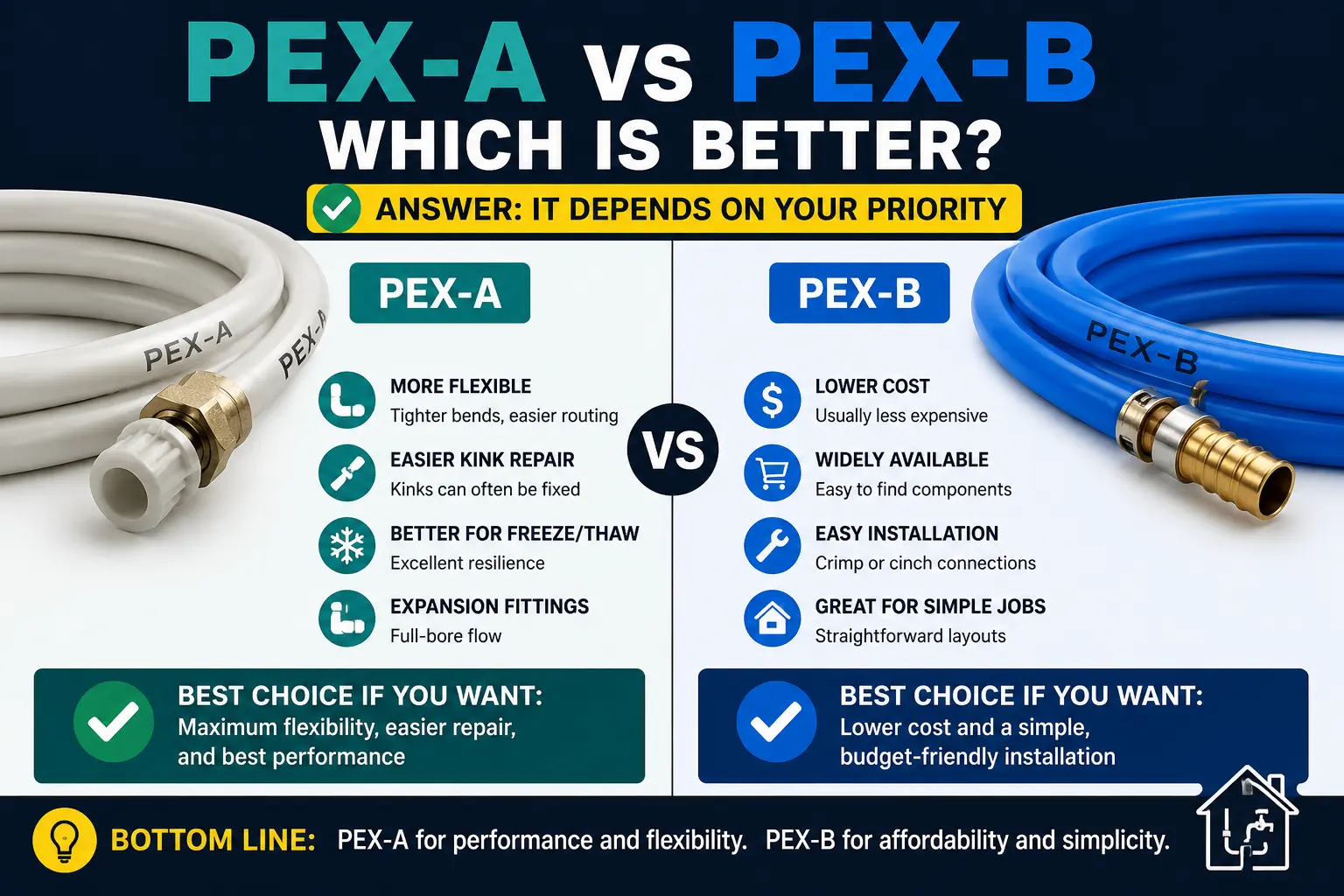
If you are comparing PEX-A vs PEX-B, the short answer is simple: PEX-A is more flexible, easier to repair when kinked, and better suited to expansion fittings and tight layouts. PEX-B is usually less expensive, stiffer, and commonly installed with crimp or clamp fittings. Neither is automatically the best choice for every plumbing job.
For most homeowners, PEX-A is worth considering when flexibility, tight bends, freeze/thaw resilience, or expansion fittings matter. PEX-B can be an excellent choice when keeping material and tool costs down is more important.
Both are cross-linked polyethylene tubing designed for plumbing. The A and B labels describe different manufacturing methods, not a simple “good vs. bad” ranking. Manufacturer specifications and fitting compatibility should always be checked before installation.
PEX-A vs PEX-B: At a Glance
Both are widely used PEX plumbing materials, but they differ in flexibility, fittings, cost, kink repair, and installation. Here’s the practical difference at a glance.
| Feature | PEX-A | PEX-B |
|---|---|---|
| Manufacturing method | Engel/peroxide | Silane/moisture cure |
| Flexibility | Higher | Good, but stiffer |
| Bend radius | Tighter | Larger |
| Kink repair | Often repairable with approved heat repair | Usually cut out and replaced |
| Expansion fittings | Yes, with compatible systems | System-dependent; check manufacturer |
| Crimp fittings | Available with compatible products | Common |
| Clamp/cinch fittings | Available with compatible products | Common |
| Flow at fittings | Can be excellent with compatible full-bore expansion fittings | Some insert-style fittings can reduce the flow passage |
| Freeze/thaw resilience | Excellent | Good, but generally less elastic |
| Material cost | Usually higher | Usually lower |
| Tool cost | Expansion tool required for expansion systems | Crimp/cinch tools are commonly less expensive |
| DIY friendliness | Good after learning the expansion system | Good for straightforward crimp/cinch work |
| Best for | Tight layouts, complex routing, expansion systems | Budget-conscious and straightforward installations |
Choose PEX-A if…
You want maximum flexibility, tighter bends, easier kink repair, or you prefer a compatible expansion fitting system.
Choose PEX-B if…
You want lower upfront material costs and a straightforward crimp or cinch installation.
What Is PEX-A?
PEX-A is cross-linked polyethylene tubing manufactured using the Engel, or peroxide, process. Cross-linking takes place while the polyethylene is processed, producing a highly flexible type of PEX.
That flexibility is the main reason plumbers and homeowners choose PEX-A.
PEX-A can make tight bends, which can reduce the number of elbows and other fittings needed in some installations. It also has shape and thermal memory. If the tubing is accidentally kinked, many PEX-A products can be repaired using controlled heat according to the manufacturer’s instructions.
PEX-A is also commonly associated with cold-expansion fittings. In systems such as Uponor ProPEX, an expansion tool temporarily enlarges the tubing so a larger fitting can be inserted. The tubing then contracts around the fitting to create the connection.
PEX-A Advantages and Disadvantages
- Very flexible and easier to route around tight spaces.
- Allows tighter bends than the stiffer PEX-B tubing.
- Excellent kink resistance and greater elasticity.
- Many compatible PEX-A products allow kink repair with approved heat-repair methods.
- Works with compatible expansion fitting systems.
- Can provide excellent flow characteristics when used with suitable full-bore expansion fittings.
- Strong freeze/thaw resilience because of its greater flexibility.
- Usually costs more than PEX-B.
- Expansion connection systems require specialized tools.
- Fitting compatibility must be checked before installation.
- Correct expansion and installation technique is important for reliable connections.
What Is PEX-B?
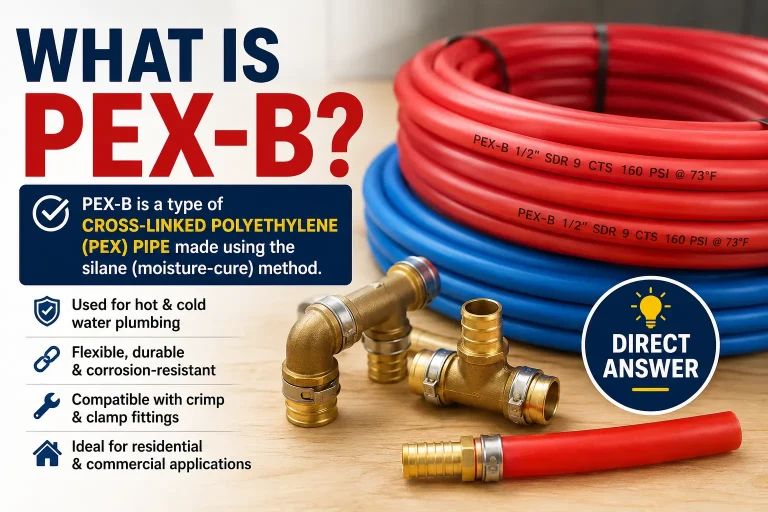
PEX-B is also cross-linked polyethylene, but it is generally manufactured using the silane or moisture-cure process. The cross-linking process occurs after extrusion rather than in the same way used for PEX-A.
PEX-B is still flexible enough for residential plumbing, but it is normally stiffer than PEX-A.
That stiffness is not necessarily a disadvantage. For long, relatively straight runs, some installers may prefer tubing that holds its shape more readily.
PEX-B is commonly used with crimp or clamp/cinch connection systems. However, the exact fitting compatibility depends on the tubing and fitting manufacturer, so you should not assume that every PEX fitting works with every PEX tube.
PEX-B Advantages and Disadvantages
- Usually costs less than PEX-A tubing.
- Widely available from plumbing suppliers and home improvement stores.
- Works well for straightforward plumbing layouts.
- Commonly used with crimp and clamp/cinch connection systems.
- Crimp and cinch tools are familiar to many plumbers and DIY installers.
- Can provide reliable performance when properly sized, rated, and installed.
- Generally less flexible than PEX-A.
- Requires a larger bend radius than PEX-A.
- A damaged or severe kink will generally require the affected section to be cut out and repaired.
- Some insert-style fittings can reduce the available flow passage.
- Compatibility with expansion fittings must be verified with the specific tubing and fitting manufacturer.
PEX-A vs PEX-B: What’s the Real Difference?
The biggest difference is how the tubing is manufactured.
That manufacturing difference affects several properties, especially flexibility, elasticity, kink recovery, and the types of connections that can be used.
But it is important not to make the mistake of treating the A and B labels as quality grades.
PEX-A is not simply “better PEX,” and PEX-B is not “cheap PEX.”
Both can be suitable for residential plumbing when the product is properly certified, correctly sized, and installed according to its instructions.
1. Manufacturing Process
| Difference | PEX-A | PEX-B |
|---|---|---|
| Process | Engel/peroxide | Silane/moisture cure |
| Cross-linking | During processing | After extrusion |
| General result | More flexible tubing | Stiffer tubing |
PEX-A’s manufacturing process produces a highly flexible material. PEX-B’s process produces tubing that is generally stiffer.
The difference becomes important when you are routing tubing around corners, repairing kinks, or choosing a connection system.
2. Flexibility: PEX-A vs PEX-B
PEX-A wins for flexibility.
PEX-A is easier to bend around corners and through tight spaces.
This can be useful when:
- Running pipe through wall cavities
- Working around obstacles
- Replacing old plumbing
- Routing tubing through joists
- Reducing the number of elbows
PEX-B is still flexible. It is simply less flexible than PEX-A.
For a simple open-wall installation, that difference may not matter much. For a complicated remodel, it can matter a lot.
Winner: PEX-A
3. Bend Radius
The bend radius describes how tightly you can bend the tubing without damaging it.
Because PEX-A is more flexible, it generally allows tighter bends than PEX-B.
That means you may be able to change direction with the tubing itself rather than installing an additional elbow.
Fewer fittings can mean:
- Fewer connections
- Less labor
- Fewer potential leak points
- Easier routing
However, always follow the minimum bend radius printed in the manufacturer’s installation instructions.
Winner: PEX-A
4. PEX-A vs PEX-B Kink Resistance
This is another major difference.
PEX-A has greater elasticity and shape memory. If a compatible PEX-A tube develops a kink, the manufacturer may allow the damaged area to be repaired using controlled heat.
PEX-B does not have the same type of repairable thermal memory.
A serious kink in PEX-B will normally require the damaged section to be cut out and repaired with an approved fitting.
So if you are working in a cramped space where accidental kinks are more likely, PEX-A offers a practical advantage.
Winner: PEX-A
5. PEX-A vs PEX-B Fittings
This is one of the most important differences for anyone planning an installation.
Common PEX-A connection
PEX-A is widely used with cold-expansion fittings.
The general process is:
- Place the expansion ring on the tubing.
- Expand the tubing and ring with the correct tool.
- Insert the fitting.
- Allow the tubing to contract around the fitting.
Uponor describes this as its ProPEX connection method.
Common PEX-B connections
PEX-B is commonly installed using:
- Copper crimp rings
- Stainless cinch clamps
- Compatible press systems
- Other manufacturer-approved connection systems
The important point is that fitting compatibility is not determined only by whether the pipe says A or B.
The tubing and fitting manufacturer must approve the connection.
For example, Apollo states that its PEX-A can be used with its PEX-A or PEX-B fittings, while its PEX-B cannot be used with its PEX-A fittings.
Winner: Depends on the installation system
Can You Use PEX-A Fittings on PEX-B?
Do not assume that you can.
Some PEX fitting systems are specifically designed for certain tubing types.
For example, Apollo specifically says its PEX-B tubing cannot be used with its PEX-A fittings.
Therefore:
Always check the fitting manufacturer’s compatibility instructions before mixing PEX tubing and fittings.
This is especially important with expansion fittings.
Can You Use Crimp Fittings on PEX-A?
Some PEX-A tubing can be used with compatible crimp fittings, but you must follow the tubing and fitting manufacturer’s instructions.
PEX-A is not limited to one connection method.
Likewise, PEX-B is not defined simply by “crimp fittings.”
Think of the tubing and fitting as a system, not two completely independent products.
6. PEX-A vs PEX-B Water Flow
This is an area where online comparisons can become misleading.
You may hear:
“PEX-A has better water pressure.”
That is not quite the right way to describe it.
Water pressure and flow are different.
Water pressure is the force available in the plumbing system.
Flow rate is how much water can move through the system over a given period.
PEX-A can have a flow advantage when it is connected with compatible full-bore expansion fittings.
The fitting can maintain a larger passage through the connection than some smaller insert-style fittings.
PEX-B installations using insert fittings can therefore experience more restriction at individual connections.
But that does not mean every PEX-A system automatically has higher household water pressure.
Actual flow also depends on:
- Pipe diameter
- Run length
- Number of fittings
- Fitting design
- Water pressure
- Valves
- Manifold design
- Overall plumbing layout
Better conclusion
PEX-A can have a flow advantage with certain expansion fitting systems, but pipe size and system design matter just as much.
7. PEX-A vs PEX-B for Freezing Temperatures
PEX-A generally has the advantage in repeated freeze/thaw conditions because of its greater elasticity.
When water freezes, it expands. A flexible pipe can accommodate some of that expansion better than a rigid material.
PEX-A’s flexibility allows it to expand and contract more readily. Uponor specifically cites PEX-A’s resilience in freeze/thaw cycles.
But there is an important warning:
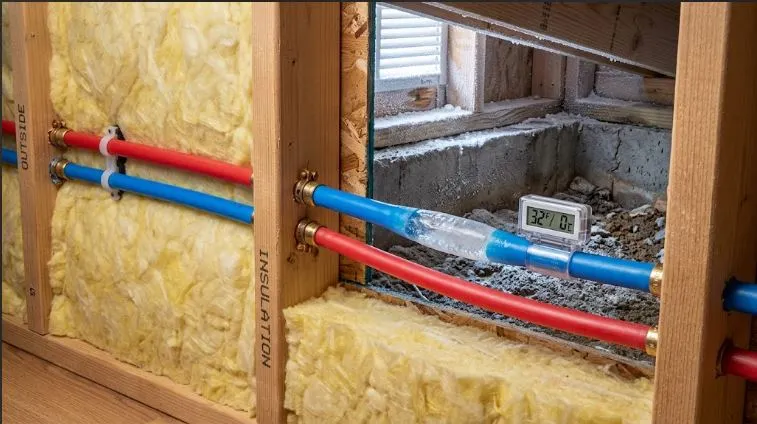
Neither PEX-A nor PEX-B should be considered freeze-proof.
A plumbing system can still be damaged by freezing conditions, especially when tubing is poorly installed or exposed to severe conditions.
If your plumbing is in an area that regularly experiences freezing temperatures, proper insulation and freeze protection still matter.
Winner: PEX-A
8. PEX-A vs PEX-B Strength
This is where you should avoid a common mistake.
More flexible does not automatically mean stronger.
PEX-A has excellent flexibility and elasticity, but you should not conclude from that alone that it always has a higher burst pressure than PEX-B.
In one published pressure test by Roger Wakefield, the tested PEX-B samples actually reached higher raw burst pressures than the tested PEX-A samples. The results were far above normal residential operating pressures, and the test should not be treated as a universal ranking of every PEX product.
The better takeaway is:
PEX-A’s major strength is flexibility and resilience, not simply a higher burst-pressure number.
Actual pressure ratings must come from the specific product’s certification and manufacturer documentation.
9. Does PEX-A Have Better Water Pressure?
Not automatically.
PEX-A does not magically increase the pressure coming into your house.
However, an appropriately sized PEX-A system using expansion fittings can reduce restriction at fittings because the connection can preserve a larger flow passage.
So the more accurate statement is:
PEX-A can provide better flow characteristics in some fitting configurations, but it does not create higher source water pressure.
If you have poor water pressure, changing from PEX-B to PEX-A may not solve the problem if the real issue is:
- Undersized pipe
- Low municipal pressure
- A partially closed valve
- Clogged aerators
- Poor system design
- Long pipe runs
- Too many restrictions
10. PEX-A vs PEX-B Cost
PEX-B usually wins on upfront material cost.
The exact price varies by:
- Brand
- Pipe size
- Length
- Supplier
- Location
- Fitting system
- Project size
PEX-A can cost more because of the tubing and expansion connection system.
But looking only at the price per foot can be misleading.
You should consider total installed cost.
PEX-A total cost can include:
- Tubing
- Expansion rings
- Expansion tool
- Expansion fittings
- Labor
PEX-B total cost can include:
- Tubing
- Crimp rings or clamps
- Crimp/cinch tool
- Insert fittings
- Labor
For a large project, the cost of fittings and tools can make a meaningful difference.
Winner for upfront cost: Usually PEX-B
11. Which Is Cheaper: PEX-A or PEX-B?
In many installations, PEX-B is cheaper, particularly when using conventional crimp or clamp fittings.
However, don’t assume PEX-B will always have the lowest total project cost.
A flexible PEX-A system may require fewer fittings in a complicated layout. That can reduce labor and connection count.
The best comparison is:
Tubing + fittings + tools + labor + installation time
rather than simply:
Price per foot
12. Which Is Easier to Install?
The answer depends on the project.
PEX-A is easier when:
- There are many bends
- Space is tight
- You need to route around obstacles
- You want to minimize elbows
- You are using an expansion system
PEX-B is easier when:
- Runs are relatively straight
- You already have a crimp/cinch tool
- You want a familiar connection method
- You want to minimize initial tool expense
For a first-time DIY project, the connection system may matter more than the letter on the pipe.
13. PEX-A vs PEX-B Tools
The biggest tool difference is the connection method. PEX-A is commonly installed with an expansion system, while PEX-B is commonly installed with crimp or cinch connections. Your exact tool requirements can vary by manufacturer and fitting system.
| Tool or Material | PEX-A Expansion System | PEX-B Crimp/Cinch System |
|---|---|---|
| Tubing cutter | Yes | Yes |
| Expansion tool | Yes | No |
| Expansion rings | Yes | No |
| Crimp tool | System-dependent | Yes |
| Crimp rings | System-dependent | Yes |
| Cinch tool | System-dependent | Yes |
| Cinch clamps | System-dependent | Yes |
| Fitting gauge | Depends on system | Depends on system |
Compare the complete tubing, fitting, ring or clamp, and tool system—not just the price of the pipe. A lower-cost tube can still become the more expensive option if its required fittings or tools cost more.
14. Which Is Better for DIY Plumbing?
There is no universal winner.
Choose PEX-A for DIY if:
- You need to make tight bends.
- You are comfortable learning an expansion tool.
- You want the option to repair compatible kinks.
- Your project has complicated routing.
- You prefer expansion connections.
Choose PEX-B for DIY if:
- Your runs are simple.
- You want a lower-cost setup.
- You are comfortable with crimp or cinch connections.
- The required tools are easier for you to obtain.
- Your local supplier has a better selection of PEX-B products.
For either type, getting the connection right is more important than choosing the “best” letter.
15. PEX-A vs PEX-B for a Whole-House Repiping
For a whole-house repipe, both can work well.
PEX-A can be attractive when:
- The house has complicated routing.
- There are many tight spaces.
- You want fewer elbows.
- Freeze protection is a major concern.
- You prefer expansion fittings.
PEX-B can be attractive when:
- Budget is the main concern.
- Runs are relatively straightforward.
- You want widely available crimp/cinch components.
- Your plumber routinely installs PEX-B.
The best choice should be based on the complete plumbing design, not just the tubing type.
16. PEX-A vs PEX-B for Tight Spaces
PEX-A is usually the better choice.
Its greater flexibility makes it easier to snake through wall cavities and around framing.
That can be particularly useful during remodeling, where you cannot easily create large access holes.
Winner: PEX-A
17. PEX-A vs PEX-B for Long Straight Runs
PEX-B can be a practical choice for long, relatively straight runs because it is generally stiffer and often less expensive.
However, PEX-A can also be used successfully for long runs.
The question is not whether one can do the job.
The better question is:
Which tubing and connection system provides the best combination of cost, installation method, availability, and performance for your project?
18. PEX-A vs PEX-B Durability and Lifespan
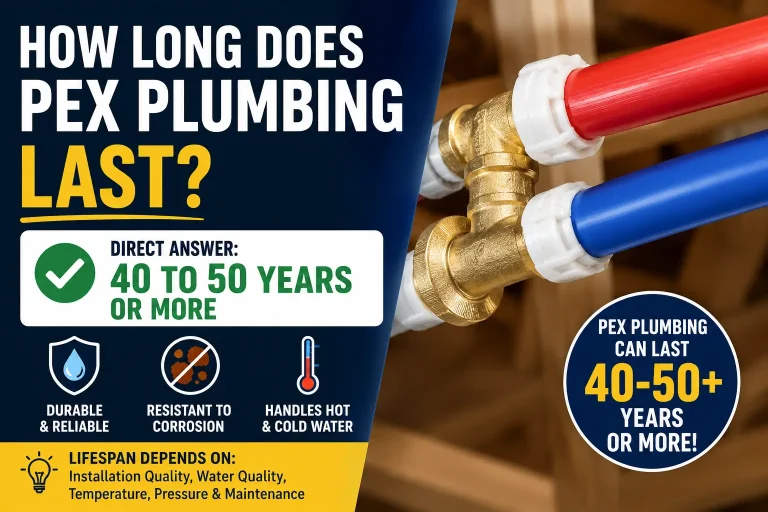
Both types are designed for long-term plumbing use when the product is properly certified and installed within its rated conditions.
Do not assume that:
PEX-A = longer life
or:
PEX-B = shorter life.
Actual service life depends on factors such as:
- Temperature
- Pressure
- Water chemistry
- UV exposure
- Installation quality
- Product formulation
- Certification
- Manufacturer specifications
For example, manufacturers publish specific pressure and temperature ratings for their products. Uponor lists ratings including 160 psi at 73.4°F and 80 psi at 200°F for its PEX products.
Always use the rating of the actual tubing you are buying.
19. PEX-A vs PEX-B and Chlorine Resistance
You may see claims online that PEX-B is automatically better for chlorine resistance.
That is too broad.
Do not judge chlorine or oxidative resistance solely from the letter A or B.
Instead, check:
- The exact product
- Manufacturer documentation
- Applicable certification
- Intended application
- Water chemistry
Different formulations and products can have different performance characteristics.
This is another reason why brand and certification matter alongside the PEX type.
20. Is PEX-A or PEX-B Safer for Drinking Water?
Both can be used for potable-water plumbing when the specific product is properly certified for that use.
For example, Apollo states that its PEX-A and PEX-B products meet applicable ASTM standards and are NSF certified for potable-water use.
Don’t choose a pipe simply because it says PEX-A or PEX-B.
Look for the appropriate markings and certifications on the actual product.
PEX-A vs PEX-B: Which One Should You Choose?
The best choice depends on your plumbing layout, connection method, budget, and the features that matter most to you. Use this quick decision guide to narrow it down.
| If your main priority is… | Consider |
|---|---|
| Maximum flexibility | PEX-A |
| Tight bends | PEX-A |
| Easier kink repair | PEX-A |
| Freeze/thaw resilience | PEX-A |
| Compatible expansion fittings | PEX-A |
| Lower material cost | PEX-B |
| Lower-cost crimp/cinch setup | PEX-B |
| Straightforward installation | PEX-B |
| Widely available components | PEX-B |
| Complex remodeling | PEX-A |
| Full-bore flow with compatible expansion fittings | PEX-A |
| Simple budget repipe | PEX-B |
PEX-A and PEX-B are both suitable for many residential plumbing applications. The exact performance, fitting compatibility, installation requirements, and permitted uses can vary by manufacturer, product, fitting system, and local plumbing code. Always check the product specifications and applicable code before installation.
Is PEX-A Worth the Extra Money?
It can be.
PEX-A is worth considering if you will benefit from:
- Better flexibility
- Tight bends
- Fewer fittings
- Kink repair
- Expansion connections
- Better resilience during freeze/thaw cycles
- Potentially better flow characteristics from full-bore fittings
If your plumbing layout is simple and your main goal is to keep costs down, PEX-B may provide better value.
The right question is not:
“Which PEX is better?”
It is:
“Which PEX system gives me the features I actually need at a reasonable total installed cost?”
PEX-A vs PEX-B vs PEX-C
PEX-A and PEX-B are not the only types.
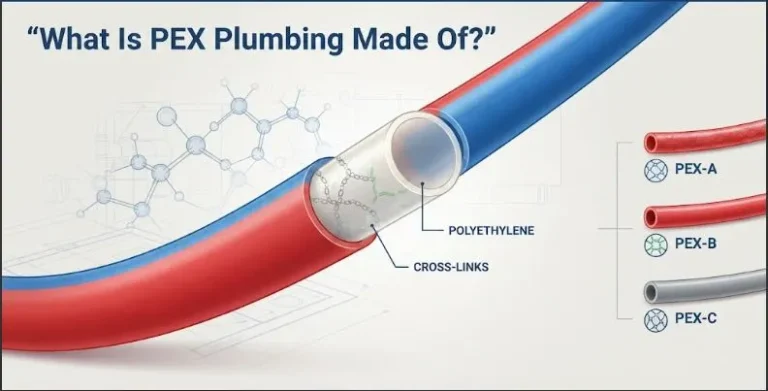
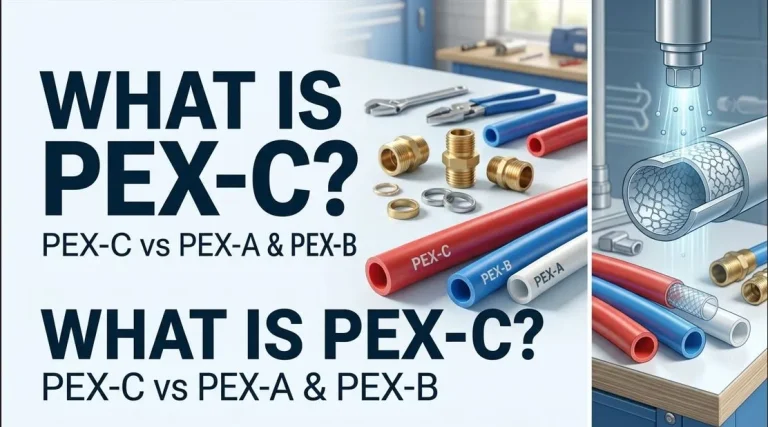
There is also PEX-C, which is manufactured using an irradiation/radiation process.
| Type | General manufacturing method | General characteristic |
|---|---|---|
| PEX-A | Engel/peroxide | Most flexible |
| PEX-B | Silane/moisture cure | Stiffer and commonly lower cost |
| PEX-C | Irradiation | Another legitimate PEX manufacturing method |
The important point is that A, B, and C describe manufacturing methods.
They are not simply quality rankings.
Final Verdict:
Choose PEX-A when flexibility and connection performance are your priorities. Choose PEX-B when lower cost and a straightforward crimp or clamp installation are more important.
PEX-A is the better fit when you want:
- Maximum flexibility
- Tight bends
- Easier kink repair
- Strong freeze/thaw resilience
- Expansion fittings
- Potentially better flow characteristics with full-bore expansion fittings
PEX-B is the better fit when you want:
- Lower upfront material cost
- Common crimp or clamp connections
- A straightforward plumbing layout
- Widely available components
- A practical budget-friendly system
The biggest lesson is that PEX-A vs PEX-B is not really a “winner takes all” comparison. Both can work well. The best choice depends on your plumbing layout, connection system, budget, climate, and the exact products being installed.
Before buying, check the tubing and fitting manufacturer’s instructions, certifications, pressure/temperature ratings, and compatibility. That matters more than simply choosing the letter A or B.