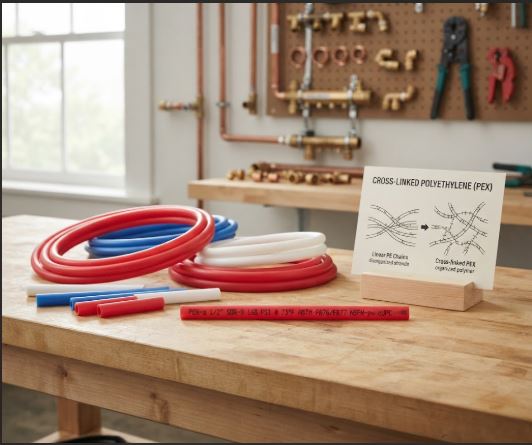
What Does PEX Stand For? What PEX Means in Plumbing
If you have looked at modern plumbing tubing, you have probably seen the letters PEX printed along the side. But what does PEX stand for?
PEX stands for cross-linked polyethylene. The name describes the material used to make PEX tubing: polyethylene that has been cross-linked during manufacturing to change its molecular structure and give the finished material properties useful for plumbing.
The term sounds more complicated than it really is. You do not need a chemistry degree to understand it.
In simple terms, PE refers to polyethylene, while the X refers to cross-linking. That cross-linking is what turns the starting polyethylene material into the PEX used in plumbing systems.
What Does PEX Stand For?
PEX stands for cross-linked polyethylene.
Breaking the term apart makes it easier to understand:
- PE = polyethylene
- X = cross-linking
- PEX = cross-linked polyethylene
Polyethylene is a plastic polymer made from long molecular chains. During PEX manufacturing, those chains become connected through a cross-linking process.
The result is a material that can be manufactured into flexible tubing for applications such as hot- and cold-water plumbing. ASTM International’s specification for PEX tubing specifically covers crosslinked polyethylene tubing used in applications including residential and commercial potable-water distribution, hydronic systems, radiant heating, and other building services when the tubing meets applicable requirements.
So, when someone asks, “What does PEX mean?”, the short answer is:
PEX means cross-linked polyethylene, a polyethylene-based material that has been cross-linked to produce PEX tubing.
What Does the “X” in PEX Mean?
The X in PEX refers to cross-linking.
This is the part of the name that often causes confusion.
Polyethylene contains long polymer chains. Cross-linking creates connections between those chains, producing a different molecular structure from ordinary polyethylene.
You can think of it like a pile of long pieces of string. Before cross-linking, the strings are mostly separate. Cross-linking creates connections between them, forming a more interconnected structure.
That change matters because PEX is not simply ordinary polyethylene tubing with a fancy name.
The cross-linking process is an important part of what gives PEX its combination of flexibility, durability, and temperature and pressure performance.
ASTM F876, the standard specification for PEX tubing, includes requirements related to properties such as sustained pressure, burst pressure, environmental stress cracking, degree of crosslinking, oxidative stability, and UV resistance.
What Is Polyethylene?
To understand PEX, it helps to understand polyethylene first.
Polyethylene is a widely used thermoplastic polymer. Manufacturers use different forms of polyethylene to make many everyday plastic products.
PEX starts with polyethylene-based material, but manufacturers then use a cross-linking process to create the PEX material.
That distinction is important when comparing PEX with other plastic pipes.
For example, saying that PEX is “plastic pipe” is technically true, but it does not tell you much about how the material behaves or why manufacturers use it for plumbing.
PEX is specifically cross-linked polyethylene.
That is why the name itself tells you something important about the material.
How Does Polyethylene Become PEX?
Manufacturers can use different methods to cross-link polyethylene and produce PEX tubing.
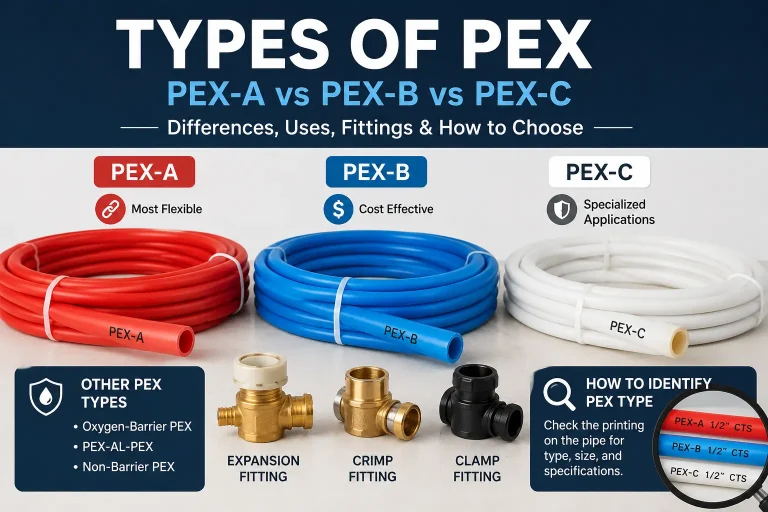
The three commonly recognized PEX classifications are:
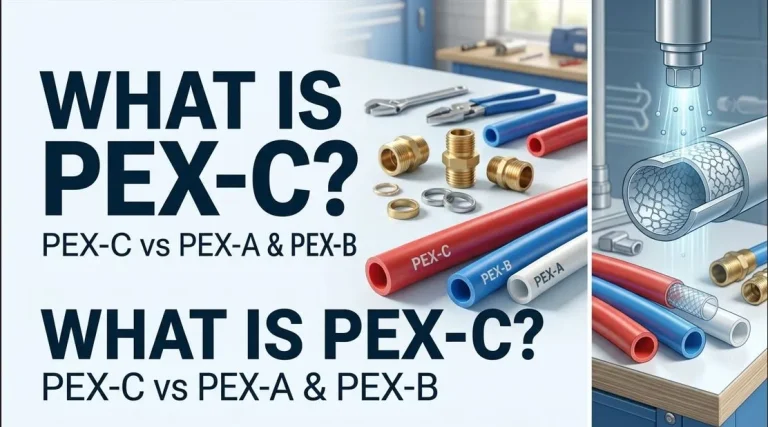
- PEX-A
- PEX-B
- PEX-C
The letters do not mean that one type is automatically “better” than another. They primarily identify the manufacturing method used to create the cross-linked material.
ASTM’s PEX tubing specification recognizes cross-linking through methods including peroxide, silane, electron-beam treatment, and other methods that meet the required performance criteria.
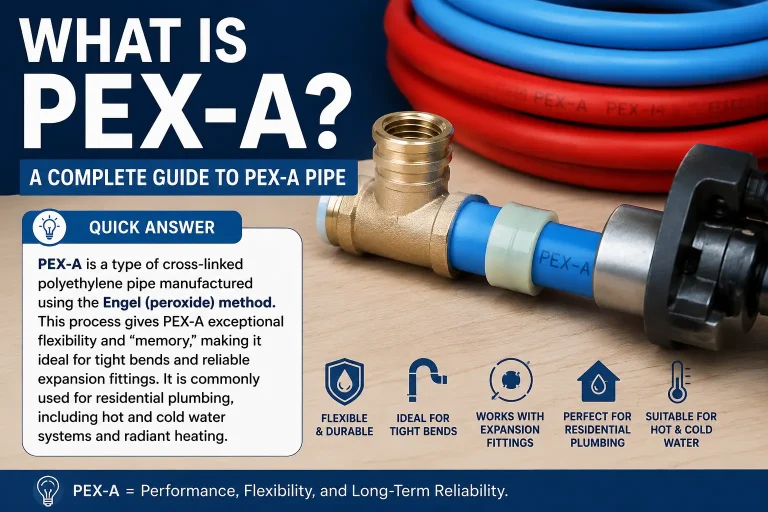
PEX-A
PEX-A is produced using the peroxide method, commonly associated with the Engel process.
The cross-linking takes place during the manufacturing process using peroxide.
PEX-A is often known for its high flexibility and its use with expansion-style connection systems.
PEX-B
PEX-B is produced using a silane-based method.
The polyethylene is cross-linked through a moisture-cure process associated with silane technology.
PEX-B is widely used in plumbing and is compatible with several mechanical connection systems, depending on the specific tubing and fittings.
PEX-C
PEX-C uses an irradiation method to cross-link the polyethylene after extrusion.
Electron-beam irradiation creates the cross-links in the polymer.
PEX-C is another legitimate PEX manufacturing method. Its characteristics and approved applications depend on the specific product.
Does PEX-A, PEX-B, or PEX-C Mean Quality?
Not by itself.
The letters identify the method used to cross-link the polyethylene. They should not be treated as a simple A-is-best, B-is-second, C-is-worst ranking.
A plumber choosing PEX should look at the complete product information, including its intended application, ratings, standards, markings, and compatible fittings.
That is a much more useful way to evaluate tubing than simply looking at the letter after PEX.
Why Is Polyethylene Cross-Linked?
This is where the name becomes useful rather than just being an acronym.
Cross-linking changes the structure of the polyethylene and allows manufacturers to produce tubing with properties suited to demanding plumbing applications.
PEX tubing is flexible, which makes it possible to route the tubing around many obstacles with fewer rigid directional changes.
It also has defined pressure and temperature performance requirements under applicable standards.
For example, ASTM F876 covers PEX tubing that is pressure-rated for water at three temperatures, with pressure ratings decreasing as temperature increases.
That last point is worth remembering.
“PEX” is not a magic temperature rating.
The actual performance depends on the particular product and its specifications.
What Is PEX Used For?
PEX is widely used in plumbing systems for applications such as:
- Hot-water distribution
- Cold-water distribution
- Residential plumbing
- Commercial plumbing
- Potable-water systems when the product is approved for that use
- Hydronic heating
- Radiant heating and cooling
- Certain other fluid-handling applications
The exact application depends on the tubing’s certification, markings, ratings, and applicable code requirements.
The Plastics Pipe Institute’s current PEX plumbing guide covers crosslinked polyethylene plumbing distribution systems for residential, multifamily, and commercial buildings and addresses hot- and cold-water plumbing distribution.
So the acronym describes the material, while the product specifications tell you where that particular PEX product can be used.
Is PEX the Same as Plastic Pipe?
PEX is a type of plastic piping material, but not all plastic pipe is PEX.
PVC, CPVC, polyethylene, polypropylene, and PEX are different materials or material classifications with different properties and approved applications.
This distinction matters when replacing or installing plumbing.
For example, you should not assume that a fitting designed for one plastic piping system will automatically work with another.
PEX requires fittings and connection methods that are compatible with the specific tubing and connection system.
Is PEX Safe for Drinking Water?
PEX can be used for potable-water applications when the specific product is approved or certified for that use.
Do not treat the word “PEX” alone as a certification.
For example, NSF’s certification listings include PEX materials and components evaluated under NSF/ANSI/CAN 61, a standard addressing health effects for drinking-water system components.
When buying PEX for drinking-water plumbing, check the manufacturer’s product information and the markings on the tubing.
The goal is simple: make sure the exact product is approved for the application.
What Do PEX-A, PEX-B, and PEX-C Mean?
The simplest way to remember the three classifications is:
| PEX Type | General Cross-Linking Method | What the Letter Tells You |
|---|---|---|
| PEX-A | Peroxide | Manufacturing/cross-linking method |
| PEX-B | Silane | Manufacturing/cross-linking method |
| PEX-C | Irradiation | Manufacturing/cross-linking method |
These classifications describe how the polyethylene was cross-linked.
They do not, by themselves, tell you which product is appropriate for every plumbing job.
The connection system, product rating, code requirements, manufacturer instructions, and intended application still matter.
Does the Color of PEX Change What PEX Means?
No.
You may see PEX tubing in red, blue, white, or other colors.
In residential plumbing, red is commonly used to help identify hot-water lines and blue is commonly used for cold-water lines. White tubing may be used for either.
But color does not change the basic meaning of PEX.
A red tube is still PEX if it is manufactured as PEX tubing. The color mainly provides a convenient visual cue during installation.
For technical information, always rely on the printed markings and manufacturer specifications rather than color alone.
What Should You Look for on PEX Tubing?
The printing on PEX tubing can tell you much more than its color.
Depending on the product, markings can identify information such as:
- Manufacturer
- Nominal tubing size
- PEX classification
- Applicable standards
- Pressure and temperature information
- Certification or listing information
- Production information
- Intended applications or other product designations
ASTM F876 includes requirements for PEX tubing markings as part of the specification.
If you are standing in a hardware store holding a coil of PEX, the print string is more useful than trying to identify the tubing by color.
PEX vs. Polyethylene: What Is the Difference?
The names are similar, but they are not interchangeable.
Polyethylene is the base polymer family.
PEX is polyethylene that has been cross-linked.
That cross-linking changes the polymer structure and allows PEX tubing to meet performance requirements for specified plumbing applications.
This is one reason the phrase “cross-linked polyethylene” is more informative than simply calling PEX “plastic.”
It describes both the base material and the modification that defines the PEX material.
Does “PEX” Tell You Everything About the Pipe?
No.
This is one of the most important points to understand.
The word PEX tells you the material classification, but it does not tell you everything about a particular piece of tubing.
You still need to know:
- What size is it?
- Which PEX classification is it?
- What standards does it meet?
- What pressure and temperature ratings apply?
- Is it approved for potable water?
- Which fittings are compatible?
- What applications does the manufacturer approve?
- What installation requirements apply?
Two products can both be PEX while having different specifications and connection requirements.
That is why experienced installers read the markings instead of making assumptions.
Why Is PEX Called PEX Pipe If It Is Tubing?
You will hear both PEX pipe and PEX tubing in everyday plumbing discussions.
The terminology can vary depending on the context, industry, manufacturer, or plumbing code language.
ASTM F876 itself uses the term PEX tubing in its title and specification.
Homeowners, plumbers, retailers, and online searches commonly use “PEX pipe” because the material carries water through a plumbing system just like other piping products.
So if you search for PEX pipe, PEX tubing, or PEX plumbing, you are generally looking at closely related terminology. The important distinction is understanding the actual product specifications rather than getting stuck on the vocabulary.
Bottom Line:
PEX stands for cross-linked polyethylene.
The name comes from the material itself: PE means polyethylene, and X refers to cross-linking.
That cross-linking changes the structure of the polyethylene and allows manufacturers to produce tubing that meets defined performance requirements for applications such as hot- and cold-water plumbing and certain hydronic systems.
When you see PEX-A, PEX-B, or PEX-C, the letter primarily identifies the cross-linking method used to manufacture the tubing.
And when you’re choosing PEX for an actual plumbing project, don’t stop at the three letters. Check the tubing’s markings, ratings, certifications, intended application, and compatible fittings.
If you want the bigger picture, see our complete guide to what PEX pipe is, including its types, sizes, colors, uses, limitations, and more.