What Is PEX-C? How It’s Made, Pros, Cons & PEX-A/B Differences
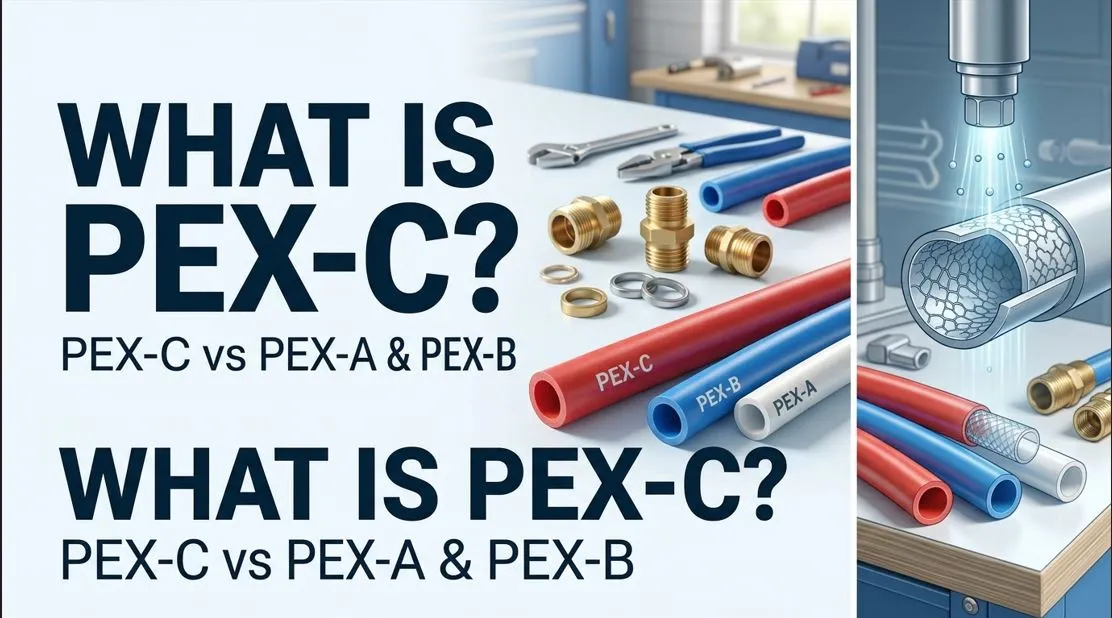
If you’re looking at PEX-C pipe and wondering what the “C” actually means, here’s the short answer: PEX-C is cross-linked polyethylene tubing made using electron-beam irradiation. The tubing is cross-linked after it is extruded, which is different from the manufacturing methods used to make PEX-A and PEX-B.
The letter C does not mean that PEX-C is a lower-quality grade of PEX. A, B, and C describe different manufacturing methods. Whether a particular PEX-C product is suitable for a plumbing job depends on its pressure and temperature ratings, certifications, intended application, and compatible fittings.
So, is PEX-C good for plumbing? It can be. But there are a few things you should know before choosing it.
What Is PEX-C?
PEX-C is a type of cross-linked polyethylene (PEX) tubing manufactured using an irradiation process, typically an electron beam.
The basic process looks like this:
Polyethylene → tubing extrusion → electron-beam treatment → cross-linking → PEX-C tubing
Unlike PEX-A, where cross-linking takes place during the extrusion process, PEX-C is cross-linked after the polyethylene tubing has been formed.
PEX-C can be manufactured for applications such as potable-water plumbing, hot- and cold-water distribution, and certain heating systems, but the exact application depends on the individual product’s specifications and certifications.
What Does the “C” Mean in PEX-C?
The “C” identifies the cross-linking method used during manufacturing.
The three common PEX classifications are:
- PEX-A: Generally manufactured using the peroxide or Engel method.
- PEX-B: Generally manufactured using the silane or moisture-cure method.
- PEX-C: Cross-linked using electron-beam irradiation.
It’s important not to think of these letters as a ranking system. PEX-A isn’t automatically better than PEX-B, and PEX-B isn’t automatically better than PEX-C.
The manufacturing method does influence characteristics such as flexibility and handling, but the actual tubing specifications are what matter when you’re choosing a product for a plumbing system.
How Is PEX-C Made?
PEX-C starts with polyethylene resin that is extruded into tubing. At this point, the material hasn’t yet been cross-linked.
The tubing is then exposed to high-energy electron beams.
That radiation changes the molecular structure of the polyethylene and creates bonds between polymer chains. Those bonds are what turn ordinary polyethylene into cross-linked polyethylene.
The PEX-C Manufacturing Process
Here’s the process in simple terms:
1. Polyethylene is formed into tubing.
The polyethylene material is heated and pushed through an extrusion die to create the desired pipe size.
2. The tubing is cooled and prepared for irradiation.
The finished tubing shape is established before the cross-linking treatment.
3. Electron beams are used to cross-link the material.
High-energy electrons pass through the tubing and initiate the cross-linking process.
4. The finished PEX-C tubing is tested.
Manufacturers test the tubing to make sure it meets the applicable performance and dimensional requirements for its intended use.
This post-extrusion irradiation process is the main thing that separates PEX-C from the manufacturing processes used for PEX-A and PEX-B.
How Does Electron-Beam Cross-Linking Affect PEX-C?
The manufacturing method isn’t just a technical detail. It can affect how the tubing behaves during installation and service.
However, this is where you need to be careful with broad claims.
Not every PEX-C product has exactly the same flexibility, pressure rating, chemical resistance, or installation characteristics. Those details depend on the actual formulation and product design.
In practical plumbing work, the things that matter include:
- Flexibility
- Bend radius
- Temperature rating
- Pressure rating
- Resistance to environmental conditions
- Connection method
- Intended application
- Applicable certifications
That’s why two products can both be labeled PEX-C but still have different specifications.
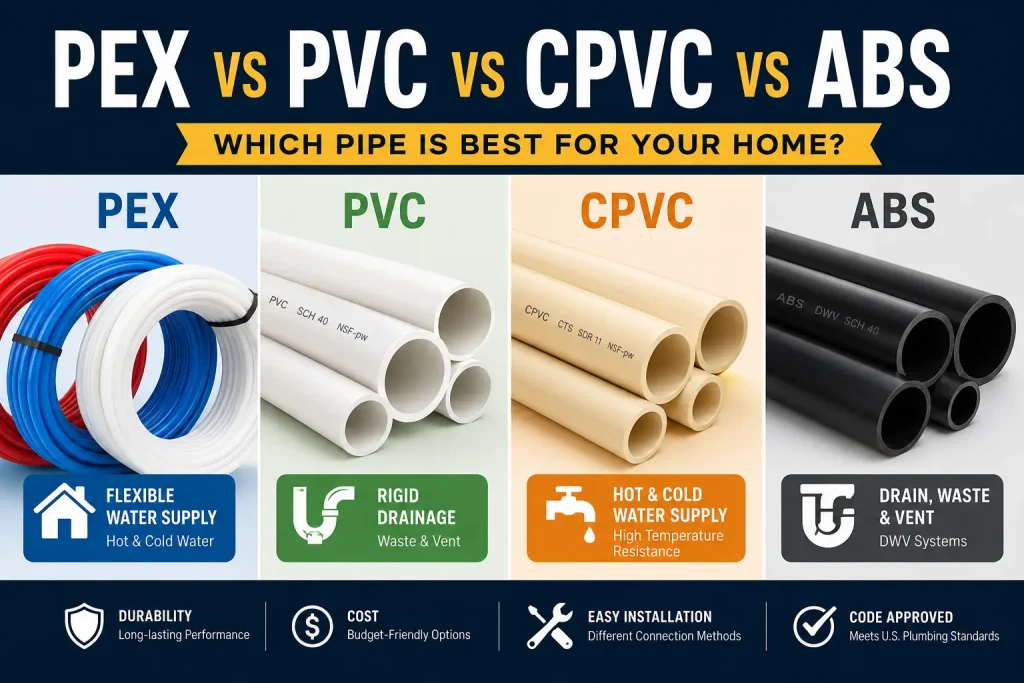
PEX-C vs PEX-A vs PEX-B
The easiest way to understand PEX-C is to compare it with the other two major PEX types.
| Feature | PEX-A | PEX-B | PEX-C |
|---|---|---|---|
| Cross-linking method | Peroxide/Engel | Silane/moisture cure | Electron beam |
| Cross-linking timing | During extrusion | After extrusion | After extrusion |
| General flexibility | Usually highest | Generally moderate | Product-dependent |
| Coil memory | Generally lower | More noticeable | Product-dependent |
| Expansion systems | Common with approved products | Product-dependent | Product-dependent |
| Residential availability | High | Very high | Generally lower |
| Main consideration | Flexibility | Availability/value | Product-specific characteristics |
The important takeaway is that A, B, and C are manufacturing classifications, not quality grades.
For example, a properly manufactured and certified PEX-C tube can be perfectly suitable for an application where its specifications meet the requirements.
Is PEX-C Good or Bad?
PEX-C isn’t inherently good or bad.
That’s probably the most important point to understand.
Some older articles portray PEX-C as inferior to PEX-A or PEX-B. That’s too simplistic.
PEX-C is a legitimate method of manufacturing cross-linked polyethylene tubing. The better question is:
Is this particular PEX-C product suitable for the plumbing application I’m installing it in?
Look at the actual product specifications instead of choosing based solely on the letter printed after PEX.
Advantages of PEX-C
Depending on the specific product, PEX-C can offer several useful characteristics:
- Electron-beam cross-linking
- Consistent manufacturing process
- Availability for specific plumbing applications
- Compatibility with approved PEX connection systems
- Availability in common plumbing sizes
- Potentially competitive pricing
Disadvantages of PEX-C
There are also reasons PEX-C isn’t as commonly discussed as PEX-A and PEX-B:
- It is less common in some residential plumbing markets.
- Product selection may be more limited.
- Installers may be more familiar with PEX-A or PEX-B.
- Fitting compatibility needs to be checked carefully.
- Flexibility can vary between products.
- Some older PEX-C products have been associated with historical failure concerns.
That last point deserves some explanation rather than a blanket statement that “PEX-C fails.”
Is PEX-C Safe for Drinking Water?
PEX-C can be used for potable water when the specific tubing is approved and certified for potable-water applications.
Don’t determine drinking-water suitability from the “C” alone.
When buying PEX-C for a home’s water supply, check the tubing and manufacturer’s documentation for the appropriate:
- Potable-water certification
- Applicable standards
- Temperature rating
- Pressure rating
- Intended application
- Installation requirements
This is the same basic rule I would use when selecting any plumbing material: look at the actual product specifications, not just the material name.
A PEX-C tube designed and certified for potable-water distribution is a different consideration from an unspecified piece of PEX tubing sitting on a shelf.
What Fittings Can You Use With PEX-C?
PEX-C can be used with PEX connection systems when the specific tubing and fitting combination is approved by the manufacturers.
Depending on the product, connection options may include:
- Crimp fittings
- Clamp or cinch fittings
- Push-to-connect fittings where approved
- Compression-style connections where applicable
- Other manufacturer-approved systems
The important part is compatibility.
Don’t assume that every fitting labeled “for PEX” is automatically approved for every PEX-C product.
Before making the connection, check:
- The tubing manufacturer’s instructions.
- The fitting manufacturer’s requirements.
- The required fitting size.
- The approved connection method.
- The applicable plumbing code for your project.
A good fitting on the wrong tubing—or the wrong installation method—is still a bad connection.
Can You Use Expansion Fittings With PEX-C?
Don’t assume that PEX-C can be used with an expansion fitting system simply because it is PEX.
Expansion connections depend on the characteristics of the particular tubing and the fitting system being used.
PEX-A is particularly well known for expansion systems because of its elastic memory. The tubing can be expanded over an expansion fitting and then contracts around the fitting.
With PEX-C, you should only use an expansion system when the tubing manufacturer specifically approves that tubing for the particular expansion fitting system.
So if you’re standing in a plumbing supply store wondering whether a PEX-C tube can be run through a PEX expansion tool, don’t guess.
Check the manufacturer’s compatibility information first.
Is PEX-C Flexible?
PEX-C is flexible because it is PEX tubing, but don’t assume every PEX-C product has the same flexibility.
PEX-A is generally considered the most flexible of the three major PEX classifications, while PEX-B is commonly somewhat stiffer.
PEX-C falls into a more product-dependent category.
The practical factors include:
- Tubing formulation
- Tube size
- Temperature
- Bend radius
- Manufacturer specifications
- Installation method
For a tight installation where you’re making lots of bends, look at the manufacturer’s minimum bend-radius requirements rather than relying on the PEX-C label.
Does PEX-C Kink Easily?
PEX-C can kink if it is bent beyond its allowable bend radius or handled improperly.
The same basic plumbing rule applies here as with other flexible tubing:
Don’t force the pipe around a corner that is tighter than the manufacturer allows.
A kink can restrict water flow and may damage the tubing.
If you accidentally kink a section, don’t automatically assume that heating it with a torch or heat gun will make it safe again. Follow the manufacturer’s repair instructions. In some cases, the correct fix is to remove and replace the damaged section.
Does PEX-C Crack When It Freezes?
PEX has better freeze tolerance than many rigid plumbing materials, but PEX should not be treated as freeze-proof.
When water freezes, it expands and creates significant pressure and stress inside a plumbing system.
Whether a particular PEX-C product tolerates a specific freeze condition depends on the product, installation and circumstances.
So I wouldn’t use the blanket statement:
“PEX-C always cracks when it freezes.”
That’s not a useful way to evaluate PEX.
The better approach is to protect plumbing from freezing in the first place by:
- Insulating exposed tubing
- Protecting pipes in exterior walls
- Sealing cold-air leaks
- Keeping vulnerable areas warm
- Following local plumbing requirements
Why Is PEX-C Less Common Than PEX-A and PEX-B?
If PEX-C is a legitimate PEX type, you might wonder why you don’t see it as often.
There isn’t one single reason.
Market adoption depends on:
- Manufacturer availability
- Installer familiarity
- Retail distribution
- Fitting ecosystems
- Regional preferences
- Product pricing
- Existing plumbing practices
- The popularity of PEX-A expansion systems
- The widespread availability of PEX-B products
PEX-B in particular is widely used because conventional crimp and clamp systems are familiar to many plumbers and are widely available.
PEX-A also has a strong following because of its flexibility and expansion connection systems.
That doesn’t make PEX-C defective. It simply means you may have fewer PEX-C choices depending on where you buy plumbing materials.
What Happened to PEX-C? Lawsuits and Historical Problems
This is one area where you should be careful with what you read online.
There have been historical concerns and legal cases involving specific PEX-C products, including allegations related to cracking and premature failure.
But here’s the important distinction:
A problem involving one manufacturer’s product does not automatically mean every PEX-C pipe is defective.
When researching an older PEX-C installation, identify:
- The manufacturer
- Product name
- Production period
- Tubing markings
- Location of the installation
- Failure symptoms
- Applicable warranty or settlement information
This is much more useful than simply seeing “PEX-C” on the pipe and assuming the entire system needs replacement.
If you’re dealing with an older installation that is leaking or showing widespread cracking, have the actual tubing identified before deciding what needs to be replaced.
How Do You Identify PEX-C Pipe?
Don’t identify PEX-C by its color.
This is a common mistake.
Red PEX isn’t automatically PEX-A.
Blue PEX isn’t automatically PEX-B.
White PEX isn’t automatically PEX-C.
PEX tubing can be manufactured in different colors regardless of its classification.
Check the Print Line
The best place to start is the writing printed along the tubing.
Depending on the manufacturer, you may find information such as:
- Manufacturer name
- Tubing designation
- PEX classification
- Nominal size
- Pressure rating
- Temperature rating
- Applicable standards
- Certification marks
If you need to identify tubing in an existing house, take a clear photo of the print line and compare it with the manufacturer’s documentation.
If the markings are difficult to read, don’t guess.
PEX-C Standards, Ratings and Certifications
This is where choosing plumbing tubing gets more technical.
The PEX-C classification tells you about the manufacturing method, but it doesn’t tell you everything about the finished product.
When evaluating a PEX-C product, look at the actual:
ASTM Standards
Common PEX standards include ASTM F876 and ASTM F877, depending on the application and product.
Temperature Rating
Hot-water applications require tubing rated for the intended operating temperature.
Pressure Rating
The tubing needs to be rated for the pressure and temperature conditions of the plumbing system.
Potable-Water Certification
If you’re using the tubing for drinking water, verify that the actual product is certified for potable-water use.
Chlorine/Environmental Ratings
Where applicable, check the manufacturer’s ratings for chlorine resistance and other environmental factors.
UV Exposure
PEX generally isn’t intended to sit exposed to direct sunlight for long periods unless the specific product is designed and rated for that use.
The takeaway is simple:
Don’t choose PEX-C based only on the “C.” Read the print line and product documentation.
Where Is PEX-C Used?
The exact uses depend on the product, but approved PEX-C tubing may be manufactured for applications such as:
Residential Water Supply
Hot- and cold-water distribution where the tubing is approved for the application.
Potable Water
Products certified for drinking-water systems can be used where permitted by local code.
Heating Systems
Some PEX products are manufactured for radiant or hydronic heating applications.
Commercial Plumbing
Certain PEX-C products may be suitable for commercial applications when their specifications allow it.
The key word here is approved.
Never assume that one PEX-C product is suitable for every plumbing application simply because another PEX-C product is.
PEX-C vs PEX-A: Which Is Better?
There isn’t one universal winner.
If your biggest priority is flexibility and an approved expansion connection system, PEX-A may be more attractive.
PEX-C may make sense when a particular product meets your project requirements and is readily available with compatible fittings.
For an actual plumbing job, compare:
- Product ratings
- Certifications
- Flexibility
- Bend radius
- Connection method
- Fitting availability
- Cost
- Local code requirements
- Manufacturer warranty
That’s a better comparison than simply saying “A is better than C.”
PEX-C vs PEX-B: Which Is Better?
Again, it depends on the application.
PEX-B is extremely common in residential plumbing and is widely available with crimp and clamp-style connection systems.
PEX-C may be a reasonable choice when its specific product specifications fit the job and the installer has access to the correct fittings and tools.
If two products meet your requirements, compare their:
- Price
- Availability
- Connection system
- Warranty
- Pressure/temperature ratings
- Certifications
- Installation requirements
The cheaper pipe isn’t necessarily the cheaper system if its fittings or installation method are harder to source.
Should You Use PEX-C for a House?
PEX-C can be a suitable choice for a house when the specific product is approved for the application and installed according to the manufacturer’s instructions and local plumbing code.
Bottom Line: Is PEX-C a Good Plumbing Pipe?
PEX-C is a legitimate type of cross-linked polyethylene tubing, and the “C” does not mean inferior quality. It identifies an electron-beam irradiation manufacturing process.
The real question isn’t whether PEX-C is good or bad in general. It’s whether the specific PEX-C product is right for your plumbing application.
Before installing it, check the tubing’s print line, certifications, temperature and pressure ratings, approved applications and compatible fittings. If you’re working on an existing system, identify the actual manufacturer and product before making assumptions based on the PEX-C designation alone.
For most homeowners, that’s the safest way to compare PEX-C with PEX-A and PEX-B: choose based on the complete plumbing system, not just the letter after PEX.