What Is PEX-A? A Complete Guide to PEX-A Pipe
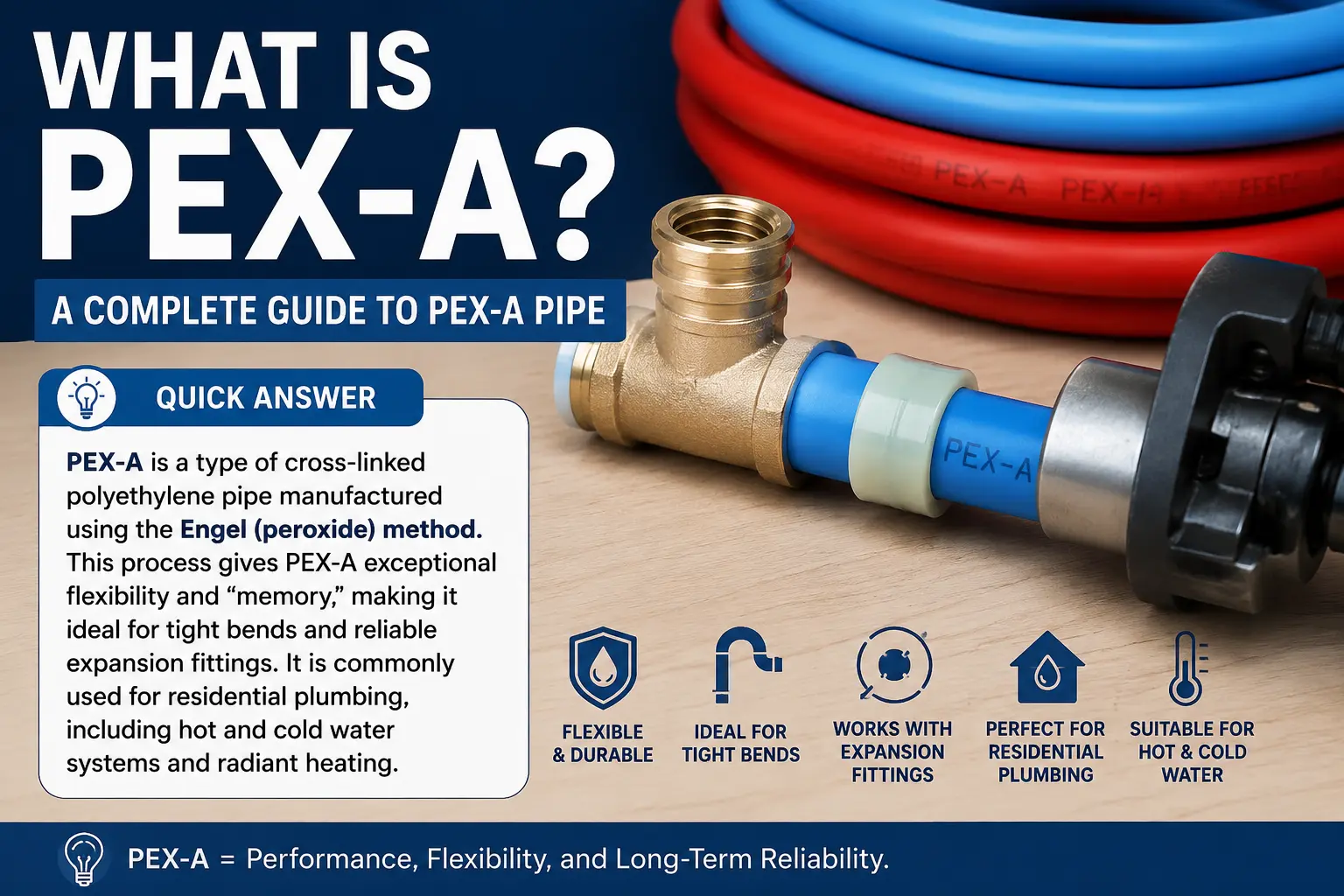
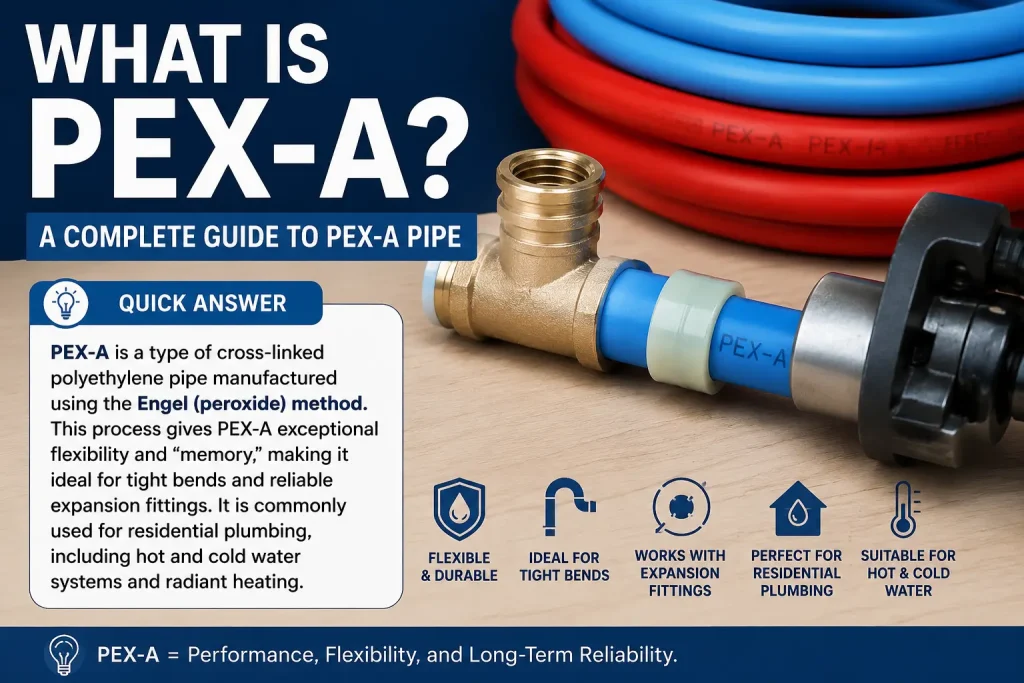
PEX-A is a type of cross-linked polyethylene tubing manufactured using the Engel (peroxide) method. This process gives PEX-A more uniform cross-linking than other PEX types, which makes the tubing unusually flexible and gives it strong elastic memory. That combination is why PEX-A works so well with expansion fittings and is widely used for residential hot and cold water distribution, repiping, and radiant heating.
If you’ve been reading about PEX plumbing and keep running into the letters A, B, and C, this guide breaks down exactly what makes PEX-A different, how it’s made, where it performs well, and where it doesn’t automatically win over the alternatives.
What Does the “A” in PEX-A Mean?
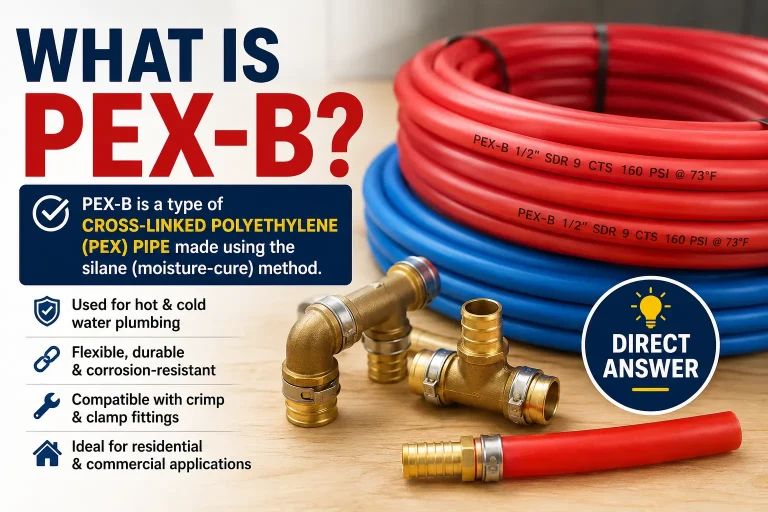
The letter doesn’t stand for a quality tier. PEX-A, PEX-B, and PEX-C simply identify which cross-linking process was used to turn ordinary polyethylene into cross-linked polyethylene. They’re manufacturing classifications, not a report card.
It’s an easy mistake to make, since “A” reads like a grade on a test. But the letter designations aren’t tied to any performance rating system — they’re based roughly on the chronological order the methods were developed. All three types still have to meet the same baseline requirements under industry standards before they can be sold for plumbing use.
That said, the manufacturing method isn’t cosmetic. It changes how uniformly the polymer chains link together, and that has a real, measurable effect on how the tubing behaves — how flexible it is, how it responds to heat, and what kind of fittings work best with it. So the “A” matters, just not as a simple better-or-worse label.
PEX-A vs PEX-B vs PEX-C
| Feature | PEX-A | PEX-B | PEX-C |
|---|---|---|---|
| Manufacturing method | Peroxide (Engel) — hot cross-linking | Silane — moisture cure, post-extrusion | Electron beam — post-extrusion irradiation |
| Flexibility | Highest, especially in warmer conditions | Good; can be stiffer in cold temperatures | Moderate; tends to be stiffest of the three |
| Elastic memory | Strong — core to expansion fittings | Limited | Limited |
| Expansion connections | Well suited | Not typically used | Not typically used |
| Typical connection methods | Expansion, crimp, cinch (product-dependent) | Crimp, cinch | Crimp, cinch |
| Cost tendency | Generally higher material cost | Generally lower material cost | Comparable to PEX-B |
| Common strengths | Tight bends, fewer fittings, kink-repair potential | Widely available, cost-effective, proven crimp/cinch systems | Uniform cross-linking without a chemical additive |
This is a general comparison — actual specs vary by manufacturer and product line. For a deeper look at how PEX-A and PEX-B differ in practice, see PlumbJournal’s PEX-A vs PEX-B comparison.
What Is PEX-A Made Of?
PEX-A starts as polyethylene, a plastic built from long chains of repeating molecules. On its own, polyethylene is a thermoplastic — heat it up enough and it softens and can be reshaped, over and over.
Cross-linking changes that. Picture the polymer chains as strands of cooked spaghetti lying loosely on top of each other. Cross-linking adds chemical bonds that tie those strands together at various points, like stitching them into a net. Once enough of those cross-links form, the material stops behaving like a simple thermoplastic and starts acting more like a thermoset — it holds its shape much more strongly under heat and stress, and it develops a “memory” of its original form.
That cross-linked structure is what separates PEX from standard polyethylene pipe. Regular PE pipe doesn’t have this internal network of bonds, so it doesn’t share PEX’s combination of flexibility, heat tolerance, and shape recovery.
How Is PEX-A Manufactured?
Engel Method
PEX-A is produced using a process most people just call the Engel method, named for German inventor Thomas Engel, who developed a way to cross-link polyethylene using peroxide. The manufacturing process is sometimes marketed as the “peroxide” method for the same reason.
The Engel process is associated specifically with PEX-A because it’s the original commercial cross-linking method, and it produces a distinct result compared with the silane and electron-beam methods used for PEX-B and PEX-C.
Peroxide Cross-Linking
In simple terms, a peroxide compound is blended into the polyethylene before it’s extruded into tubing. As the material passes through a heated extruder under high pressure, that peroxide breaks down and triggers the cross-linking reaction — this happens while the polymer is in a melted state, above its normal crystalline melting point. That’s sometimes called “hot” cross-linking, and it tends to produce a very evenly distributed network of cross-links throughout the pipe wall, from the inside surface to the outside.
The degree of cross-linking matters here. ASTM F876, the core U.S. specification covering PEX tubing, sets requirements for crosslinking testing, and PEX-A tubing typically comes in on the higher end of the allowable range. Too little cross-linking and the material behaves more like ordinary plastic; too much can make it brittle. Manufacturers aim for a middle ground that balances flexibility with strength.
Why Does the Manufacturing Process Matter?
The reason to care about any of this as an installer or homeowner: the “hot,” uniform cross-linking from the Engel method is what gives PEX-A its most useful real-world traits — high flexibility, strong elastic memory, and (for many products) the ability to recover from certain kinks with heat. Those properties directly affect how the tubing bends around framing, how it connects to fittings, and how forgiving it is during a rough installation day.
Why Is PEX-A So Flexible?
The even, “hot” cross-linking process leaves PEX-A with a molecular structure that resists kinking and allows tighter bends than many other tubing options. In practical terms, that means you can often route PEX-A around a stud bay or through a tight joist cavity without adding an elbow fitting.
Fewer fittings isn’t just convenient — every fitting is a potential leak point, so a run with fewer connections can simplify both the install and future maintenance.
Flexible doesn’t mean infinitely bendable, though. Every PEX-A product has a manufacturer-specified minimum bend radius, and bending tighter than that can stress or damage the tubing even if it doesn’t kink outright. Always check the documentation for the specific product you’re installing rather than assuming “PEX-A bends fine” covers every situation.
What Is Thermal and Elastic Memory in PEX-A?
These two terms get used interchangeably sometimes, but they describe different things.
Elastic Memory
When PEX-A tubing is stretched or expanded — say, during the expansion-fitting process described below — it doesn’t want to stay in that expanded shape. It gradually works its way back toward its original diameter. That tendency to “remember” its manufactured size is elastic memory, and it’s the property that makes expansion fittings possible in the first place.
Thermal Memory
Thermal memory refers to how heat can help certain PEX-A products recover from an installation kink. Applying controlled heat, typically with a heat gun, can sometimes allow the cross-linked structure to relax back toward its original round shape.
This is not a blanket fix for every kink. Whether a kink can be repaired with heat, and how, depends entirely on the manufacturer’s instructions for that specific product. Some kinks are too severe or too sharp to recover safely, and the damaged section needs to be cut out and replaced instead. Don’t reach for a heat gun on a kinked line without checking what the manufacturer actually permits.
How Does PEX-A Expansion Fitting Work?
Expansion fittings are closely associated with PEX-A because they rely directly on elastic memory. The basic sequence looks like this:
- Slide an expansion ring over the end of the tubing.
- Insert the correct expansion head into the tubing and ring together.
- Use the expansion tool to stretch the tubing and ring outward to a larger diameter.
- Insert the fitting into the now-expanded tubing.
- Let the tubing sit — its elastic memory pulls it back toward its original size.
- As it contracts around the fitting, it forms a tight mechanical seal.
No solvents, no heat-fusing, no crimping tool squeezing a ring down onto a barbed fitting. The tubing does the gripping work itself as it recovers its shape, which is why the expansion ring, expansion tool, expansion head, and fitting all need to belong to the same approved system — mixing components across brands isn’t something to assume will work.
What Fittings Can You Use With PEX-A?
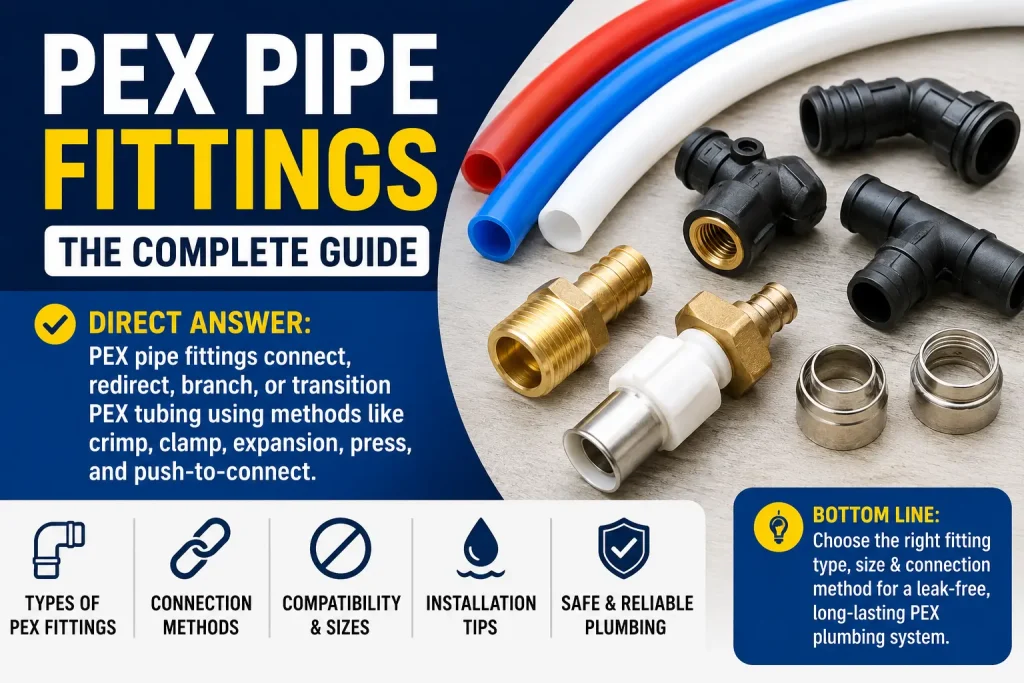
Expansion Fittings
These are the connection method most closely tied to PEX-A specifically because they depend on the tubing’s elastic memory.
Crimp Fittings
Many PEX-A tubing products can also be installed with copper crimp rings, provided the tubing and fitting are both rated for that connection method. This is a more traditional, widely familiar technique for plumbers coming from a copper or PEX-B background.
Cinch/Clamp Fittings
Stainless steel cinch (clamp) fittings are another option for compatible PEX-A tubing. A clamp is tightened around the tubing over a barbed insert fitting using a dedicated cinch tool, compressing the tubing onto the barb.
Push-Fit Fittings
Push-fit connections can work with some PEX-A tubing, but compatibility depends heavily on the specific fitting brand and the tubing it’s paired with. This is not a universal yes.
Compatibility Warning
Don’t assume any PEX fitting works with any PEX-A tubing just because both are labeled “PEX.” Before connecting anything, verify:
- That the tubing is approved for the specific fitting system
- That the fitting itself is rated for the application
- The manufacturer’s installation instructions
- Applicable ASTM and NSF standards
- The intended use (potable water, radiant heat, etc.)
- Pressure and temperature ratings for both tubing and fitting
PEX-A Pros and Cons
Pros
- Very high flexibility and a tight bend radius
- Fewer fittings needed on many layouts
- Well-suited to expansion connections
- Strong elastic memory
- Kink repair potential on products where the manufacturer permits it
- Better tolerance of freeze-related expansion than rigid piping
- Easier routing through framing and tight cavities
Cons
- Often carries a higher material cost than PEX-B
- Expansion tools represent an added upfront investment
- Sensitive to prolonged UV exposure, like other PEX types
- Specific ratings and approvals vary by product — nothing is universal
- Requires compatible, brand-matched fitting systems
- Not automatically the right choice for every budget or project
What Is PEX-A Used For?
Potable Water
PEX-A is used extensively for hot and cold potable water lines, provided the specific product carries the correct potable-water certification.
Hot and Cold Water
Residential water distribution — running lines from a manifold out to fixtures — is one of PEX-A’s most common jobs, largely thanks to its flexibility and reduced fitting count.
Repiping
When replacing old galvanized or copper piping, PEX-A’s ability to snake through existing framing without demoing walls extensively makes it a popular repipe material.
New Construction
Home-run plumbing layouts, where a manifold feeds individual lines to each fixture, are common in new residential construction and pair naturally with PEX-A’s flexibility.
Radiant Heating
PEX-A is widely used in radiant floor heating, but the tubing has to be specifically designed and rated for hydronic heating — not every PEX-A water-distribution product is intended for that application.
Other Approved Applications
Some PEX-A products are approved for other hydronic uses, like snow-melt systems, but again, only when the specific product is designed and certified for it. Check the print line before assuming.
Is PEX-A Safe for Drinking Water?

Yes, when the specific product has been tested and certified for potable-water use. That’s an important qualifier — the fact that a pipe is PEX-A doesn’t automatically mean it’s approved for drinking water.
In North America, PEX tubing intended for potable water is typically evaluated against NSF International standards, including NSF/ANSI 61, along with ASTM F876 and F877. Look for these certifications printed directly on the tubing itself, along with the manufacturer’s product documentation, before assuming a given PEX-A product is approved for your water line.
PEX-A Temperature and Pressure Ratings
There’s no single pressure or temperature number that applies to every PEX-A product on the market. ASTM F876 requires PEX tubing to carry pressure ratings for water at three different temperatures, with ratings decreasing as temperature increases the typical structure covers room-temperature, 180°F, and 200°F performance, but the actual numbers vary by manufacturer and product line.
Rather than quoting a specific PSI figure here, the practical takeaway is this: check the print line on the tubing and the manufacturer’s technical data sheet before sizing a system or making assumptions about how a given run will perform under your home’s water pressure and temperature.
Can PEX-A Freeze?
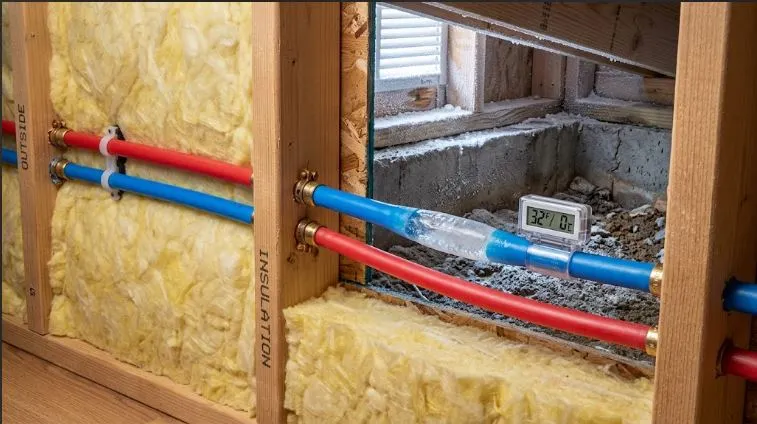
PEX-A is not freeze-proof. It tolerates the expansion that happens when water freezes inside the tubing better than rigid materials like copper or CPVC, since the tubing wall can flex slightly rather than splitting immediately. That’s a real advantage, but it isn’t the same as being immune to freeze damage.
Fittings and connections can still fail from freeze pressure. Repeated freeze-thaw cycles can weaken tubing and joints over time even if nothing bursts on the first occurrence. Insulating exposed lines and taking normal freeze-protection precautions still matters, regardless of what tubing type is installed.
How Long Does PEX-A Last?
Manufacturers generally design PEX-A products for decades of service life, but the actual number depends on several variables working together: installation quality, water chemistry (particularly chlorine levels), operating temperature and pressure, UV exposure during storage or installation, and how closely the installation followed the manufacturer’s requirements.
Rather than quoting a guaranteed lifespan, it’s more accurate to say that a properly installed, code-compliant PEX-A system operating within its rated conditions is built for long-term residential use — and that the manufacturer’s own specifications for that specific product are the best source for expected performance.
Is PEX-A Better Than PEX-B?
Neither one is universally “better” — they’re suited to different priorities.
PEX-A may be preferable when:
- Maximum flexibility matters for a tight or complex layout
- Tight bends are needed without extra fittings
- You want to use expansion fittings
- The routing is difficult, with lots of obstacles in framing
- Kink-repair capability (on approved products) is a useful safety net
PEX-B may be preferable when:
- Keeping initial material costs down is a priority
- You or your installer already have crimp or cinch tools and experience
- The project doesn’t need PEX-A’s extra flexibility to get the job done
For a full breakdown of the differences, PlumbJournal’s dedicated PEX-A vs PEX-B guide goes deeper than this article needs to.
Is PEX-A Worth the Extra Cost?
Tubing price is only part of the equation. PEX-A material typically costs more per foot than PEX-B, and expansion tools carry a real upfront investment compared with a basic crimp tool. But material cost isn’t the same as total installed cost.
On a complicated layout with lots of tight turns, PEX-A’s flexibility can mean fewer fittings and faster routing, which can offset some of that higher material price through reduced labor time. On a straightforward, mostly-straight-run job, that advantage shrinks, and a lower-cost PEX-B setup with familiar crimp tools may make more practical sense.
There’s no universal answer here — it comes down to the specific project, the installer’s existing tools and experience, and how much the layout actually benefits from extra flexibility.
How to Identify PEX-A Tubing
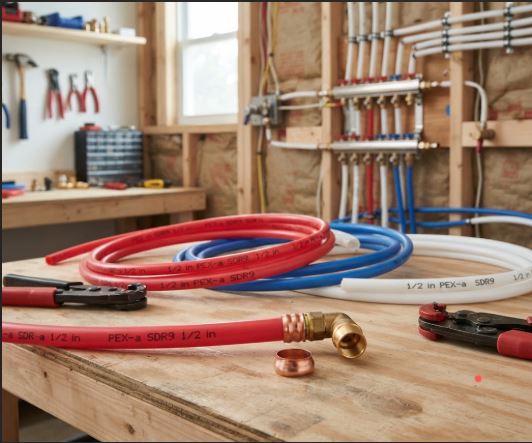
The reliable way to identify PEX-A is to read the print line running along the tubing itself. That printed information typically includes the manufacturer, the PEX classification, the relevant ASTM standards, and any potable-water or other certifications the product carries. Manufacturer documentation and product packaging back this up with the full technical specifications.
What doesn’t reliably tell you the tubing type: color. Red and blue commonly indicate hot and cold water lines, but color coding is not a standardized way to identify PEX-A versus PEX-B versus PEX-C — plenty of PEX-B products come in red and blue too. The same goes for how the tubing feels in your hand; flexibility can vary by brand, diameter, and temperature, so it’s not a dependable identification method either. Read the print line.
Final Verdict: When Should You Choose PEX-A?
PEX-A earns its place when flexibility, tight-bend routing, and expansion connections actually solve a problem on your project — a tricky repipe through existing framing, a radiant heating layout with lots of curves, or a home-run system where fewer fittings genuinely simplifies the install.
It’s not automatically the right call for every job. The better question isn’t “which PEX is best” but which product fits your application, local code requirements, pressure and temperature needs, preferred installation method, and budget. Check the manufacturer’s specifications for whatever product you’re considering, confirm it’s approved for your intended use, and let those details — not the letter grade — make the decision.