Why Is PEX Plumbing Bad? 9 Problems, Risks & When to Avoid It
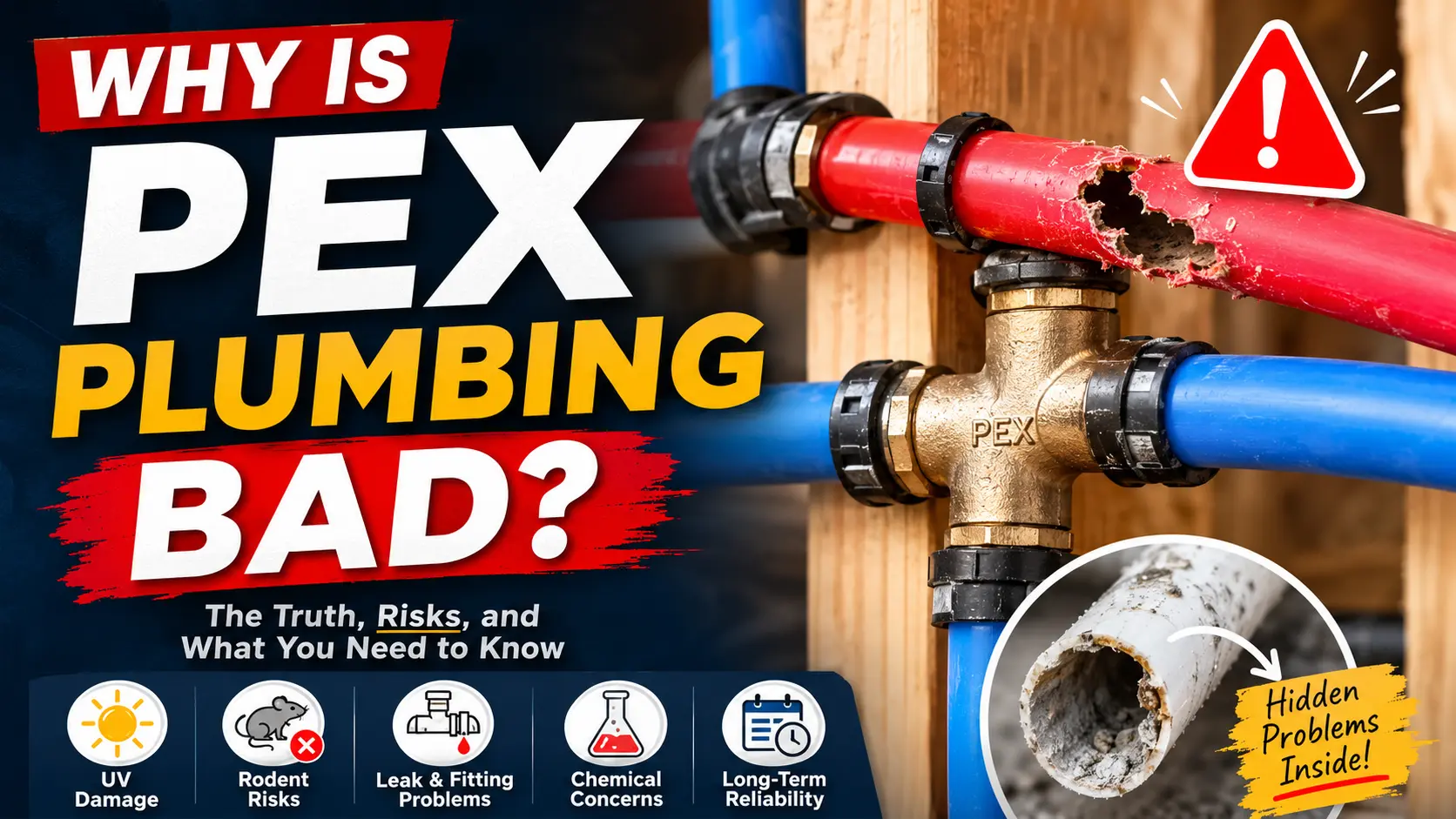
PEX plumbing is not inherently bad. It is a widely used material for hot- and cold-water plumbing in homes and other buildings. However, PEX does have limitations. UV exposure, certain chemicals, physical damage, poor installation, and fitting problems can all cause issues.
So, why is PEX plumbing bad? The better answer is that PEX can be a poor choice in certain conditions. A properly selected and installed PEX system can work well for many residential plumbing applications.
This guide explains the real disadvantages of PEX, common PEX plumbing problems, drinking-water concerns, and when you may want to choose another material.
PEX plumbing is not inherently bad. It is widely used for residential hot- and cold-water systems, but it has limitations. UV exposure, certain chemicals, physical damage, rodents, fitting problems, and poor installation can cause PEX plumbing issues.
The key question is not simply whether PEX is “good” or “bad.” It is whether the specific PEX product is appropriate for the application and has been installed correctly.
What Is PEX Plumbing?
PEX stands for cross-linked polyethylene. It is a flexible plastic tubing material commonly used for hot- and cold-water distribution.
Unlike rigid copper pipe, PEX can bend around many obstacles. This can reduce the number of connections needed in some installations and make installation easier in tight spaces.
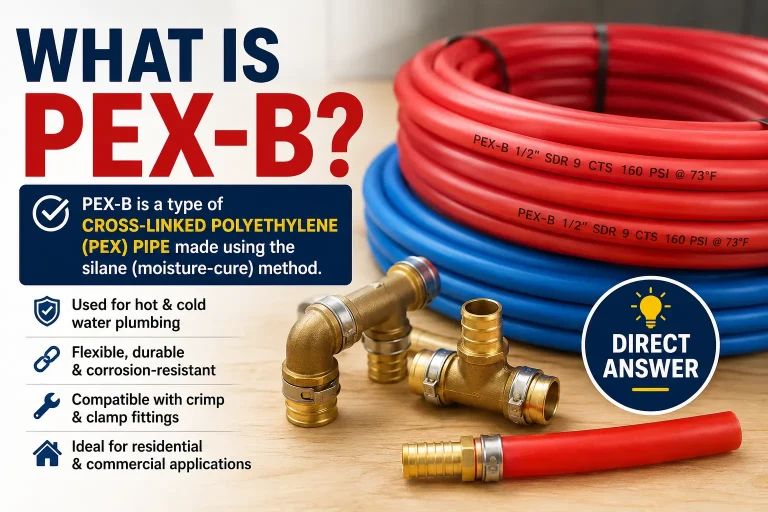
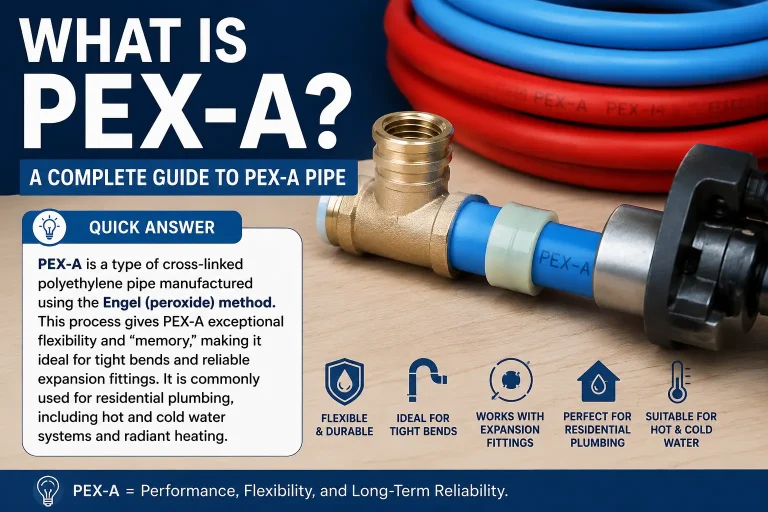
PEX is also available in different forms, including PEX-A, PEX-B, and PEX-C. These designations refer to different manufacturing processes and can affect the tubing’s flexibility and the connection methods used with it.
The important point is that PEX is not one identical product. Tubing, fittings, connection systems, manufacturer specifications, and installation conditions all matter.
Is PEX Plumbing Actually Bad?
No. PEX plumbing is not inherently bad.
PEX is used extensively for residential water-supply systems. The material has several advantages, including flexibility, relatively simple installation, and resistance to many forms of corrosion that can affect metal piping.
However, PEX is not perfect.
It can be damaged by prolonged UV exposure. Certain chemical environments can also create problems. Rodents can damage exposed tubing, and poor connections can lead to leaks.
There are also older PEX-related problems that can cause confusion. A failure involving an old fitting or a specific product does not mean that every modern PEX system has the same problem.
For that reason, it is better to ask:
Is PEX appropriate for this particular plumbing application?
rather than simply asking whether PEX is good or bad.
Why Does PEX Have a Bad Reputation?
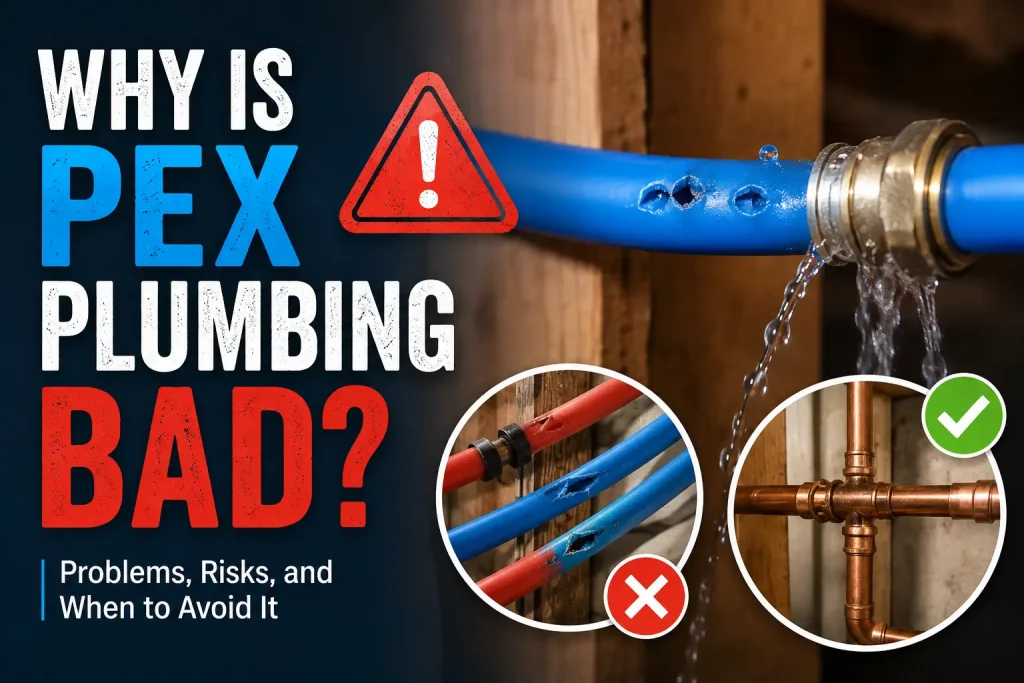
PEX has developed a mixed reputation for several reasons.
Some concerns are based on genuine limitations. Others come from installation mistakes, historical products, or claims that lack important context.
Common concerns include:
- UV damage
- chlorine and oxidation
- fitting failures
- chemical permeation
- rodent damage
- drinking-water concerns
- improper installation
- temperature limitations
- difficulty recycling cross-linked plastic
Another source of confusion is the difference between PEX tubing and PEX fittings.
A leak at a PEX connection does not necessarily mean that the tubing itself failed. The fitting, connection method, installation, or surrounding conditions may be responsible.
That distinction is important when evaluating an existing plumbing system.
What Are the Main Problems With PEX Plumbing?
PEX Plumbing Problems at a Glance
| Potential problem | How serious is it? | What matters most? |
|---|---|---|
| UV exposure | Real limitation | Duration and manufacturer exposure limits |
| Chlorine and oxidation | Condition-dependent | Water chemistry, temperature, product formulation and certification |
| Fitting leaks | Real possibility | Fitting quality and installation |
| Rodent damage | Real possibility | Whether tubing is exposed or accessible |
| Chemical permeation | Site-specific | Known chemical contamination around the pipe |
| Poor installation | Important | Connections, routing, support and manufacturer instructions |
| Drinking-water concerns | Product-dependent | Use of appropriately certified potable-water products |
1. PEX Can Be Damaged by UV Light
One of the clearest limitations of PEX is its sensitivity to ultraviolet radiation.
Direct sunlight can degrade PEX tubing over time. This is why PEX should not be treated like copper pipe when it comes to long-term outdoor exposure.
The concern can arise during construction, too. Tubing may sit outside on a job site before it is installed. The manufacturer’s instructions determine how much UV exposure is permitted for a particular product.
Once installed, PEX is generally intended to be protected from prolonged direct sunlight.
Can PEX Be Used Outdoors?
PEX may be suitable for some applications involving outdoor plumbing, but you should not assume that ordinary PEX tubing can simply be left exposed to sunlight.
Check the tubing’s markings and manufacturer instructions before using it in an exposed location.
If PEX has been exposed to sunlight for an unknown or excessive period, have the affected tubing evaluated rather than assuming it is still in perfect condition.
2. Chlorine and High Water Temperatures Can Affect PEX
Another common concern is chlorine.
PEX can be affected by oxidative conditions involving disinfectants such as chlorine. Temperature also matters because higher temperatures can accelerate some degradation processes.
However, the statement “chlorine destroys PEX” is too broad.
PEX products can be tested for chlorine resistance, and current certified products exist that meet applicable chlorine-resistance requirements. NSF listings, for example, identify PEX products that meet chlorine-resistance requirements under relevant ASTM testing. (NSF)
The actual performance depends on factors such as:
- the specific PEX formulation
- temperature
- disinfectant concentration
- exposure time
- water chemistry
- manufacturer specifications
Therefore, you should evaluate the specific product rather than assuming every PEX pipe behaves exactly the same way.
Does Chlorine Damage PEX?
Chlorine can contribute to degradation under certain conditions, but that does not mean normal chlorinated tap water automatically makes PEX unsafe or causes rapid failure.
Product specifications and certification matter.
3. PEX Fittings and Connections Can Fail
A PEX plumbing system contains more than tubing.
It also includes:
- fittings
- valves
- connection rings
- clamps
- manifolds
- adapters
- transitions to other pipe materials
A failure at one of these components can cause a leak.
For example, a connection may fail because of improper installation, incorrect insertion, damaged tubing, an incompatible component, or a problem with the fitting.
This is why it is inaccurate to treat every PEX leak as a failure of the plastic tubing itself.
Can PEX Fittings Leak?
Yes. Like other plumbing connections, PEX fittings can leak.
The risk depends heavily on the connection system and installation quality.
When investigating a leak, inspect both the tubing and the connection rather than assuming that replacing the entire PEX system is necessary.
4. PEX Can Be Vulnerable to Rodent Damage
PEX is flexible and relatively soft compared with metal pipe.
That can make exposed tubing more vulnerable to physical damage from rodents.
Rats and mice may chew plumbing in accessible areas such as:
- crawl spaces
- attics
- basements
- utility areas
- unfinished walls
- mechanical rooms
Can Rats or Mice Chew Through PEX?
Yes. Rodents can damage PEX tubing.
However, this does not mean that every home with PEX needs to be repiped.
The better approach is to identify where the tubing is exposed, protect vulnerable sections, repair damaged tubing, and address the rodent problem.
If rodents repeatedly access the plumbing, the surrounding environment needs attention as well.
5. PEX Has Limits in Certain Chemical Environments
Chemical exposure is a more specialized PEX concern that homeowners may not know about.
Certain chemicals outside the pipe can interact with polymer tubing. In some contaminated environments, chemicals can permeate through the tubing wall and affect the water inside.
This can be particularly important when plumbing is installed through or near contaminated soil.
Potential concerns can include:
- petroleum products
- gasoline
- fuel oil
- solvents
- industrial chemicals
- contaminated soil
Can Chemicals Penetrate PEX Pipe?
Certain chemicals can permeate some plastic piping materials under specific conditions.
This does not mean ordinary household soil will cause a problem.
The issue is more relevant to known or suspected chemical contamination. If a property has a history of fuel spills, industrial activity, or contaminated soil, the pipe material should be selected with that environment in mind.
6. PEX Can Have Problems When It Is Installed Incorrectly
PEX is easier to work with than some rigid piping materials, but that does not make installation mistakes harmless.
Common problems include:
- improper connections
- excessive bending
- kinking
- inadequate support
- physical damage
- incorrect fitting installation
- incompatible components
- failure to follow manufacturer instructions
- improper routing
A plumbing system can fail because it was installed incorrectly even when the underlying material is suitable.
This is an important distinction:
A PEX plumbing failure does not automatically mean PEX itself is defective.
The tubing, fittings, installation method, and environment all need to be considered.
7. PEX Has Temperature and Application Limits
PEX is commonly used for hot- and cold-water plumbing, but every PEX product has application and temperature limits.
Do not assume that all PEX tubing has the same ratings.
The appropriate temperature and pressure limits depend on the product, standard, and intended application.
This matters particularly around:
- water heaters
- hot-water distribution
- high-temperature systems
- unusual industrial applications
Always follow the manufacturer’s installation instructions and the requirements of the applicable plumbing code.
8. PEX Can Be Damaged by Physical Impact
PEX is flexible, but it is not indestructible.
Tubing can be damaged by:
- nails
- screws
- sharp edges
- construction work
- excessive bending
- abrasion
- crushing
- accidental impact
This is especially important when PEX runs through areas where future construction or maintenance work could damage it.
Proper routing and protection can reduce the risk.
If you discover a damaged section, don’t simply cover it and forget about it. A damaged pipe can eventually become a leak.
9. PEX Is More Difficult to Recycle Than Copper
PEX vs. Copper: Quick Comparison
| Factor | PEX | Copper |
|---|---|---|
| Flexibility | Very flexible | Rigid |
| Installation | Generally easier | Usually more labor-intensive |
| UV resistance | Limited | Excellent |
| Rodent resistance | Lower | Higher |
| Corrosion | Does not rust like steel | Can corrode under certain water conditions |
| Outdoor exposure | Requires appropriate protection | Generally better suited |
| Recycling | More difficult | Highly recyclable |
| Best fit | Flexible residential installations | Rigid or exposed applications |
Note: Neither material is universally better. The appropriate choice depends on the application, installation conditions, product specifications and local plumbing requirements.
Another disadvantage is related to the material itself.
PEX is a cross-linked polymer. Cross-linking gives the material useful performance characteristics, but it also makes conventional recycling more difficult than recycling metals such as copper.
Copper has an established scrap and recycling market.
PEX does not have the same level of straightforward end-of-life recycling.
For most homeowners, this is not a reason to reject PEX by itself. However, it is a legitimate environmental consideration when comparing plumbing materials.
Is PEX Safe for Drinking Water?
This is one of the most common concerns about PEX.
Certified PEX products can be used for potable-water applications.
The important word is certified.
NSF explains that NSF/ANSI/CAN 61 evaluates drinking-water system components for potential chemical extraction into drinking water. The standard establishes health-based requirements for contaminants that may be introduced by plumbing products.
Current NSF listings also include PEX tubing and fittings certified for potable-water applications.
So the question should not simply be:
“Is PEX plastic?”
Instead ask:
Is the specific PEX product certified and approved for the intended drinking-water application?
Does PEX Leach Chemicals Into Water?
Like many materials that come into contact with drinking water, PEX can potentially release very small amounts of substances into water.
That fact alone does not mean the water is unsafe.
NSF explains that testing evaluates potential contaminants and compares them with allowable health-based levels.
If you are concerned about a particular PEX system, check the product markings and certification rather than relying on a general claim that all PEX is toxic.
How Can You Check Whether PEX Is Certified for Potable Water?
Look at the markings printed on the tubing.
NSF explains that PEX meeting relevant health-effect requirements may carry markings such as NSF-61 or NSF-pw, depending on the certification.
You can also verify products through the NSF certification listings.
Are Old PEX Plumbing Problems Still Relevant Today?
This is where homeowners can easily become confused.
Not every PEX problem discussed online applies equally to every PEX installation.
Some older plumbing systems, products, or fitting designs have a history that should be considered separately from modern products.
For an older home, identify:
- the tubing manufacturer
- tubing type
- installation date
- fitting system
- visible condition
- history of leaks
- any known product-specific issue
What About Historical PEX Fitting Problems?
Some older PEX systems used fittings or components that later became associated with reliability concerns.
That history is worth understanding, but it should not be used to claim that all modern PEX plumbing is defective.
The correct approach is to identify the actual product and components installed in the home.
What About Kitec?
Kitec is another source of confusion in discussions about plastic plumbing.
Homeowners sometimes group every plastic or flexible plumbing system under “PEX.” That is not technically accurate.
If an older home has questionable tubing, identify the actual product before deciding whether replacement is necessary.
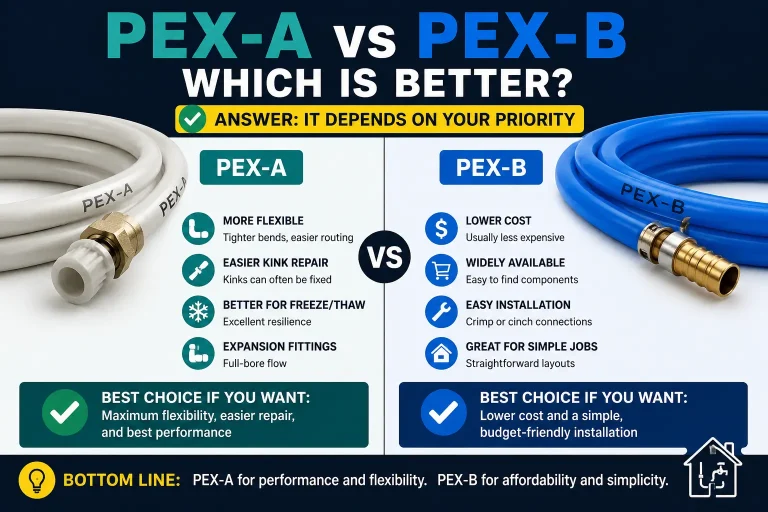
PEX-A vs. PEX-B vs. PEX-C: Does the Type Matter?
Yes, the type can matter.
PEX-A, PEX-B, and PEX-C refer to different manufacturing methods.
They can differ in:
- flexibility
- shape recovery
- connection systems
- installation methods
- manufacturer requirements
- product characteristics
However, PEX-A is not automatically better for every application, and PEX-B is not automatically bad.
The specific product and connection system matter more than simply choosing a letter.
When comparing PEX products, look at their certifications, specifications, intended application, and installation requirements.
PEX vs. Copper: Which Is Better?
There is no universal winner.
The right material depends on the home’s conditions and the goals of the plumbing project.
| Factor | PEX | Copper |
|---|---|---|
| Flexibility | High | Low |
| Installation | Generally easier | Usually more labor-intensive |
| UV resistance | Limited | Excellent |
| Corrosion | Does not rust like steel | Can corrode under certain water conditions |
| Rodent resistance | Lower | Higher |
| Freeze behavior | Flexible, but not freeze-proof | More vulnerable to burst damage |
| Connections | Crimp, clamp, expansion, or other approved systems | Solder, press, compression, or other systems |
| Outdoor exposure | Requires appropriate protection | Generally better suited |
| Recycling | More difficult | Highly recyclable |
| Material cost | Often lower | Often higher |
| Repair | Relatively straightforward when properly installed | Depends on the system and access |
When Is Copper Better Than PEX?
Copper can make sense when:
- the pipe will be exposed to sunlight
- rodent resistance is important
- the installation requires a rigid pipe
- long-term recyclability is a priority
- the installer prefers copper
- local conditions favor copper
When Is PEX Better Than Copper?
PEX can be attractive when:
- flexibility is useful
- installation space is limited
- faster installation is desired
- fewer connections can simplify the layout
- corrosion resistance is important
- the application is permitted by local code
The choice should be based on the specific project rather than a blanket claim that one material is always better.
PEX vs. CPVC: Is PEX the Worse Option?
PEX and CPVC are both used for residential water distribution, but they have different characteristics.
PEX is generally more flexible, while CPVC is rigid.
The comparison can involve:
- flexibility
- installation method
- temperature ratings
- fittings
- chemical resistance
- freeze behavior
- local code requirements
- installer preference
If you’re choosing between them, compare the specific products and application rather than assuming one material is always superior.
When Is PEX Plumbing Actually a Bad Choice?
When Should You Think Twice About PEX?
PEX is not automatically a bad choice. However, another plumbing material may make more sense when the installation has one or more of these conditions:
The tubing cannot be adequately protected from direct sunlight.
The plumbing will pass through soil or an environment with known chemical contamination.
Exposed tubing cannot be protected and rodents repeatedly damage the plumbing.
The installer cannot meet the manufacturer’s requirements for routing, connections or support.
The specific product or application does not meet the applicable plumbing requirements.
Bottom line: The problem is usually not “PEX” by itself. The problem is using the wrong product or installation method for the conditions.
PEX can be a poor choice when the installation conditions do not suit the material.
PEX may be a bad choice when:
1. The tubing will have prolonged UV exposure.
Long-term sunlight can damage PEX.
2. The installation environment contains chemical contaminants.
Known petroleum or solvent contamination deserves special consideration.
3. Rodent damage cannot be controlled.
Exposed tubing may be vulnerable to repeated chewing.
4. The product is not certified for the intended potable-water application.
Always verify the specific product.
5. The installation does not follow manufacturer requirements.
Incorrect connections and routing can create avoidable failures.
6. The local plumbing code does not permit the intended application.
Plumbing requirements vary by jurisdiction and adopted code.
7. Another material is clearly better suited to the environment.
For example, an exposed outdoor installation may favor a material with better UV resistance.
The key is that PEX is conditionally appropriate, not universally good or bad.
When Is PEX Actually a Good Choice?
PEX can be a practical choice for many residential plumbing projects.
It can work well for:
- interior hot- and cold-water distribution
- residential repiping
- remodeling projects
- tight spaces
- complex layouts
- applications where flexible tubing is useful
- installations where the product is approved and properly installed
PEX’s flexibility can make routing easier than rigid pipe in some homes.
Its suitability still depends on the product, application, installation, and local requirements.
Should You Replace PEX Plumbing in Your Home?
No. The presence of PEX alone is not a reason to replace your plumbing.
If an existing PEX system is properly installed and functioning normally, replacement may not be necessary simply because the pipes are made from PEX.
Instead, look for actual evidence of a problem.
Signs Your PEX System May Need Attention
Watch for:
- recurring leaks
- damaged tubing
- failed fittings
- visible UV exposure
- rodent chew marks
- cracking or deterioration
- repeated connection failures
- unexplained water-quality concerns
- known problematic products
- evidence of improper installation
If you find one damaged section, that does not automatically mean the entire plumbing system needs replacement.
A qualified plumber can determine whether the problem is isolated or systemic.
When Can You Repair PEX Instead of Replacing It?
A localized problem may be repairable.
For example, a plumber may be able to address:
- a damaged section of tubing
- a leaking fitting
- a faulty connection
- localized rodent damage
- an incorrectly installed component
A complete repipe becomes more reasonable when there are widespread failures, extensive damage, incompatible or problematic components, or a broader installation problem.
The correct solution depends on the condition of the system.
How to Check Whether Your PEX Plumbing Is at Risk
If you are buying a home or evaluating an existing plumbing system, start with these steps.
1. Find the PEX tubing
Look in accessible areas such as the basement, crawlspace, utility room, or mechanical area.
2. Read the markings
The print string can identify the manufacturer, size, standard, and other information.
3. Identify the PEX type
Determine whether the tubing is PEX-A, PEX-B, PEX-C, or another material.
4. Inspect visible tubing
Look for:
- cracks
- cuts
- discoloration
- abrasion
- kinks
- rodent damage
- excessive UV exposure
5. Inspect fittings
Look for corrosion, leaks, damaged connections, or other visible problems.
6. Check for repeated leaks
One isolated leak is different from a system that repeatedly develops failures.
7. Consider the environment
Ask whether the tubing is exposed to:
- sunlight
- rodents
- chemicals
- excessive heat
- physical damage
8. Check the product certification
For potable-water applications, verify that the product is certified for the intended use.
9. Follow manufacturer requirements
If you need to modify or repair the system, identify the correct fittings and connection method.
10. Get professional help when the problem is unclear
A plumber can inspect concealed plumbing and determine whether a repair or larger replacement is justified.
PEX Plumbing Problem Diagnosis
| What you notice | Possible cause | What to check | Possible next step |
|---|---|---|---|
| Leak at a joint | Connection or fitting problem | Fitting and connection | Have the connection repaired or evaluated |
| Chew marks | Rodent damage | Accessible tubing and nearby areas | Repair tubing and address rodent access |
| Visible UV exposure | Sunlight exposure | Exposure duration and tubing condition | Protect or replace affected tubing as appropriate |
| Repeated fitting failures | Component or installation issue | Fitting type and installation method | Professional evaluation may be appropriate |
| Cracked or damaged tubing | Physical or environmental damage | Location and condition of tubing | Repair or replace affected section |
| Unusual taste or odor | Water-quality or material-related issue | Water source and plumbing condition | Investigate and test if persistent |
| Repeated unexplained leaks | Multiple possible causes | Entire accessible system | Arrange a professional plumbing inspection |
Final Verdict:
PEX plumbing is not inherently bad.
It has real limitations, but many of the concerns surrounding PEX depend on the installation and environment.
PEX can also be suitable for potable water when the appropriate certified product is used. NSF explains that NSF/ANSI/CAN 61 evaluates potential chemical extraction from drinking-water system components and establishes health-based requirements for contaminants.
If the tubing is properly selected, approved for the application, correctly installed, and protected from known hazards, PEX can be a practical plumbing material.