What Is PEX Pipe? Types, Uses, Sizes, Colors & More
If you have ever opened a plumbing wall and found a red or blue plastic tube instead of copper, you have probably seen PEX pipe.
PEX stands for cross-linked polyethylene. It is a flexible plastic piping material widely used for hot- and cold-water distribution, and specific PEX products are also made for applications such as hydronic heating.
Unlike rigid pipe, PEX can bend around many corners and often allows longer runs with fewer connections. That makes it practical for new construction, remodeling, and repiping.
But there is more to PEX than its bright colors and ability to bend. The type of PEX, its size, markings, pressure and temperature ratings, certification, and compatible fittings all matter.
Key Takeaways
- PEX stands for cross-linked polyethylene, a flexible plastic material used to manufacture plumbing tubing.
- PEX is widely used for residential hot- and cold-water distribution.
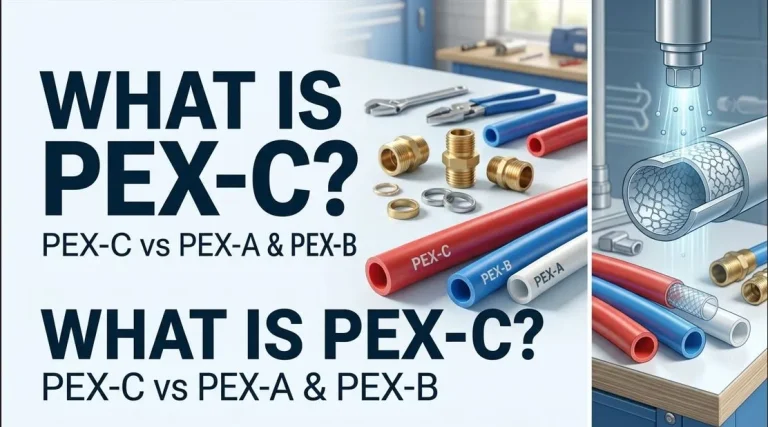
- PEX-A, PEX-B, and PEX-C are different types of PEX based primarily on their manufacturing and cross-linking methods.
- Common PEX colors include red, blue, and white, but color is mainly a visual identification aid and does not by itself determine the pipe’s approved use.
- PEX comes in different nominal sizes, and the correct size depends on factors such as water demand, flow, pressure, pipe length, fittings, and applicable plumbing requirements.
- PEX tubing has printed markings that can provide important information about the manufacturer, size, type, standards, ratings, and certifications.
- For drinking-water applications, use PEX products that are approved or certified for potable water.
- PEX can be used for hot water when the specific product is rated and approved for the intended temperature and application.
- PEX can be connected using systems such as crimp, clamp/cinch, expansion, and approved push-to-connect fittings, depending on the tubing and fitting system.
- PEX is flexible and easier to route than many rigid pipe materials, but it still has limitations, including UV exposure, installation requirements, fitting compatibility, and product-specific temperature and pressure ratings.
- PEX can freeze and may be damaged by freezing water, even though its flexibility can allow it to tolerate some expansion better than rigid piping.
- There is no single universal lifespan number for every PEX installation. Service life depends on the product, application, installation, operating conditions, and exposure.
What Is PEX Pipe?
PEX pipe is a cross-linked polyethylene piping material used primarily for water distribution and other approved plumbing or heating applications.
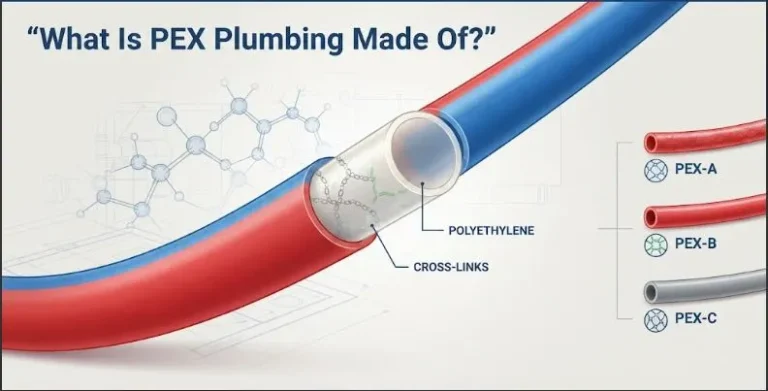
The word “cross-linked” describes a change in the molecular structure of polyethylene. The cross-linking process connects polymer chains, giving the finished material properties that make it suitable for demanding plumbing applications.
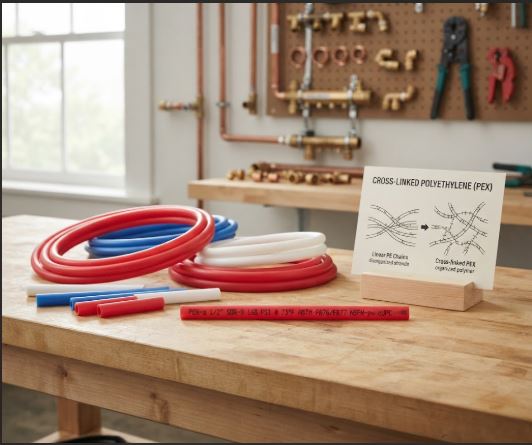
PEX is commonly sold as flexible tubing in coils or straight lengths. Its flexibility allows installers to route it through walls, floors, and other spaces without using an elbow at every turn.
That does not mean PEX can be installed however you like. The tubing still has specific installation requirements, temperature and pressure limits, fitting compatibility, and application approvals.
Current NSF certification listings include PEX products manufactured to standards such as ASTM F876 and ASTM F877, with certified products available in multiple sizes and colors.
What Does PEX Stand For?
PEX stands for cross-linked polyethylene.
The name can be understood simply:
- PE = polyethylene
- X = cross-linked
- PEX = cross-linked polyethylene
Polyethylene itself is a common plastic material. Cross-linking changes how the polymer chains interact, producing a material with the flexibility, strength, and temperature resistance needed for many plumbing applications.
PEX is therefore not simply ordinary polyethylene tubing with a different name. The cross-linking process is an important part of what gives PEX its useful performance characteristics.
What Is PEX Pipe Made Of?
PEX is made from polyethylene, a plastic polymer that has been cross-linked during manufacturing.
Manufacturers use different processes to create the three main PEX classifications:
- PEX-A uses the peroxide or Engel method.
- PEX-B uses the silane or moisture-cure method.
- PEX-C uses an irradiation method.
These manufacturing methods produce tubing with different physical characteristics. For example, PEX-A is generally known for greater flexibility and elastic memory, while PEX-B is typically stiffer.
The manufacturing method does not mean that one type is automatically suitable for every plumbing job. The product’s markings, certification, application rating, manufacturer instructions, and applicable plumbing requirements still determine where it can be used.
How Is PEX Pipe Made?
PEX starts with polyethylene resin. During manufacturing, the polyethylene undergoes a cross-linking process that connects polymer chains within the material.
The three common manufacturing approaches are generally identified as:
PEX-A
PEX-A uses the peroxide, or Engel, method. It is known for high flexibility and strong elastic memory.
That elastic memory is particularly useful with expansion-style connection systems because the tubing can expand and then contract around a fitting.
PEX-B
PEX-B uses the silane or moisture-cure method. It is generally stiffer than PEX-A and is widely used in residential plumbing.
PEX-B can be used with several fitting systems when the tubing and fittings are specifically approved for that connection method.
PEX-C
PEX-C uses an irradiation process to cross-link the polyethylene.
It is generally stiffer than PEX-A and PEX-B and is another established form of PEX tubing.
The important takeaway is simple: PEX-A, PEX-B, and PEX-C describe manufacturing methods, not pipe sizes.
What Is PEX Pipe Used For?
PEX has several approved applications, but its most familiar use in American homes is hot- and cold-water distribution.
Depending on the specific product, PEX may also be used for:
- Residential water-supply piping
- Commercial water-supply systems
- Hot-water distribution
- Cold-water distribution
- Hydronic heating
- Radiant floor heating
- Other manufacturer-approved applications
NSF’s current certification listings show PEX products accepted for residential and commercial construction, with separate listings covering potable-water and radiant-heating applications.
The key phrase here is specific product. Not every piece of PEX tubing is automatically approved for every possible use.
For example, oxygen-barrier PEX is designed for particular hydronic heating applications and should not be treated as interchangeable with ordinary potable-water PEX simply because both products are made from cross-linked polyethylene.
PEX Pipe Sizes
PEX is available in a range of nominal sizes.
Common residential sizes include:
| PEX size | Common role |
|---|---|
| 3/8 inch | Smaller branch or fixture applications |
| 1/2 inch | Individual fixtures and branch lines |
| 3/4 inch | Larger branches and distribution lines |
| 1 inch | Larger residential supply and distribution |
| 1-1/4 inch and larger | Higher-demand or larger systems |
These are general applications, not universal sizing rules.
The correct PEX size depends on factors such as required flow, available water pressure, developed length, fixture demand, fittings, and the applicable plumbing code.
For example, choosing 1/2-inch PEX simply because a fixture has a 1/2-inch connection does not automatically mean the entire supply run should be 1/2 inch.
Current NSF listings show certified PEX tubing in sizes ranging from smaller residential sizes to substantially larger tubing, depending on the product.
What Do Red, Blue and White PEX Mean?
The color of PEX usually helps installers identify a line’s intended service.
A common convention is:
- Red PEX: hot-water line
- Blue PEX: cold-water line
- White PEX: can be used for either hot or cold water when the product is approved for that application
But here is an important detail:
The color itself does not determine the tubing’s performance rating.
In other words, red PEX is not magically more heat-resistant because it is red.
Manufacturers can produce PEX in different colors, and current NSF listings include certified red, blue, white, and other configurations depending on the product.
Always check the printing on the tubing and the manufacturer’s specifications rather than relying on color alone.
What Do the Markings on PEX Pipe Mean?
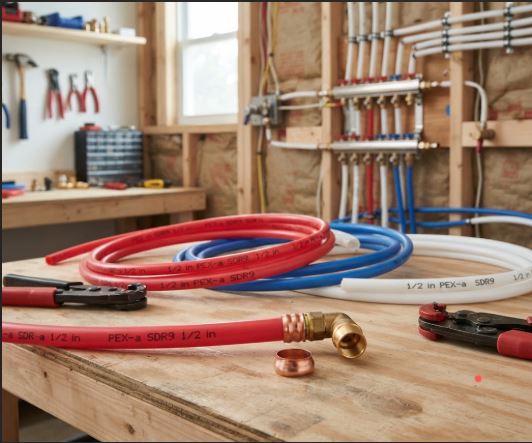
If you already have PEX installed in your house, the printing along the tubing can tell you much more than its color can.
Depending on the product, markings may identify information such as:
- Manufacturer or brand
- Nominal tubing size
- PEX type
- Applicable product standard
- Pressure and temperature information
- Certification marks
- Recommended fitting-system designations
This information matters when replacing or extending an existing PEX system.
For example, NSF certification records show PEX tubing associated with standards including ASTM F876/F877 and fitting-system designations such as ASTM F1807, ASTM F1960, ASTM F2159, and ASTM F2098, depending on the product.
So if you are standing in a basement staring at a mysterious piece of plastic tubing, don’t play plumbing detective based on color alone. Read the print string.
Is PEX Safe for Drinking Water?
PEX can be used for drinking-water systems when the specific product is certified and approved for potable-water use and installed according to applicable requirements.
This distinction is important.
NSF explains that potable-water piping products, including PEX tubing and fittings, are subject to health-effects requirements such as NSF/ANSI/CAN 61 under North American plumbing requirements. The standard addresses substances that can potentially migrate from a product into drinking water.
NSF’s current certification database also lists PEX products certified for potable-water applications and identifies applicable standards and certification information.
When buying PEX for drinking-water plumbing, look for the appropriate certification and product markings instead of assuming that every PEX product has the same approval.
Can PEX Be Used for Hot Water?
Yes. PEX is commonly used for hot-water distribution when the specific tubing is rated and approved for that application.
The important part is the product’s temperature and pressure rating.
Do not assume that every PEX product has identical limits. Manufacturers publish ratings for their specific tubing, and those ratings should be followed along with applicable plumbing requirements.
For example, manufacturer documentation can specify different allowable pressure values at different temperatures. That is why a generic statement such as “PEX can handle X degrees” can be misleading when it is presented without identifying the product and application.
How Is PEX Pipe Connected?
PEX can be connected using several fitting systems.
Common approaches include:
- Crimp fittings
- Clamp or cinch fittings
- Expansion fittings
- Push-to-connect fittings
- Other approved connection systems
The important rule is:
PEX fittings and connection methods are not automatically interchangeable.
The tubing and fitting system must be compatible.
For example, ASTM standards referenced in current certification information include different fitting systems such as ASTM F1807 and ASTM F1960.
This is also why an installer should follow the tubing and fitting manufacturer’s instructions rather than assuming that any PEX fitting will work with any PEX tubing.
If you are learning how to make a specific connection, see our detailed guide on how to crimp PEX for the step-by-step process.
PEX Pipe vs. Copper, CPVC and PVC
PEX is only one of several piping materials used in residential plumbing.
| Feature | PEX | Copper | CPVC | PVC |
|---|---|---|---|---|
| Flexible | Yes | No | No | No |
| Common water-supply use | Yes | Yes | Yes | Application-dependent |
| Corrosion resistance | High | Can corrode under certain conditions | High | High |
| Can make long flexible runs | Yes | No | No | No |
| Common connection methods | Crimp, clamp, expansion and others | Solder, press, compression and others | Solvent cement | Solvent cement |
| Hot-water use | When rated | Yes | When rated | Product/application dependent |
There is no single pipe material that makes every plumbing project easier.
PEX’s major practical advantage is its flexibility. Copper offers long-established performance and different connection options. CPVC and PVC have their own applications and installation requirements.
The right choice depends on the system, local requirements, product ratings, installation conditions, and the project itself.
Advantages of PEX Pipe
PEX has several characteristics that explain its popularity in residential plumbing.
Flexibility
PEX can bend around many obstacles and often requires fewer directional fittings than rigid pipe.
Fewer connections
Long flexible runs can reduce the number of joints needed in certain layouts.
Fewer connections can also mean fewer potential connection points to inspect.
Corrosion resistance
PEX does not rust like steel and does not develop copper corrosion in the same way copper piping can.
Easier handling
A coil of PEX is lightweight and easier to carry around a construction site than long rigid lengths of metal pipe.
Suitable for many remodeling projects
Its flexibility can make it useful when routing new supply lines through existing structures.
These advantages do not eliminate the need for proper design and installation. Flexible does not mean foolproof.
What Are the Disadvantages of PEX Pipe?
PEX also has limitations.
UV exposure
PEX should not be exposed to sunlight beyond the exposure limits specified by the manufacturer.
Ultraviolet radiation can degrade the material over time. This is why PEX stored outdoors or installed where it receives prolonged sunlight can be a problem.
It still requires compatible fittings
The pipe itself may be flexible, but the connection system still needs to be selected and installed correctly.
Not every PEX product has the same approval
A product designed for one application should not automatically be assumed suitable for another.
It can be damaged
PEX is durable, but sharp objects, improper installation, excessive bending, heat sources, and other site conditions can damage tubing.
It is not suitable for every plumbing application
PEX is primarily associated with water distribution and approved heating applications. It is not a universal replacement for every type of pipe.
Can PEX Pipe Freeze?
PEX has greater flexibility than many rigid plumbing materials and can expand when water inside it freezes.
That gives PEX some resistance to freeze-related damage.
But PEX is not freeze-proof.
A frozen plumbing system can still cause problems, particularly at fittings and other components that may not tolerate the same movement as the tubing.
PEX should therefore still be protected from freezing according to the applicable installation requirements.
Can PEX Be Used Outdoors?
PEX should not be exposed to prolonged sunlight unless the particular product is specifically designed and rated for that exposure.
The problem is ultraviolet radiation.
If PEX is being installed outdoors, underground, or in another unusual location, check the manufacturer’s instructions and the applicable plumbing requirements for that specific product.
Do not assume that burying ordinary indoor PEX automatically makes every outdoor installation acceptable.
How Long Does PEX Pipe Last?
PEX is designed for long-term plumbing service, but there is no single lifespan number that applies to every PEX product and installation.
Service life depends on factors such as:
- Product quality
- Water conditions
- Temperature
- Pressure
- UV exposure
- Installation quality
- Chemical exposure
- Compatibility of fittings and materials
A better approach than promising a specific number of years is to choose a properly certified product, install it within its rated conditions, and follow the manufacturer’s requirements.
Can PEX Connect to Copper?
Yes. PEX can be connected to copper using appropriate transition fittings.
This makes PEX useful when replacing or repairing only part of an existing plumbing system.
For example, a homeowner may have copper supply piping in one part of the house and PEX in another.
The transition must use a fitting and connection method approved for the specific materials involved. Never assume that two pipes can be joined simply because their nominal sizes look similar.
How Can You Identify PEX Pipe in Your Home?
If you are unsure whether an existing line is PEX, start with these clues:
- Look at the material. PEX is flexible plastic tubing rather than rigid metal.
- Check the color. Red, blue, white and other colors are common.
- Read the print string. Look for the manufacturer, size, standards and certification information.
- Check the fittings. The connection system can provide another clue.
- Look for product markings. Standards and certification marks can help identify what the tubing was designed and approved for.
The print string is usually much more useful than simply saying, “It looks like PEX.”
PEX Pipe vs. PEX Tubing: Is There a Difference?
You will see both PEX pipe and PEX tubing used when people talk about the material.
In everyday plumbing conversations, the terms are often used interchangeably.
Manufacturers and standards may use more specific terminology depending on the product, application, and size. NSF certification records, for example, separately identify products under pipe and tubing categories.
For a homeowner searching for information, “PEX pipe” and “PEX tubing” generally point to the same broad family of cross-linked polyethylene products.
The Bottom Line
PEX pipe is cross-linked polyethylene tubing used for approved plumbing and heating applications, especially hot- and cold-water distribution.
Its flexibility makes it easier to route than many rigid piping materials, while its resistance to corrosion and practical connection options have made it common in residential plumbing.
But PEX is not simply “red or blue plastic pipe.”
The PEX type, size, markings, certification, temperature and pressure rating, application, and fitting system all matter.
If you are buying or replacing PEX, check the print on the tubing and the manufacturer’s documentation. That small line of text running along the pipe can tell you far more than its color ever will.