Does PEX Pipe Freeze? What Happens in Cold Weather and How to Prevent It
Yes, PEX pipe can freeze. The water inside PEX can freeze when temperatures reach the normal freezing point of water, around 32°F (0°C). However, PEX handles freezing better than many rigid plumbing materials because its flexible tubing can expand as the water freezes.
That does not make PEX freeze-proof.
PEX is considered freeze-damage resistant, not immune to freezing. The Plastic Pipe Institute notes that water inside PEX can freeze and thaw under many circumstances without damaging the tubing, but it also recommends protecting PEX plumbing systems from freezing.
So, if you are wondering whether your PEX plumbing is safe during a cold snap, the short answer is: PEX gives you more protection against freeze damage, but you still need to protect it from freezing temperatures.
Does PEX Pipe Freeze?
Yes, the water inside PEX can freeze. PEX itself is highly resistant to freeze damage because its flexible tubing can accommodate some expansion, but it is not freeze-proof and its fittings and connections can still be damaged.
When the temperature around a water-filled PEX pipe drops low enough for long enough, the water inside the tubing can turn to ice. The important difference is what happens next.
Water expands as it freezes. A rigid pipe may have little room to accommodate that expansion. PEX is flexible, so the tubing can expand with the freezing water and then contract again as the ice melts.
SharkBite describes PEX as freeze-damage resistant because the tubing can expand when frozen and return toward its original shape after thawing. It also makes an important point: PEX is not freeze-proof.
Think of PEX as the plumbing equivalent of a stretchable winter jacket. It gives you more room for movement, but you would still rather not spend the night outside in a blizzard.
At What Temperature Does PEX Pipe Freeze?
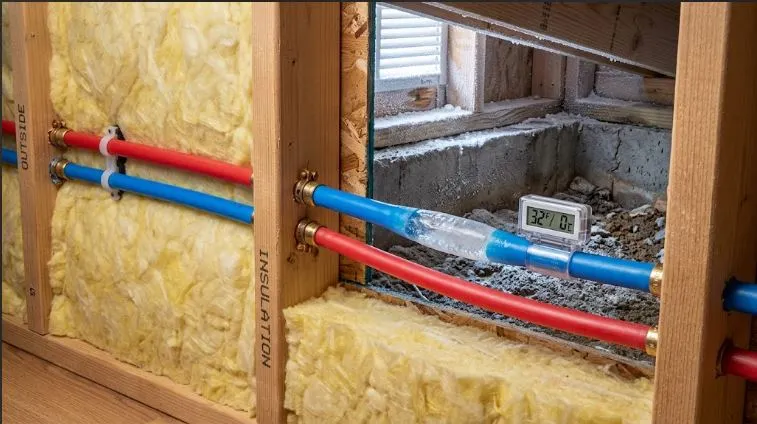
The water inside a PEX pipe freezes at approximately 32°F (0°C) under normal conditions.
This is an important distinction because you may see claims that “PEX freezes at 20°F.” That wording can be misleading.
20°F is not the freezing point of PEX or water. Water freezes at about 32°F. The actual risk of a particular PEX line freezing depends on how cold the surrounding area gets and how long the pipe remains exposed to those conditions.
Several factors affect how quickly a PEX water line can freeze, including:
- Surrounding air temperature
- Length of cold exposure
- Pipe location
- Insulation
- Water temperature
- Air movement around the pipe
- Whether the pipe runs through a heated or unheated area
- Whether the plumbing sits against an exterior wall
A PEX line inside a heated interior wall is in a very different situation from one sitting in an unheated crawl space.
That is why there is no single temperature that tells you exactly when every PEX pipe will freeze.
Does PEX Burst When It Freezes?
PEX is much less likely to suffer freeze-break damage than rigid plumbing materials because the tubing can expand as ice forms.
The Plastic Pipe Institute identifies freeze-break resistance as one of PEX’s advantages. Its technical material explains that the flexibility and elasticity of PEX can allow water-filled tubing to freeze and thaw without cracking or splitting under many circumstances.
But that does not mean a frozen PEX plumbing system is automatically safe.
Installation conditions matter. The tubing needs enough room to accommodate expansion. Other components in the plumbing system may also behave differently from the PEX tubing itself.
So the better statement is:
PEX is highly resistant to freeze damage, but it can still be damaged by freezing conditions.
That distinction matters when you are deciding whether to leave vulnerable plumbing unprotected during winter.
What Happens to PEX When Water Freezes Inside?
When water freezes, it expands. That expansion places pressure on the pipe and the surrounding plumbing system.
PEX’s flexibility gives the tubing some ability to accommodate that expansion. The tubing can stretch slightly rather than immediately splitting like a rigid material might.
According to the Plastic Pipe Institute, this freeze-break resistance works particularly well when PEX has room to expand evenly along its length, such as when it is installed in walls or ceilings.
After the ice melts, the PEX can return toward its original dimensions.
However, you should not treat that as a reason to intentionally freeze the plumbing. The Plastic Pipe Institute specifically states that PEX plumbing systems should not be intentionally subjected to freezing.
Can PEX Fittings Freeze and Break?
Yes, fittings and connections still deserve attention.
A PEX plumbing system is more than just flexible tubing. It can include fittings, valves, manifolds, adapters and other components.
The tubing may tolerate freezing better than a rigid pipe, but that does not mean every component has identical freeze resistance.
This is one reason you should not assume that a PEX installation is completely protected simply because the tubing itself is flexible.
If a PEX line freezes, inspect the accessible fittings and connections after thawing. Look for:
- Leaking joints
- Cracked components
- Bulging or damaged tubing
- Water around connections
- Sudden pressure changes
- Leaks that appear after the ice melts
A pipe that looks fine while frozen can reveal a problem once water starts moving through it again.
Where Is PEX Most Likely to Freeze?
PEX can freeze anywhere it is exposed to sufficiently cold conditions for long enough.
Some locations deserve extra attention during winter.
Exterior Walls
PEX installed near an exterior wall can face colder conditions than tubing located deeper inside the home’s heated space.
Poor insulation or air leaks can make the problem worse.
Crawl Spaces
An unheated crawl space can become extremely cold during winter. PEX running through this area may need proper insulation and protection.
Garages
Garages often remain much colder than the living areas of a home. Water lines located along exterior walls or in poorly insulated sections deserve particular attention.
Attics
An attic can experience significant temperature swings. Plumbing installed there should receive appropriate protection for the local climate and installation conditions.
Under Sinks
Cabinet spaces against exterior walls can become surprisingly cold. Opening cabinet doors during severe cold can help warm air reach vulnerable plumbing.
How Do You Know if a PEX Pipe Is Frozen?
A frozen PEX line may not always be obvious.
One of the first clues can be little or no water coming from a faucet.
You might also notice:
- Reduced water flow
- No water from a particular fixture
- Frost on an exposed section of tubing
- An unusually cold section of pipe
- A bulge or visible change in the tubing
- Water or leakage after thawing
If only one fixture stops supplying water while the rest of the house works normally, a localized frozen section may be responsible.
Do not immediately assume the pipe has burst. PEX’s freeze resistance means the tubing may survive the event. Still, inspect the plumbing carefully once it thaws.
How to Safely Thaw a Frozen PEX Pipe
If you discover frozen PEX, the goal is gradual, controlled thawing.
The Plastic Pipe Institute lists several methods for accessible frozen PEX tubing, including warm or hot water, warm moist towels, hot air and warming the surrounding area. It also says the tubing temperature should not exceed 180°F (82°C) during hot-air thawing.
A simple approach is:
- Open the affected faucet. This gives melting water somewhere to go.
- Locate the frozen section if it is accessible.
- Apply gentle heat using a hair dryer, warm towel or another method approved for the particular tubing.
- Warm the area gradually rather than trying to melt the ice as quickly as possible.
- Watch for leaks as the ice melts and water pressure returns.
- Inspect the tubing and fittings after thawing.
Never Use an Open Flame to Thaw PEX
This is important.
Do not use a torch, open flame or excessive heat to thaw frozen PEX.
The Plastic Pipe Institute specifically warns against open flames, excessive heat and electric resistance pipe-thawing devices because they can damage plastic pipe and potentially cause property damage or loss of water pressure.
In other words, a frozen pipe is annoying. A frozen pipe plus a blowtorch is how an annoying morning becomes a much bigger problem.
Follow the tubing manufacturer’s instructions whenever you thaw PEX.
How to Prevent PEX Pipes From Freezing
Prevention is better than thawing a frozen pipe at 6 a.m. while wearing two jackets.
Start by identifying vulnerable plumbing before the temperature drops.
Insulate Vulnerable PEX
Insulation slows heat loss from the pipe. Pay particular attention to plumbing located in:
- Crawl spaces
- Garages
- Exterior walls
- Unheated basements
- Attics
- Other cold or drafty areas
SharkBite recommends using standard insulation precautions with PEX even though the material has freeze-damage resistance.
Keep Vulnerable Areas Warm
During severe cold, maintain adequate heat in areas containing plumbing.
If a sink sits against an exterior wall, opening the cabinet doors can help warm household air reach the plumbing.
Seal Cold-Air Leaks
Cold outdoor air entering around openings can rapidly cool nearby plumbing.
Check vulnerable areas around:
- Pipe penetrations
- Exterior walls
- Doors
- Windows
- Crawl-space openings
Protect Exposed Plumbing
PEX should not simply be left exposed to harsh outdoor conditions.
In addition to freezing concerns, UV exposure matters. SharkBite states that its PEX pipe is not approved for continuous UV exposure and should be protected from sunlight.
Always follow the specific manufacturer’s installation requirements for outdoor, buried or exposed applications.
Does PEX-A Freeze Less Than PEX-B?
PEX-A and PEX-B are both forms of cross-linked polyethylene tubing, and neither one is freeze-proof.
The important point is not to choose a particular PEX type on the assumption that it cannot freeze.
PEX’s overall freeze-damage resistance comes from the material’s flexibility and ability to accommodate expansion. Installation conditions also matter.
If you are choosing between PEX-A and PEX-B for a project where freezing is a concern, follow the product manufacturer’s specifications and local plumbing requirements rather than relying on the idea that one type is immune to freezing.
PEX vs. Copper, PVC and CPVC in Freezing Weather
All water-filled plumbing can experience freezing. The major difference is how the material responds.
| Pipe material | Can water inside freeze? | General freeze-damage resistance |
|---|---|---|
| PEX | Yes | High |
| Copper | Yes | Lower than PEX |
| PVC | Yes | Lower than PEX |
| CPVC | Yes | Lower than PEX |
PEX’s flexibility gives it an advantage when freezing occurs. The Plastic Pipe Institute lists freeze-break resistance among the key advantages of PEX tubing.
That does not mean PEX should replace basic freeze protection.
The better way to think about it is simple: PEX gives your plumbing more forgiveness when freezing happens, but prevention remains the goal.
What Should You Do After a Frozen PEX Pipe Thaws?
Do not simply turn on every faucet and walk away.
Check the plumbing while the system returns to normal pressure.
Look around accessible PEX tubing, fittings and valves for signs of leakage. Pay particular attention to joints and areas where water could run behind walls, cabinets or floors.
If you find a leak, shut off the appropriate water supply and arrange for the damaged component to be repaired or replaced.
If the pipe was thawed using an improper method such as an open flame or excessive heat, professional inspection is especially important. The Plastic Pipe Institute warns that incorrectly thawed PEX may suffer altered integrity even when visible damage is not immediately obvious.
So, Does PEX Pipe Freeze?
Yes, PEX pipe can freeze because the water inside it can freeze at around 32°F (0°C). However, PEX is much more resistant to freeze damage than many rigid plumbing materials because its flexible tubing can expand as the water freezes.
Related Post: why PEX plumbing can be bad?