
What Is PEX Pipe Used For?
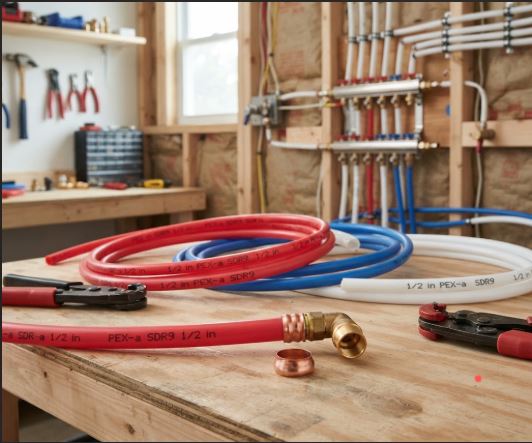
PEX pipe is used for hot and cold water supply lines, home repiping, and certain heating systems. PEX stands for cross-linked polyethylene. It is a flexible plastic tubing used in many residential plumbing systems across the United States.
PEX bends around corners more easily than rigid copper pipe. This can reduce the need for elbows and other fittings. It is also available in different sizes and designs for specific plumbing applications.
However, not every PEX product is suitable for every job. The right choice depends on the pipe’s rating, intended use, installation conditions, and local plumbing code.
PEX Pipe: Key Takeaways
PEX pipe is flexible plastic tubing used in residential water supply systems and certain heating applications. It can make some plumbing installations easier, but the right product must be selected for each job.
- Supplies hot and cold water to household fixtures.
- Works well for many new plumbing and repiping projects.
- Can be used in approved radiant floor heating systems.
- Bends around obstacles and may reduce the need for fittings.
- Needs protection from UV exposure and physical damage.
- Must meet applicable temperature, pressure, and code requirements.
Important: Not every PEX product is approved for every application. Check the manufacturer’s instructions and local plumbing code before installation.
What Is PEX Pipe Used For?
PEX pipe has several common uses in residential plumbing. These include:
- Carrying hot and cold drinking water to household fixtures.
- Supplying water to kitchen sinks, bathroom faucets, showers, and toilets.
- Replacing old water supply pipes during home repiping.
- Installing water lines in new homes and remodeling projects.
- Supplying water to washing machines and other appliances.
- Circulating heated water in radiant floor heating systems.
- Serving certain approved hydronic heating applications.
PEX is popular because it is flexible, relatively easy to install, and available in different sizes. Still, homeowners and plumbers must select tubing that meets the requirements of the intended application.
PEX Pipe Uses at a Glance
PEX can serve several plumbing and heating needs. Use this table to understand where it fits and what to check before choosing it.
| Application | Suitability | What to Check |
|---|---|---|
| Hot water supply | Suitable | Temperature and pressure ratings. |
| Cold drinking water | Suitable | Potable-water approval and compatible fittings. |
| Home repiping | Suitable | Pipe sizing, routing, connections, and local code. |
| Radiant floor heating | Suitable with approved tubing | Heating design and oxygen-barrier requirements. |
| Underground water service | Product dependent | Approval for burial and installation conditions. |
| Exposed outdoor piping | Use caution | UV exposure limits and product instructions. |
| Drain and sewer lines | Generally unsuitable | Use approved drain, waste, and vent materials. |
Suitability depends on the specific tubing, fittings, system design, and applicable code. Always follow manufacturer instructions and local plumbing requirements.
7 Common Uses of PEX Pipe
PEX tubing is used in many residential plumbing and heating projects. Here are seven common applications and what each one does.
| No. | Common Use | How PEX Is Used |
|---|---|---|
| 1 | Hot and Cold Water Supply | Carries hot and cold water to household plumbing fixtures. |
| 2 | New Home Plumbing | Routes water lines through approved wall, floor, and framing spaces. |
| 3 | Whole-House Repiping | Replaces old water supply pipes in suitable renovation projects. |
| 4 | Kitchen and Bathroom Fixtures | Supplies water to sinks, faucets, showers, bathtubs, and toilets. |
| 5 | Household Appliances | Supplies water to compatible washing machines and other approved appliances. |
| 6 | Radiant Floor Heating | Circulates heated water through tubing installed beneath or within suitable floors. |
| 7 | Hydronic Heating Systems | Carries heating fluid in compatible systems, using tubing that meets the system’s requirements. |
Note: The tubing must be approved for its intended use. Always check product ratings, fitting compatibility, manufacturer instructions, and local plumbing codes.
1. Hot and Cold Water Supply Lines
One of the most common uses of PEX pipe is supplying hot and cold water throughout a house.
Hot water lines carry heated water from a water heater to faucets, showers, and other fixtures. Cold water lines deliver water from the main supply to toilets, sinks, refrigerators with water dispensers, and other appliances.
PEX can handle both hot and cold water when the product is rated and approved for the intended use. The pipe’s temperature and pressure limits must always be followed.
Many PEX pipes are red, blue, or white. Red often identifies hot water, while blue often identifies cold water. However, these colors are mainly visual guides. They do not prove that a pipe is safe for a particular application.
For drinking water, choose PEX tubing and compatible fittings that meet applicable potable-water requirements.
2. New Home Plumbing Systems
PEX is widely used in new residential plumbing systems.
Plumbers can route flexible PEX tubing through wall cavities, floor joists, and other approved spaces. This makes it useful when connecting a home’s main water supply to different fixtures.
Some homes use a central manifold. A manifold distributes water through separate lines to individual fixtures or groups of fixtures. This layout can make it easier to shut off water to a specific area.
Other homes use a traditional branch system. In this design, supply lines connect to smaller pipes that serve multiple fixtures.
The best layout depends on the home’s design, water demand, pipe size, and local plumbing requirements.
3. Whole-House Repiping
PEX pipe is often considered when replacing old water supply pipes.
Older homes may have copper, galvanized steel, or other existing plumbing materials. Some pipes can corrode, leak, or develop flow problems as they age.
During a repiping project, a plumber may replace the old supply lines with approved PEX tubing. Its flexibility can make routing easier through accessible walls and floors.
However, repiping is not always a simple replacement job. The plumber must check water pressure, pipe sizing, fitting compatibility, access points, and local code requirements.
PEX can also work well for remodeling projects. It may reduce the number of connections needed around corners, depending on the layout.
If you are planning a replacement project, use our repiping cost calculator to help estimate project expenses.
4. Kitchen and Bathroom Plumbing
PEX can supply water to many kitchen and bathroom fixtures.
Common examples include:
- Kitchen sinks and faucets
- Bathroom sinks and faucets
- Showers and bathtubs
- Toilets
- Bidets and other approved fixtures
PEX tubing connects to compatible fittings, valves, and supply connections. These parts help deliver water where it is needed.
Its flexibility can be useful in tight spaces. It may also reduce the need for multiple elbows compared with rigid pipe.
However, exposed connections still need proper support and protection. Installers must follow the fitting manufacturer’s instructions and local code.
PEX supplies water to fixtures. It does not replace the drain pipes that carry wastewater away from sinks, showers, and toilets.
5. Washing Machines and Other Appliances
PEX can also supply water to certain household appliances.
Examples include washing machines, refrigerators with water dispensers, and other approved water-using equipment.
The tubing carries water from the home’s supply system to the appliance connection. The correct fittings and shutoff valves help create a secure connection.
Not every appliance connection should use the same tubing arrangement. Some appliances require specific connectors or installation methods.
Always check the appliance manual and the PEX manufacturer’s instructions. Also, protect the tubing from sharp edges, crushing, and other physical damage.
6. Radiant Floor Heating
PEX is commonly used in hydronic radiant floor heating systems.
These systems circulate heated water through tubing installed beneath or within a floor. The warm floor then transfers heat into the room.
Radiant floor heating can be used in suitable homes, bathrooms, basements, and other spaces. The system design depends on the floor structure, insulation, heat demand, and heating equipment.
Some PEX tubing designed for hydronic systems includes an oxygen barrier. This barrier helps limit oxygen movement through the tubing and can protect compatible metal parts in a closed heating system from corrosion.
Not all PEX tubing has the same certification or intended use. Tubing approved only for radiant heating should not be used for drinking water.
Before installation, check the product specifications and the heating system’s design requirements.
7. Other Approved Hydronic Heating Applications
Beyond radiant floors, PEX tubing can be used in certain hydronic heating systems.
Hydronic systems use water or another approved fluid to transfer heat. Depending on the design, they may supply compatible baseboard heaters, radiators, or other heating equipment.
The tubing must be suitable for the system’s temperature, pressure, and fluid requirements. Some applications also require oxygen-barrier tubing.
Do not assume that every PEX product can connect to every heating appliance. Follow the equipment manufacturer’s instructions and applicable mechanical and plumbing codes.
Where Can You Use PEX Pipe?
PEX can be installed in many residential plumbing locations when the product and installation method are approved.
Common examples include:
- Inside walls and floor cavities
- Beneath floors in approved installations
- Water supply routes between a main line and household fixtures
- Suitable new construction and remodeling projects
- Approved underground water-service installations
- Compatible hydronic heating systems
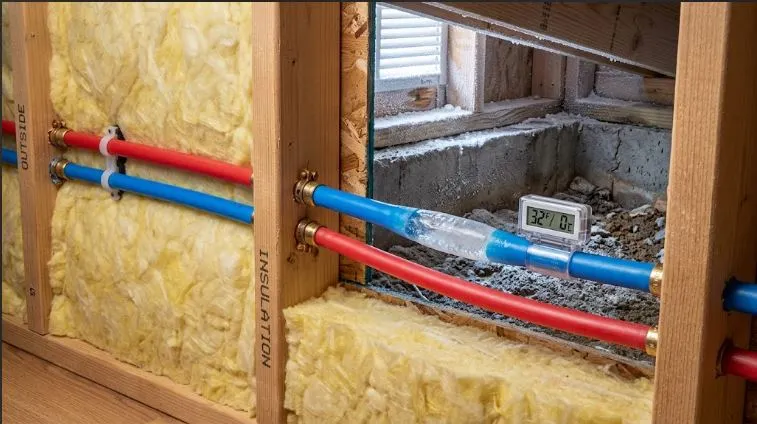
The installation location matters. PEX may need protection from nails, screws, abrasion, excessive heat, and other hazards.
Underground use also depends on the tubing’s approval, local code, soil and site conditions, and installation instructions.
Before starting a project, check the pipe markings and confirm that the product is approved for the intended use.
Where Should You Not Use PEX Pipe?
PEX is useful, but it has important limits.
PEX Pipe Installation Checklist
Before choosing PEX for your plumbing project, check these important requirements.
- Confirm the intended use. Make sure the tubing is approved for drinking water, heating, or the specific application.
- Check temperature and pressure ratings. Keep the system within the product’s stated limits.
- Choose compatible fittings. Follow the manufacturer’s connection and installation instructions.
- Plan for physical protection. Protect tubing from sharp edges, crushing, abrasion, and unsuitable heat.
- Check UV exposure limits. Do not leave tubing exposed to sunlight beyond the manufacturer’s permitted limits.
- Verify local plumbing code. Confirm that the product and installation method are permitted in your area.
Plumbing tip: For complex repiping or heating projects, consult a qualified plumber. Correct pipe sizing, fittings, and installation are essential for a reliable system.
Direct Sunlight and UV Exposure
Ordinary PEX tubing can be damaged by ultraviolet (UV) light. Long exposure to direct sunlight may reduce its service life.
Store PEX away from sunlight and install it according to the manufacturer’s exposure limits. Some products have added UV protection, but that does not mean they can remain exposed indefinitely.
Near Unsuitable Heat Sources
PEX has specific temperature and pressure limits. It should not be installed where heat exceeds the product’s approved limits.
Keep it away from direct contact with chimneys, flues, and other unsuitable heat sources. Follow required clearances and use approved protective measures.
Drain and Sewer Lines
PEX is designed for approved pressure-piping and other specified applications. It is not a general replacement for drain, waste, and vent (DWV) piping.
Drainage systems need pipes and fittings designed for wastewater flow and approved by the applicable code.
PVC and other approved drainage materials may be used for these systems, depending on the application and local requirements.
Unsupported or Exposed Locations
PEX can be damaged by sharp objects, crushing, abrasion, and poor installation.
Some exposed locations may need additional protection. Install the correct supports, sleeves, and fittings according to the manufacturer’s instructions.
Also, do not assume that PEX is suitable for every outdoor installation. UV exposure, temperature changes, physical damage, and local requirements must be considered.
Which Type of PEX Pipe Should You Choose?
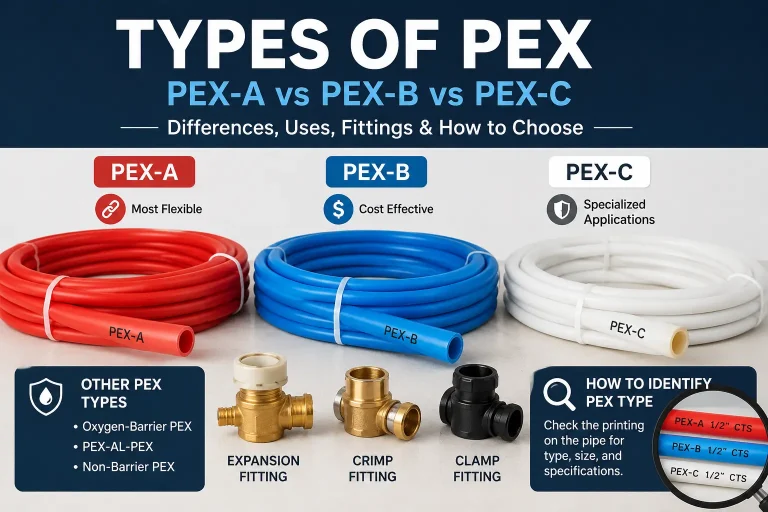
PEX-A, PEX-B, and PEX-C describe different manufacturing methods. All three can be used in suitable plumbing products, but their properties and installation requirements vary.
| PEX type | General characteristics | What to check |
|---|---|---|
| PEX-A | Often more flexible and may allow certain expansion-style connections | Approved fitting system and installation method |
| PEX-B | Commonly used in residential water supply systems | Bend requirements, compatible fittings, and product ratings |
| PEX-C | Made using a different cross-linking process | Manufacturer specifications and approved connections |
These types are not automatically interchangeable with every fitting system. Follow the tubing and fitting manufacturers’ instructions.
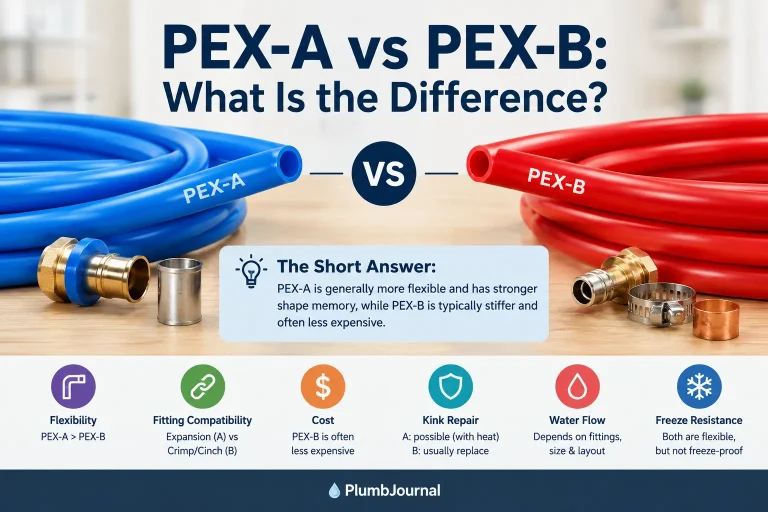
For a more detailed comparison, read our guide to PEX-A vs. PEX-B.
The intended application is just as important as the PEX type. For example, a potable-water installation needs suitable drinking-water certification. A hydronic heating system may need tubing with an oxygen barrier.
PEX vs. Copper, CPVC, and PVC
PEX is one of several materials used in plumbing systems. Each material has different strengths and limitations.
| Pipe material | Common uses | Main consideration |
|---|---|---|
| PEX | Hot and cold water supply; certain heating systems | Flexible, but needs protection from UV exposure and physical damage |
| Copper | Water supply lines and other approved plumbing uses | Durable and heat-resistant, but can cost more to install |
| CPVC | Approved hot and cold water supply systems | Rigid and requires compatible solvent-cement connections |
| PVC | Commonly used for approved drain, waste, vent, and other specified systems | Standard PVC is not a general substitute for hot-water supply piping |
PEX can be easier to route through some homes because it bends around obstacles. Copper may be preferred for certain exposed installations or where metal piping is required. CPVC may suit some rigid plastic water-supply systems.
PVC is a different material with different approved uses. Do not choose a pipe based on material alone. Check its listing, application, temperature and pressure ratings, and local code.
For more detail, see our guide to PEX vs. copper pipe.
Is PEX Pipe Safe for Drinking Water?
PEX can be used for drinking water when the specific tubing and fittings meet the applicable health and plumbing requirements.
Look for the required potable-water certification and check the manufacturer’s documentation. NSF explains that NSF/ANSI/CAN 61 addresses the health effects of materials that contact drinking water.
Also, check the product’s certification listing. A mark intended for radiant floor heating alone does not establish that the tubing is approved for drinking water.
You can review the NSF certified PEX plumbing listings before choosing a product.
What Are the Main Benefits of PEX Pipe?
PEX offers several benefits for residential plumbing.
Flexibility: PEX can bend around many obstacles. This may reduce the need for extra elbows and connections.
Installation: Its flexibility can make routing easier through accessible wall and floor spaces.
Hot and cold water: Approved products can supply both hot and cold water.
Different system designs: PEX can be used in suitable new construction, remodeling, repiping, and hydronic heating projects.
Corrosion resistance: PEX does not rust like iron or steel. However, its compatibility with water conditions and other system components still matters.
PEX also has limitations. It can be damaged by UV exposure, sharp objects, and unsuitable heat. Installation quality and product selection affect performance.
Read our guide to the disadvantages of PEX plumbing before deciding which material is right for your project.
How Do You Choose the Right PEX Pipe?
Choosing PEX involves more than selecting a color or size.
Follow these steps:
- Identify the application. Decide whether the pipe will supply drinking water, serve a heating system, or support another approved use.
- Check the product rating. Confirm that the tubing meets the system’s temperature and pressure requirements.
- Verify certification. For drinking water, check the applicable potable-water certification.
- Choose compatible fittings. Use fittings and connection methods approved for the tubing.
- Confirm pipe sizing. The correct size depends on water demand, flow, pressure loss, and the plumbing layout.
- Check local code. Requirements can vary by state and local jurisdiction.
- Protect the tubing. Plan for proper support and protection against sunlight, physical damage, and excessive heat.
For help with connections, read our guide to PEX pipe fittings.
If you are planning a larger plumbing project, our plumbing cost estimator can help you explore potential costs.
Final Thoughts
PEX pipe is used for many residential plumbing applications, especially hot and cold water supply lines. It is also a common option for home repiping and certain hydronic heating systems.
Its flexibility can make installation easier, but the correct product still matters. Check the tubing’s intended use, temperature and pressure ratings, fittings, and certification before installation.
For US homeowners, the best choice depends on the project and local plumbing code. When in doubt, consult a licensed plumber who understands the requirements in your area.