PEX vs. Polybutylene (Poly-B): Which Pipe Is Better?
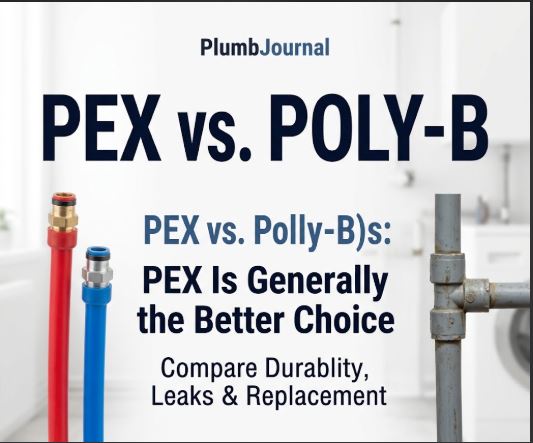
PEX is generally a better choice than polybutylene (Poly-B) for modern residential water-supply plumbing. PEX is widely used in new plumbing systems and home repiping projects. Poly-B is an older plastic pipe linked to deterioration and leak concerns. If your home has Poly-B pipes, a qualified plumber can inspect them and help you decide whether repair or replacement is the best option.
PEX vs. Polybutylene: Key Differences
PEX and polybutylene are both flexible plastic pipes. However, they differ in their history, material standards, and use in modern plumbing systems.
| Feature | PEX Pipe | Polybutylene (Poly-B) |
|---|---|---|
| Full name | Cross-linked polyethylene | Polybutylene |
| Common use | Modern water-supply plumbing | Older residential plumbing systems |
| Typical color | Red, blue, white, or other colors | Often gray, but other colors exist |
| Pipe marking | Often marked with PEX standards | Often marked PB2110 |
| Main concern | Installation errors, UV exposure, freezing, and fitting problems | Pipe deterioration and possible leaks |
| Flexibility | Flexible | Flexible |
| New plumbing projects | Commonly used where approved | Not a typical choice for new residential plumbing |
| Replacement option | Common choice for replacing old supply pipes | Existing material that may need inspection |
| Connections | Requires compatible PEX fittings | May have older or incompatible fittings |
The main difference: PEX is a modern plumbing material, while Poly-B is an older material associated with costly plumbing failures. However, neither material is free from problems. Proper installation, suitable fittings, and local plumbing codes all matter.
What Is PEX Pipe?
PEX stands for cross-linked polyethylene. It is a flexible plastic tubing used in residential water-supply systems.
Plumbers often use PEX to carry hot and cold water to sinks, showers, toilets, and other fixtures. Its flexibility can make installation easier than installing rigid pipes in some homes.
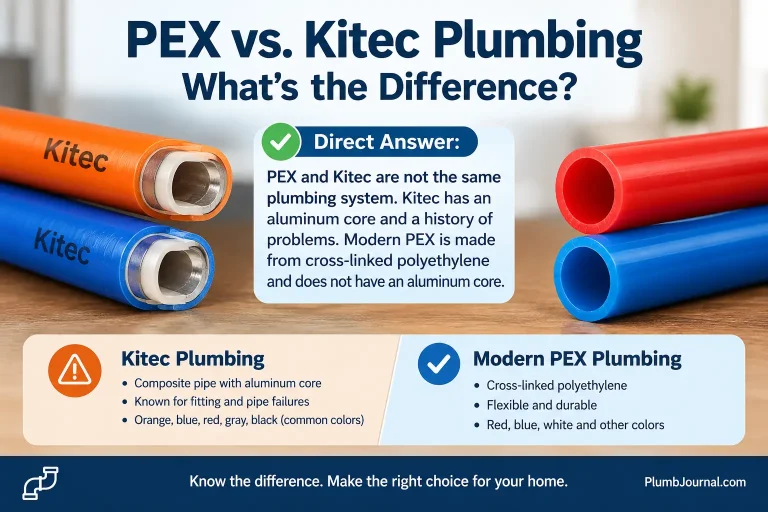
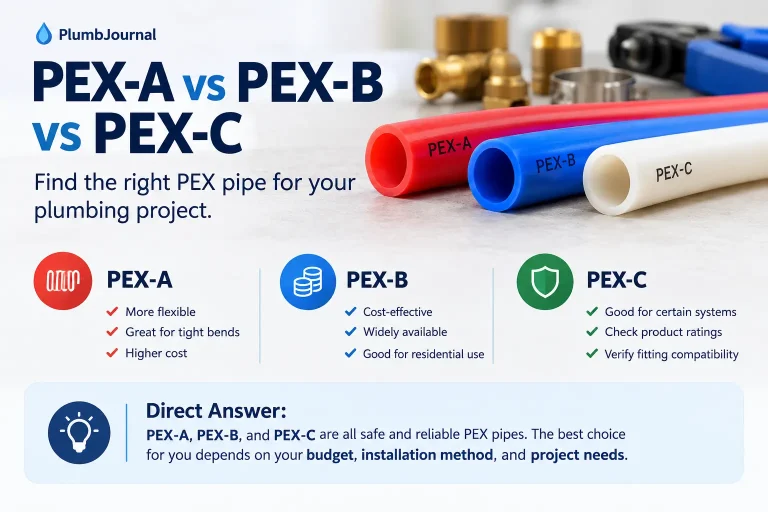
PEX also comes in different types, including PEX-A, PEX-B, and PEX-C. These types differ in how manufacturers produce the material. Their properties and approved installation methods can also differ.
Advantages of PEX Plumbing
PEX offers several benefits for homeowners:
- Flexible installation: PEX can bend around some corners without extra fittings.
- Fewer connections: Its flexibility may reduce the number of fittings needed.
- Corrosion resistance: PEX does not rust like metal pipes.
- Common replacement option: Plumbers often use PEX when repiping older homes.
- Hot and cold water use: Approved PEX products can serve both hot and cold water lines.
Disadvantages of PEX Plumbing
PEX also has limitations.
- UV exposure: Sunlight can damage PEX if the tubing is exposed beyond its permitted limits.
- Freezing: Frozen water can damage plumbing, including PEX systems.
- Installation requirements: PEX needs compatible fittings and proper installation.
- Rodent damage: Rodents can chew through plastic tubing.
- Local code limits: Some locations may restrict certain uses or installation methods.
PEX is not automatically the right choice for every project. The pipe type, water conditions, installation method, and local code should guide the decision.
What Is Polybutylene Pipe?
Polybutylene pipe, often called Poly-B or PB pipe, is an older type of plastic plumbing pipe. It was widely used in residential water-supply systems from the late 1970s through the mid-1990s.
Builders used Poly-B because it was flexible, affordable, and easy to install. However, reports of pipe failures and water damage led to major concerns about the material.
Polybutylene production for plumbing use ended in the 1990s. Many older homes may still have Poly-B water lines behind walls, under floors, or near plumbing fixtures.
Why Was Poly-B Used in Homes?
Poly-B was popular because it offered several practical benefits:
- It was less expensive than some traditional piping materials.
- It was flexible and easy to route through a building.
- It was relatively simple to install.
- It could be used in residential hot and cold water systems.
These benefits helped Poly-B become common in many homes. However, concerns about deterioration and leaks changed how the material is viewed today.
How to Identify Poly-B Plumbing
You may be able to identify Poly-B by checking the visible water-supply pipes in your home. However, color alone is not enough to confirm the pipe material.
1. Look for the PB2110 Marking
One of the most useful clues is the marking PB2110. This code is commonly associated with polybutylene plumbing.
Look along the pipe for printed letters, numbers, or manufacturer markings. You may need a flashlight to read them.
2. Check the Pipe Color
Poly-B pipes are often gray. However, they can also appear in blue, white, silver, or black.
Other plastic pipes can have similar colors. Do not assume that every gray pipe is Poly-B.
3. Inspect Common Plumbing Areas
Check visible water-supply lines in these areas:
- Under kitchen and bathroom sinks
- Near the water heater
- In utility rooms
- In unfinished basements
- Around accessible plumbing connections
Do not cut into walls or damage the pipe to identify it.
4. Ask a Qualified Plumber
If the pipe markings are missing or unclear, ask a plumber or qualified home inspector to identify the material.
Correct identification matters because PEX, polyethylene, PVC, and polybutylene are different materials. They do not all use the same fittings or installation methods.
Why Do Polybutylene Pipes Fail?
Polybutylene pipes can deteriorate over time. One concern is the reaction between certain water disinfectants and the pipe material.
Research and field reports have linked exposure to some disinfectants, including chlorine, with deterioration of polybutylene piping. This process can weaken the pipe and contribute to cracking or leaks.
Problems may develop in the pipe itself or at its connections. A pipe can also look normal on the outside while having damage that is difficult to see.
Common Problems With Poly-B Plumbing
Homeowners with Poly-B plumbing may face several concerns:
- Leaks: A damaged pipe or connection may release water.
- Hidden water damage: Leaks behind walls can damage insulation, flooring, and drywall.
- Mold risk: Ongoing moisture can support mold growth.
- Repair costs: A leak may require plumbing repairs and building restoration.
- Insurance concerns: Some insurers may have special rules for homes with Poly-B.
- Resale concerns: Buyers may request an inspection, replacement estimate, or price adjustment.
Not every Poly-B system will fail at the same time. Its condition depends on factors such as the pipe, connections, water conditions, and installation history.
Still, the possibility of hidden deterioration makes professional evaluation important.
Is PEX More Reliable Than Polybutylene?
PEX is generally the preferred option for modern residential water-supply plumbing when the product and installation method meet local requirements.
It is widely used in new construction and repiping projects. Its flexibility and corrosion resistance make it useful for many residential applications.
Poly-B has a different history. Concerns about deterioration and unexpected leaks have made it a material that homeowners often consider replacing.
However, no plumbing material is guaranteed to last forever. PEX can also develop leaks because of poor installation, unsuitable fittings, physical damage, excessive UV exposure, or freezing.
The best approach is to compare the condition of the existing system with the cost and benefits of replacement.
Does Poly-B Plumbing Affect Home Insurance or Resale?
Poly-B plumbing can affect insurance decisions and home sales. However, the impact depends on the insurer, policy, property, and local requirements.
Some insurers may refuse to cover homes with Poly-B. Others may offer coverage with restrictions, higher premiums, or a requirement to replace the pipes.
A home with Poly-B may also raise questions during an inspection. Buyers may ask about the pipe’s condition, the risk of leaks, and the estimated replacement cost.
What Homeowners Should Do
If you discover Poly-B plumbing, take these steps:
- Confirm the material. Ask a qualified professional to identify the pipes.
- Request an inspection. Find out whether there are visible leaks or other concerns.
- Contact your insurer. Ask about coverage rules and replacement requirements.
- Get written estimates. Compare repair and repiping options.
- Keep records. Save inspection reports, invoices, permits, and replacement documents.
Do not assume that every insurer follows the same rules. Confirm the requirements directly with your insurance company before making a decision.
How Much Does It Cost to Replace Poly-B With PEX?
The cost to replace Poly-B plumbing depends on the size of the home, the number of fixtures, pipe access, labor rates, and the amount of work required.
A small repair may cost much less than replacing the entire water-supply system. A whole-house repipe may also require drywall repairs, painting, and permit fees.
Factors That Affect Repiping Costs
| Cost factor | How it affects the price |
|---|---|
| Home size | Larger homes may require more pipe and labor |
| Number of bathrooms | More fixtures can increase the amount of work |
| Pipe access | Finished walls and ceilings can make installation harder |
| Replacement scope | Partial repairs usually differ from a full repipe |
| Pipe material | PEX and copper have different material and labor costs |
| Wall repairs | Drywall, paint, and flooring restoration can add costs |
| Permits | Requirements and fees vary by location |
The price of PEX tubing alone does not show the full cost of a repiping project. Labor, fittings, access, and restoration can make up a large part of the final bill.
For an accurate estimate, ask licensed plumbing contractors to inspect the property and provide written quotes. Make sure each quote explains what is included.
Compare the scope of work, not just the total price.
Can You Repair Polybutylene Pipes Instead of Replacing Them?
A plumber may be able to repair a specific leak in a Poly-B system. However, fixing one leak does not prove that the rest of the piping is in good condition.
If the system has widespread deterioration or repeated leaks, replacing more of the piping may be a better long-term option.
The right decision depends on the inspection findings, the extent of the damage, local requirements, and your plans for the home.
When Should You Consider Replacement?
Discuss replacement with a plumber if:
- Your home has confirmed Poly-B water lines.
- You have experienced repeated pipe leaks.
- You see signs of water damage near plumbing lines.
- Your insurer requires replacement.
- You plan to renovate or sell the property.
- An inspection identifies concerns with the piping system.
Even if there is no active leak, it is worth getting a professional assessment. A plumber can explain the likely risks and help you compare repair costs with a full repipe.
Can You Connect PEX to Existing Poly-B Pipes?
A connection between PEX and existing Poly-B may be possible with a suitable transition fitting. However, the fitting must be approved for the specific materials and application.
PEX fittings are not automatically compatible with Poly-B. Using the wrong connector can lead to leaks and property damage.
A qualified plumber should check the pipe markings, diameter, condition, and fitting requirements before making a connection. The work must also comply with local plumbing codes and manufacturer instructions.
Do not use a fitting simply because it appears to fit both pipes.
Should You Replace Poly-B With PEX or Copper?
PEX and copper are both used in residential water-supply plumbing. Each has benefits and limitations.
| Feature | PEX | Copper |
|---|---|---|
| Material | Flexible plastic tubing | Metal pipe |
| Installation | Often easier to route through walls | May require more fittings and specialized joining methods |
| Corrosion | Does not rust | Can corrode under certain water conditions |
| Freezing | Can tolerate some expansion, but freezing can still cause damage | Can split when water freezes inside |
| Cost | Often less expensive to install | Can cost more due to material and labor |
| Main concerns | UV exposure, physical damage, fittings, and installation | Corrosion, water chemistry, and joining quality |
PEX is a common choice for replacing Poly-B because it is flexible and can simplify installation. Copper may also be suitable, depending on the home and local conditions.
Neither option is best for every project. Ask your plumber to compare the total installed cost, expected maintenance, applicable code requirements, and suitability for your water conditions.
Final Verdict: PEX vs. Polybutylene
PEX is generally the more suitable choice for modern residential water-supply plumbing. Poly-B is an older pipe material linked to deterioration and potentially costly leaks.
If your home has Poly-B, first confirm the material and have the system inspected. Then compare the cost of repair with the cost of replacement. PEX is a common replacement option, but copper and other approved materials may also be suitable.
A professional assessment can help you choose a safe, code-compliant solution for your home.
Frequently Asked Questions
Is PEX better than Poly-B pipe?
Yes, PEX is generally the better choice for modern residential water-supply plumbing. It is widely used in new systems and replacement projects. Poly-B is an older material associated with deterioration and leak concerns. The right replacement still depends on local codes, product specifications, and proper installation.
How can I tell if I have Poly-B plumbing?
Look for flexible plastic pipes that are often gray and may have the marking PB2110. Check visible water lines near sinks, water heaters, and utility areas. Color alone is not enough to identify the material. If the markings are unclear, ask a qualified plumber or home inspector.
Do all Poly-B pipes need to be replaced?
There is no single answer for every home. Poly-B has known deterioration concerns, so homeowners should seek a professional assessment and discuss proactive replacement. The urgency and scope depend on the pipe’s condition, leak history, insurance requirements, and local rules.
Will homeowners insurance cover a house with Poly-B pipes?
Coverage varies by insurer and policy. Some companies may restrict coverage or require replacement, while others may consider the property under different terms. Contact your insurer directly and ask whether Poly-B affects eligibility, premiums, or coverage for water damage.
How much does it cost to replace Poly-B with PEX?
The price depends on the home’s size, number of fixtures, labor, pipe access, and repair work. A partial repair and a whole-house repipe have very different costs. Get written estimates from qualified contractors and confirm whether drywall repairs, permits, and restoration are included.
Can you repair Poly-B pipes without replacing the whole system?
A plumber may be able to repair a specific leak. However, a local repair does not eliminate possible problems elsewhere in the system. If the pipes show widespread deterioration or repeated leaks, discuss whether a larger replacement is a better long-term choice.
Is Poly-B the same as PEX?
No. Polybutylene and cross-linked polyethylene are different plastic materials. They have different specifications and histories. Similar colors or appearances do not make them interchangeable, and each requires compatible fittings and approved installation methods.
Can PEX freeze without breaking?
Yes. PEX can still be damaged by freezing, even though it may tolerate some expansion better than rigid pipes. Protect plumbing from freezing, follow manufacturer guidance, and keep pipes in suitable locations.