What is the difference between pex a and pex b
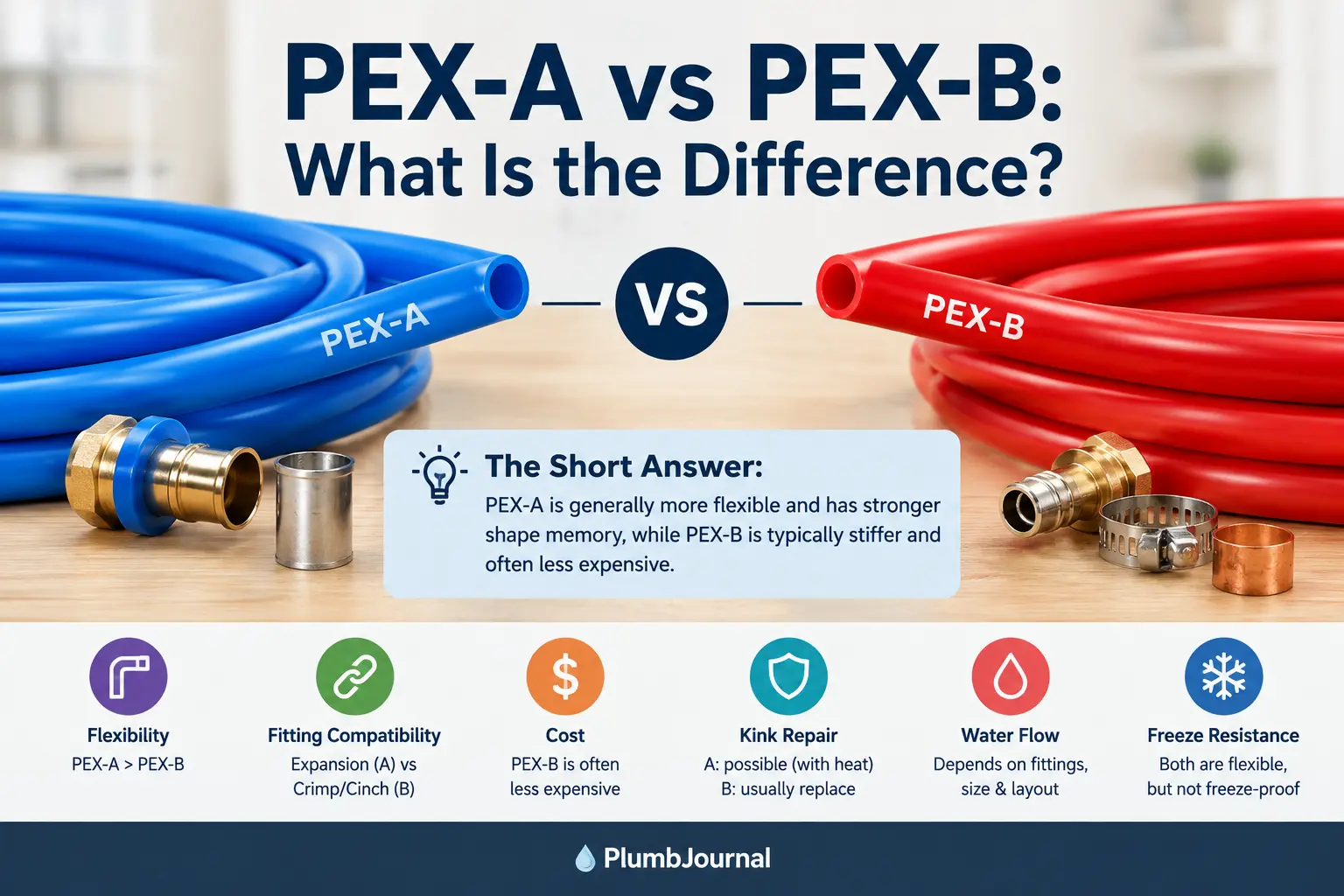
The main difference between PEX-A and PEX-B is how the tubing is manufactured. PEX-A is generally more flexible and has stronger shape memory, while PEX-B is typically stiffer and often less expensive. PEX-A is commonly used with compatible expansion fittings, whereas PEX-B is widely used with crimp and cinch fittings.
Neither type is automatically better for every plumbing project. The right choice depends on flexibility, fitting compatibility, installation costs, and the manufacturer’s specifications.
PEX-A vs PEX-B: At a Glance
| Feature | PEX-A | PEX-B |
|---|---|---|
| Manufacturing method | Engel/peroxide process | Silane/moisture-cure process |
| Flexibility | Generally more flexible | Generally stiffer |
| Bend radius | Usually allows tighter bends | Generally requires wider bends |
| Kink repair | Some products allow approved heat repair | Kinked sections generally require replacement |
| Expansion fittings | Common with compatible systems | Compatibility must be verified |
| Crimp fittings | Compatible products are available | Commonly used |
| Cinch/clamp fittings | Compatible products are available | Commonly used |
| Water flow | Depends on tubing size and fitting design | Depends on tubing size and fitting design |
| Material cost | Often higher | Often lower |
| Tool cost | Expansion tools can increase upfront costs | Crimp or cinch tools are often less expensive |
| Common advantage | Flexibility and kink recovery | Cost and common connection options |
Important: These are general characteristics. Actual performance and fitting compatibility depend on the specific tubing and connection system.
What Is the Main Difference Between PEX-A and PEX-B?
Both PEX-A and PEX-B are made from cross-linked polyethylene. The letters identify different manufacturing methods, not quality grades.
PEX-A is manufactured using the Engel, or peroxide, process. It is generally more flexible and has strong elastic memory, which helps compatible tubing return toward its original shape after expansion.
PEX-B is commonly manufactured using the silane or moisture-cure process. It is generally stiffer than PEX-A but remains suitable for many residential hot- and cold-water plumbing systems.
For a broader explanation of PEX materials and applications, read our guide to what PEX plumbing is.
PEX-A vs PEX-B: Flexibility and Kink Repair
PEX-A is generally the more flexible option. It can make tighter bends, which may simplify routing through wall cavities, floor joists, and other confined spaces. Depending on the layout, this can also reduce the need for additional elbows.
PEX-B is usually stiffer and may require a wider bend radius. However, it remains flexible enough for many standard plumbing installations.
Another difference is kink recovery. Some PEX-A products allow a kink to be repaired using controlled heat and the manufacturer’s approved procedure. A kinked PEX-B section will generally need to be cut out and repaired with an approved fitting.
Never apply heat to PEX tubing unless the manufacturer specifically permits that repair method.
PEX-A vs PEX-B Fittings
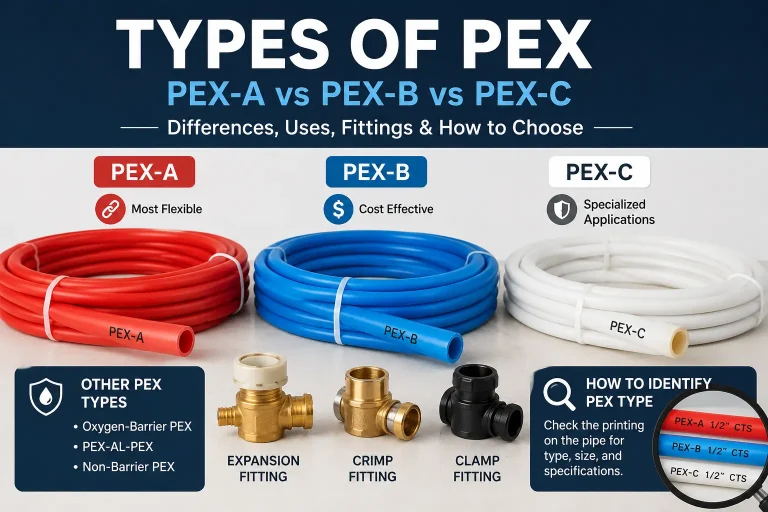
PEX-A is commonly associated with cold-expansion fittings. The tubing is expanded using a compatible tool, the fitting is inserted, and the tubing contracts around it to form the connection.
PEX-B is commonly installed with copper crimp rings or stainless-steel cinch clamps. These systems use a fitting inserted into the tubing and a ring or clamp secured with the appropriate tool.
However, PEX-A can also be used with compatible crimp or cinch systems. Do not assume that every fitting works with every type of PEX.
- Can PEX-A use crimp fittings? Yes, when the specific tubing and fitting system are approved for that connection.
- Can PEX-B use expansion fittings? Do not assume so. Check the tubing and fitting manufacturer’s compatibility requirements.
- Can PEX-A and PEX-B be connected? Yes, when an approved fitting and connection method support the specific products.
Learn more about connection options in our guide to PEX pipe fittings.
Does PEX-A Have Better Water Flow Than PEX-B?
Not automatically. Water flow depends on the pipe’s inside diameter, fitting design, pipe length, and overall plumbing layout.
Some expansion fittings preserve a larger internal flow passage than certain insert-style crimp or cinch fittings. This can give a compatible expansion system a flow advantage at the connection.
However, the PEX-A material itself does not increase your home’s incoming water pressure. If you are experiencing low flow, check pipe sizing, restrictions, valves, and system design before assuming the tubing type is responsible.
PEX-A vs PEX-B: Cost
PEX-B is often less expensive than PEX-A, but the total installation cost depends on more than the price per foot.
Compare the cost of the tubing, fittings, rings or sleeves, tools, and labor. An expansion system may require a specialized tool, while a crimp or cinch system may have a lower initial equipment cost.
For help estimating a plumbing project, use our plumbing cost estimator.
Which Should You Choose: PEX-A or PEX-B?
| Your priority | What to consider |
|---|---|
| Tight bends and complex routing | PEX-A’s greater flexibility |
| Kink-repair capability | PEX-A products that permit heat repair |
| Expansion connections | Compatible PEX-A systems |
| Lower upfront material cost | PEX-B, depending on local prices |
| Existing crimp or cinch tools | A compatible system for either tubing type |
| Reliable installation | Manufacturer-approved tubing, fittings, and tools |
PEX-A may suit installations where flexibility, tight bends, and compatible expansion connections are priorities. PEX-B may be a practical option for straightforward plumbing projects where cost and crimp or cinch connections matter more.
Both can perform well when correctly selected and installed. Check the product’s pressure and temperature ratings, certifications, fitting compatibility, and local plumbing-code requirements before purchasing.
Frequently Asked Questions
Is PEX-A better than PEX-B?
Neither is universally better. PEX-A generally offers greater flexibility and shape memory, while PEX-B is often less expensive and commonly used with crimp or cinch fittings.
Which PEX is more flexible?
PEX-A is generally more flexible than PEX-B and usually allows tighter bends.
Which PEX is cheaper?
PEX-B is often cheaper, although prices vary by manufacturer, pipe size, supplier, and connection system.
Is PEX-A more resistant to freezing?
PEX-A’s greater elasticity can help it tolerate expansion during freezing conditions. However, neither PEX-A nor PEX-B is freeze-proof. Fittings, valves, and other plumbing components can still be damaged.
How can I identify PEX-A or PEX-B?
Check the printing on the tubing for the manufacturer, product designation, and specifications. The fitting may provide a clue, but the tubing’s identification markings and manufacturer documentation are more reliable. See our guide to PEX-A vs PEX-B for more details.
Bottom Line
The main difference between PEX-A and PEX-B is their manufacturing process, which affects flexibility, kink recovery, and typical connection methods. PEX-A is generally more flexible, while PEX-B is often less expensive.
Choose based on your plumbing layout, approved fitting system, tool requirements, and total project cost—not the letter alone.