PEX vs CPVC: Which Is Better for Plumbing?
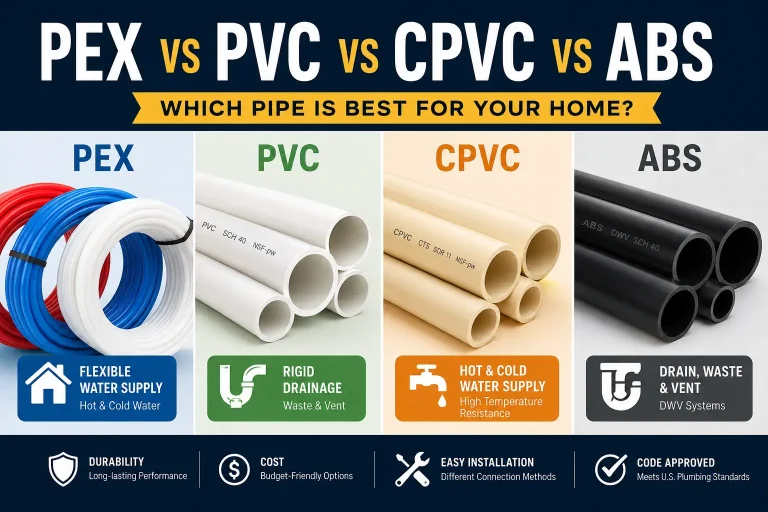
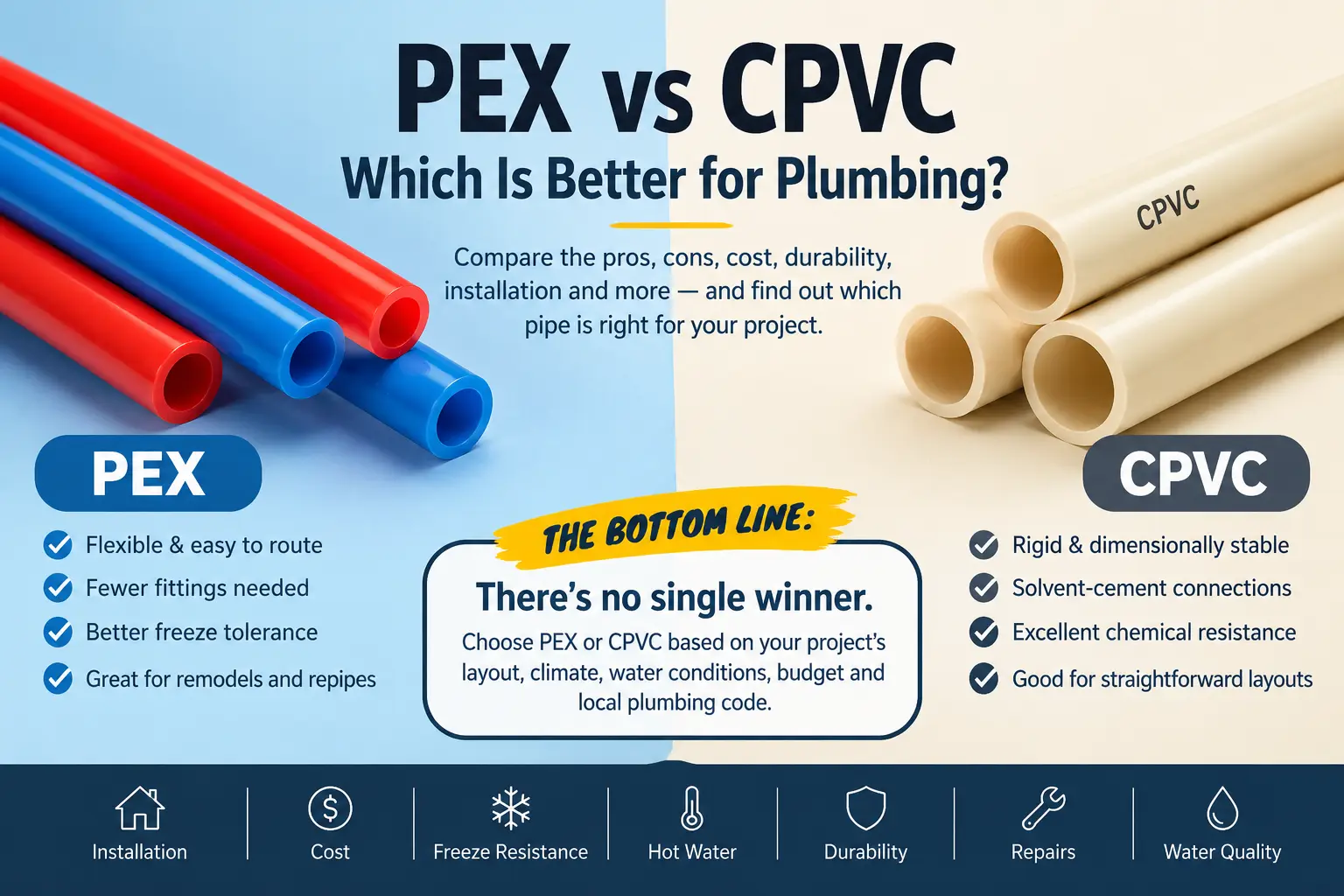
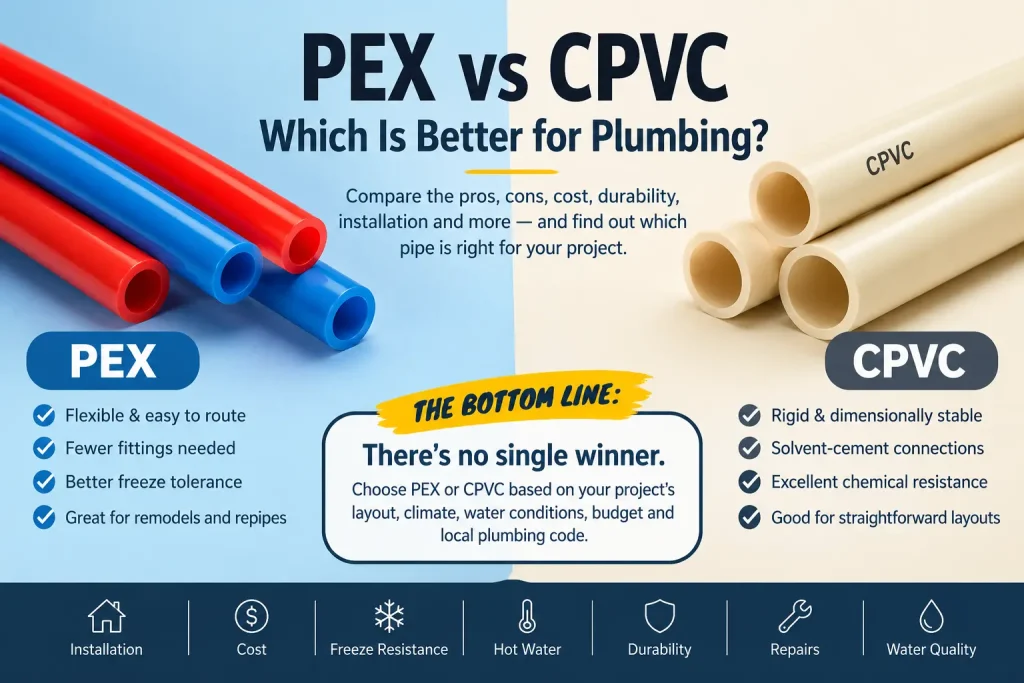
Both PEX and CPVC are widely used for hot- and cold-water distribution, but they work very differently. PEX is flexible and can often run around corners with fewer fittings. CPVC is rigid and typically uses solvent-cement connections.
So, is PEX better than CPVC?
Not in every situation. The better choice depends on the installation, climate, water conditions, existing plumbing, product ratings, local code, and how the system will be installed.
For many residential projects, PEX is attractive because it is flexible and easy to route. CPVC can still make sense when a rigid plastic piping system fits the project.
Let’s compare them in the areas that actually matter.
PEX vs CPVC at a Glance
| Feature | PEX | CPVC |
|---|---|---|
| Material | Cross-linked polyethylene | Chlorinated polyvinyl chloride |
| Flexibility | Flexible | Rigid |
| Hot-water use | Yes, when properly rated | Yes, when properly rated |
| Cold-water use | Yes, when properly rated | Yes, when properly rated |
| Common joining methods | Crimp, clamp, expansion, or approved push-fit systems | Solvent cement and approved transition fittings |
| Routing around obstacles | Easier | Requires fittings for direction changes |
| Freeze tolerance | Generally more tolerant of freeze-thaw conditions | More vulnerable to cracking from freezing |
| UV exposure | Product-specific limits; direct sunlight must be controlled | Product-specific |
| Thermal movement | Relatively high | Lower than PEX |
| Repair | Depends on the connection system | Requires compatible CPVC repair fittings and joining method |
| Existing CPVC conversion | Can be connected with approved transition fittings | Existing material |
| Best-known advantage | Flexibility and easy routing | Rigid piping and solvent-welded joints |
Both materials are recognized in U.S. plumbing standards for water-distribution applications when the specific product meets the applicable requirements. The International Residential Code, for example, references ASTM standards for both PEX and CPVC water-distribution products.
What Is the Difference Between PEX and CPVC?
The biggest difference is simple: PEX bends, while CPVC does not.
PEX stands for cross-linked polyethylene. It comes as flexible tubing and can often be routed through framing cavities, around obstacles, and across longer runs without adding an elbow at every turn.
CPVC stands for chlorinated polyvinyl chloride. It is a rigid plastic pipe. When the direction of a CPVC run changes, the installer normally uses an appropriate fitting rather than bending the pipe.
Their joining methods are different too.
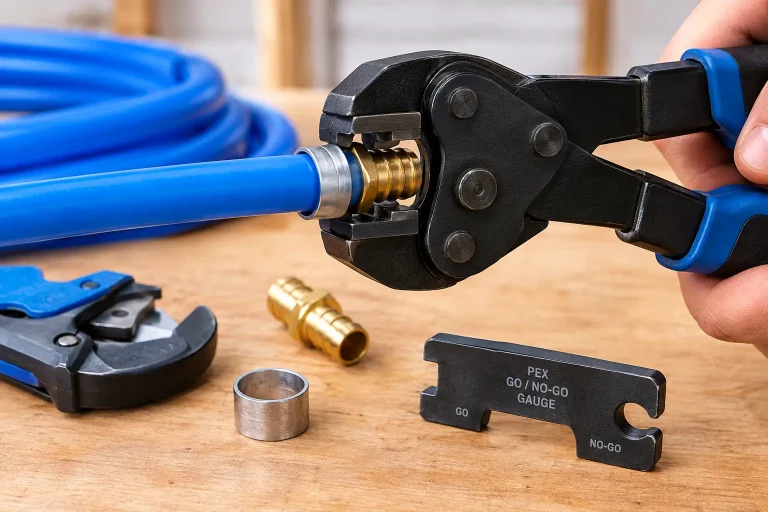
PEX systems may use crimp, clamp, expansion, or other approved connection systems depending on the product. CPVC commonly uses solvent cement to join pipe and fittings.
That difference affects installation time, tools, routing, repairs, and even how the finished plumbing system moves inside a wall.
PEX vs CPVC Pros and Cons
PEX Pros
- Flexible and easy to route
- Often requires fewer directional fittings
- Good tolerance of freeze-thaw conditions compared with rigid piping
- Several connection systems are available
- Useful for remodeling and repiping
PEX Cons
- Requires protection from excessive UV exposure
- Thermal movement needs to be managed
- Connection characteristics vary by system
- Product-specific chlorine and temperature ratings matter
CPVC Pros
- Rigid and dimensionally stable
- Suitable for hot- and cold-water distribution when properly rated
- Solvent-cement connections create a permanent joint when correctly made
- Good resistance to many forms of chemical attack
- Does not corrode like metallic pipe
CPVC Cons
- Rigid, so routing around obstacles can require more fittings
- More vulnerable to cracking from freezing than flexible PEX
- Solvent-cement installation requires correct preparation and compatible materials
- Older or damaged CPVC may require careful evaluation before repair or modification
PEX vs CPVC: Installation
This is one area where PEX has a practical advantage.
Because PEX is flexible, an installer can often make long runs with fewer directional fittings. That can simplify work in a remodel where walls, joists, cabinets, and existing plumbing make straight pipe runs difficult.
CPVC takes a more traditional rigid-pipe approach. You measure, cut, fit, and join sections together. Every turn generally needs the correct fitting.
Neither approach is automatically better for every project.
A simple, open installation can work well with CPVC. A complicated remodel with lots of corners can make PEX much easier to route.
The connection method also matters. A PEX installation is only as good as the connection system used. The same applies to CPVC solvent-cement joints.
Follow the pipe and fitting manufacturer’s instructions rather than mixing components or connection methods because they “look like they should fit.”
Plumbing is not the place for creative improvisation.
PEX vs CPVC Cost
The cost comparison is more complicated than looking at the price of one piece of pipe.
You need to consider:
- Pipe
- Fittings
- Connection tools
- Labor
- Installation time
- Access to existing plumbing
- Repairs
- Number of fittings required
CPVC can have an inexpensive material and joining system, while PEX can reduce labor and fitting requirements because of its flexibility.
That means the cheapest pipe per foot does not necessarily produce the cheapest completed plumbing project.
For a whole-house repipe, get the total installed cost rather than comparing pipe prices alone.
Local labor rates and project complexity can change the calculation considerably.
PEX vs CPVC: Freeze Resistance
If you live somewhere that experiences freezing temperatures, this deserves special attention.
PEX is more flexible than rigid piping and can tolerate freeze-thaw conditions better. Some PEX systems have been specifically tested for repeated freeze-thaw cycles.
Uponor, for example, documents testing of its PEX systems under freeze-thaw conditions and notes that PEX can expand when water freezes and return toward its original shape after thawing.
But don’t turn that into the myth that PEX is “freeze-proof.”
It isn’t.
A PEX plumbing system still needs appropriate protection against freezing. Connections and other components can also be damaged, and repeated freezing can weaken the system.
CPVC is rigid, so freezing water can create stresses that may crack the pipe.
If your home is in a cold climate, pipe location, insulation, heat, and installation details still matter even when you choose PEX.
PEX vs CPVC for Hot Water
Both PEX and CPVC can be used for hot-water distribution when the specific products are properly rated and installed according to their instructions.
However, don’t compare materials using one generic temperature number.
Temperature capability depends on the particular product, pressure, application, and applicable standard.
The 2021 International Residential Code, for example, specifies that water-distribution pipe and tubing must have a pressure rating of at least 100 psi at 180°F and references ASTM standards for PEX and CPVC products.
Always check the marking on the actual pipe and the manufacturer’s technical documentation.
This matters because two products made from the same broad material category can have different specifications.
Does PEX Have Better Water Flow Than CPVC?
This question gets oversimplified online.
Pipe flow depends on more than the material itself.
The important factors include:
- Inside diameter
- Pipe size
- Fitting design
- Number of fittings
- Run length
- Water pressure
- Flow demand
Some PEX connection systems use insert fittings that reduce the internal passage through the fitting. Other systems use different fitting designs.
CPVC systems also have their own pipe and fitting dimensions.
So don’t assume that saying “PEX has better flow” or “CPVC has better flow” settles the issue.
For a properly designed residential plumbing system, sizing and fitting selection matter just as much as the pipe material.
PEX vs CPVC: Chlorine and Water Chemistry
Water chemistry is another reason you should avoid blanket statements.
CPVC is known for its resistance to chlorine-based disinfectants, and manufacturers such as Lubrizol document CPVC’s suitability for potable-water applications and resistance to chemical attack.
PEX manufacturers also test their products for resistance to hot, chlorinated water. The PEX pipe’s printed designation can provide important information about its performance classification.
For example, Uponor explains that its PEX print string includes a chlorine-resistance designation and a UV-resistance designation.
That leads to an important rule:
Don’t judge all PEX products by the performance of one PEX product.
Check the actual pipe marking, certification, application rating, and manufacturer’s documentation.
The same principle applies to CPVC.
Is PEX Safer Than CPVC for Drinking Water?
For potable-water plumbing, the question isn’t simply whether the material is “plastic.”
The specific product needs to be approved and certified for the intended application.
The applicable plumbing code, product standards, and certifications matter.
The International Residential Code requires water-distribution piping within dwelling units to conform to NSF 61 and applicable material standards. Those standards include ASTM specifications for both CPVC and PEX.
So when buying pipe for drinking-water service, look for the appropriate potable-water listing and certification instead of relying only on the words PEX or CPVC printed on a product description.
PEX vs CPVC: Durability and Lifespan
You will often see websites promise a precise lifespan for PEX or CPVC.
Be careful with that.
A pipe’s actual service life depends on the product, temperature, pressure, water chemistry, installation, UV exposure, physical damage, and other conditions.
CPVC can provide long service when properly selected and installed. PEX also has a long history of use in residential plumbing.
Rather than saying “PEX always lasts X years” or “CPVC always lasts Y years,” look at the manufacturer’s warranty, testing, product listing, and operating conditions.
That is a more useful way to evaluate longevity.
PEX vs CPVC: Thermal Expansion
PEX is flexible, but that flexibility comes with a tradeoff: it moves more with temperature changes than rigid piping.
Hot water can cause PEX to expand, so proper support and installation practices matter.
CPVC also expands and contracts with temperature, but its rigid structure means the movement is handled differently.
The International Residential Code includes specific support requirements for PEX and CPVC, which is a good reminder that flexible tubing still needs to be installed correctly.
PEX isn’t “install it and forget it.”
The pipe still needs proper support, routing, protection, and clearances.
Is PEX Quieter Than CPVC?
PEX can have an acoustic advantage because its flexible material can absorb some movement and pressure surges.
CPVC is rigid, so temperature changes and water movement can produce noticeable pipe movement or noise when the installation allows the pipe to contact framing.
However, installation quality matters.
Proper support, routing, pressure control, and water-hammer management can influence how noisy a plumbing system becomes.
So don’t choose a pipe based on the promise that it will be completely silent.
Your walls may still have opinions.
Which Is Easier to Repair: PEX or CPVC?
Both can be repaired, but the process depends on the type of damage and connection system.
With PEX, a damaged section can often be removed and replaced using compatible fittings and the appropriate connection method.
With CPVC, the damaged section can be cut out and replaced with compatible CPVC pipe and fittings using the manufacturer’s recommended joining procedure.
The important part is matching the repair fitting to the pipe and connection system.
Don’t assume that every push-fit fitting is approved for every pipe type.
Can You Connect CPVC to PEX?
Yes.
PEX can be connected to CPVC using an appropriate transition fitting designed and approved for those materials.
Manufacturers offer purpose-built PEX-to-CPVC transition adapters. Uponor, for example, lists PEX-to-CPVC socket and spigot adapters and specifically instructs installers to follow the CPVC manufacturer’s connection requirements.
The correct fitting depends on the pipe size, connection system, product, and installation.
Do not glue PEX into a CPVC socket.
PEX and CPVC use different joining methods, so the transition requires a fitting designed to bridge the two systems.
How Do You Convert CPVC to PEX?
If you’re replacing part of an existing CPVC plumbing system with PEX, the basic concept is straightforward:
- Shut off the water and relieve system pressure.
- Identify the existing CPVC size and type.
- Select a compatible CPVC-to-PEX transition fitting.
- Make the CPVC connection according to the CPVC manufacturer’s instructions.
- Connect the PEX using the approved PEX connection method.
- Support and protect the new PEX properly.
- Restore water pressure and check the entire connection for leaks.
The exact fitting and installation procedure depend on the products involved.
For example, purpose-built transition adapters are available from PEX manufacturers, including products designed to connect PEX tubing to CPVC pipe.
If you’re working inside a wall or changing a significant section of a home’s water distribution system, following the applicable code and manufacturer’s instructions is essential.
Should You Replace CPVC With PEX?
Not necessarily.
If an existing CPVC system is functioning properly and has no signs of failure, replacing it simply because PEX is newer may not make economic sense.
Replacement becomes a more relevant question when you are:
- Replacing damaged plumbing
- Remodeling
- Performing a whole-house repipe
- Dealing with repeated leaks
- Opening walls for another renovation
- Working with an aging system
- Changing the plumbing layout
- Living in an area where freeze exposure is a major concern
The condition of the existing plumbing matters more than the age of the material alone.
If you’re already opening walls and need substantial plumbing work, that’s when comparing PEX and CPVC as replacement options becomes much more useful.
PEX or CPVC: Which Should You Choose?
Instead of asking which material wins, start with the conditions of the project.
PEX may make sense when:
- You need flexible routing.
- The installation has many corners or obstacles.
- You want to minimize directional fittings.
- You’re remodeling or repiping.
- Freeze-thaw tolerance is an important consideration.
- Your selected PEX product is properly rated for the application.
CPVC may make sense when:
- You prefer a rigid pipe system.
- The layout is relatively straightforward.
- The specific CPVC product meets the project’s requirements.
- Its solvent-cement connection system fits the installation.
- Water chemistry and product specifications make CPVC appropriate.
Neither material should be selected based on marketing claims alone.
Check the actual product specifications, applicable standards, installation instructions, and locally adopted plumbing code.
Final Verdict: PEX vs CPVC
PEX stands out for flexibility, routing, and freeze-thaw tolerance. CPVC offers a rigid piping approach with solvent-cement connections and strong resistance to many chemical conditions.
For a new installation or repipe, compare the actual project rather than choosing based on a generic internet winner.
Look at the pipe’s application rating, temperature and pressure requirements, water chemistry, installation conditions, connection method, local plumbing code, and total project cost.
And if you already have CPVC, you don’t automatically need to replace it with PEX. In many cases, the practical question is whether the existing system is in good condition and whether a change would solve a real problem.