PEX vs PVC vs CPVC vs ABS: Which Pipe Is Best for Your Home?
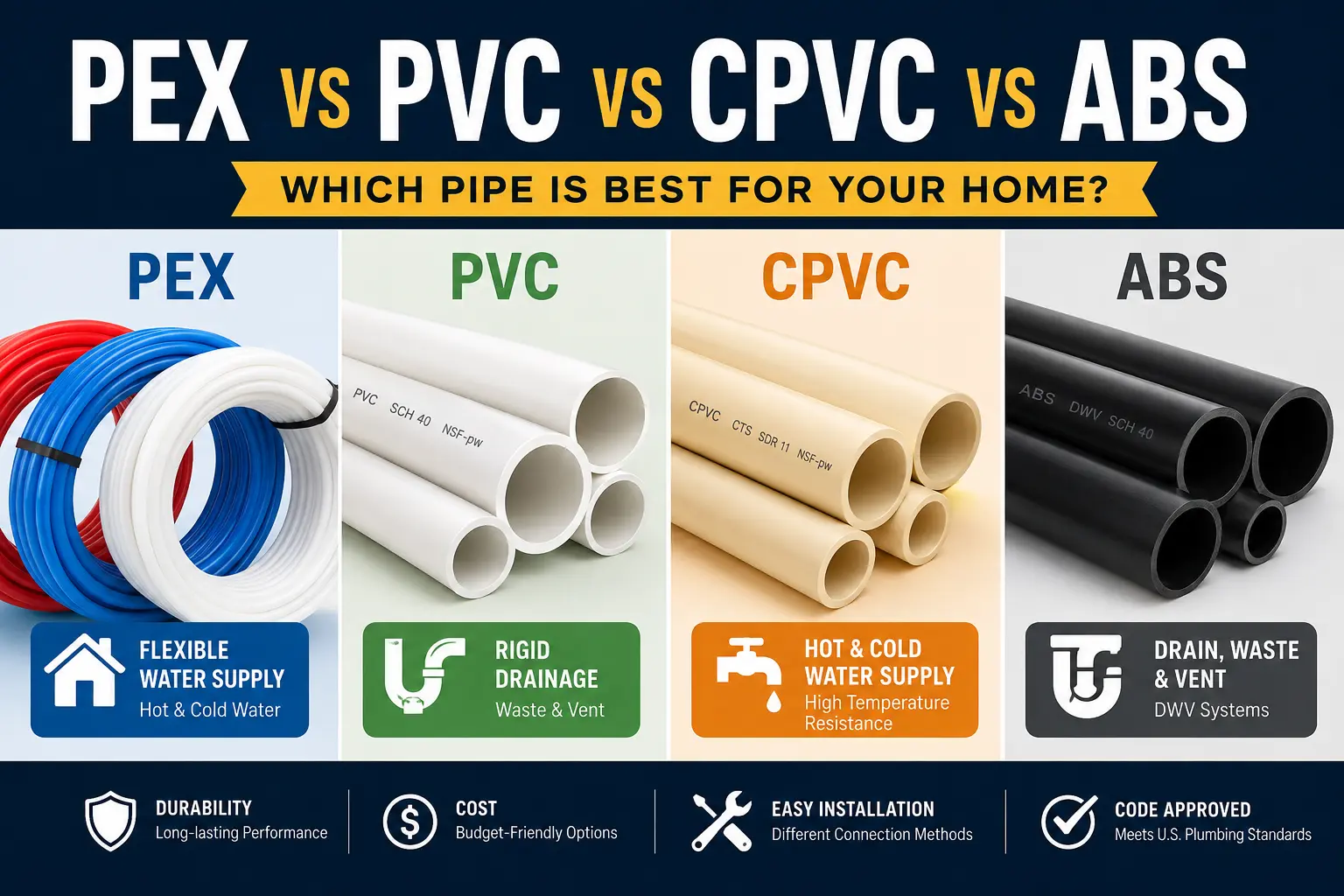
Quick answer: PEX is often a strong choice for residential water-supply and repiping projects. CPVC is another option for hot and cold water distribution. PVC and ABS are more commonly associated with drainage, waste, and vent systems. Always check the specific pipe’s listing, manufacturer instructions, and local code before installation.
If you are comparing PEX vs PVC vs CPVC vs ABS, there is one important thing to understand first: these pipes are not all designed to do the same job.
PEX and CPVC are commonly used for water-supply systems, while PVC and ABS are widely used for drainage, waste, and vent piping. PVC can also be approved for certain water-supply applications, depending on the specific product and local plumbing requirements.
So there is no single winner between PEX, PVC, CPVC, and ABS.
The right choice depends on what the pipe is carrying, water temperature, installation location, flexibility, connection method, cost, product rating, and local plumbing code.
For many residential water-supply projects, PEX is attractive because it is flexible and relatively easy to install. CPVC remains a practical rigid option for hot and cold water distribution. PVC and ABS are common choices for drainage and waste systems.
This guide explains the differences so you can choose the right material for the job.
PEX vs PVC vs CPVC vs ABS at a Glance
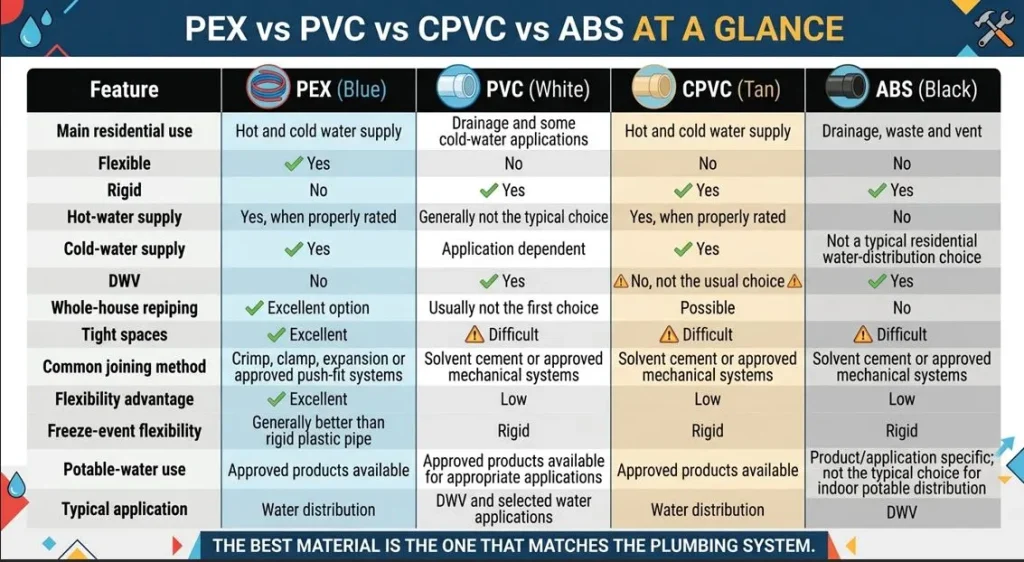
| Feature | PEX | PVC | CPVC | ABS |
|---|---|---|---|---|
| Main residential use | Hot and cold water supply | Drainage and some cold-water applications | Hot and cold water supply | Drainage, waste and vent |
| Flexible | Yes | No | No | No |
| Rigid | No | Yes | Yes | Yes |
| Hot-water supply | Yes, when properly rated | Generally not the typical choice | Yes, when properly rated | No |
| Cold-water supply | Yes | Application dependent | Yes | Not a typical residential water-distribution choice |
| DWV | No | Yes | No, not the usual choice | Yes |
| Whole-house repiping | Excellent option | Usually not the first choice | Possible | No |
| Tight spaces | Excellent | Difficult | Difficult | Difficult |
| Common joining method | Crimp, clamp, expansion or approved push-fit systems | Solvent cement or approved mechanical systems | Solvent cement or approved mechanical systems | Solvent cement or approved mechanical systems |
| Flexibility advantage | Excellent | Low | Low | Low |
| Freeze-event flexibility | Generally better than rigid plastic pipe | Rigid | Rigid | Rigid |
| Potable-water use | Approved products available | Approved products available for appropriate applications | Approved products available | Product/application specific; not the typical choice for indoor potable distribution |
| Typical application | Water distribution | DWV and selected water applications | Water distribution | DWV |
The Biggest Difference: Water Supply vs. Drainage
Before comparing the materials, it helps to divide residential plumbing into two basic jobs.
Water-supply piping
Supply pipes bring water to fixtures such as:
- Kitchen faucets
- Bathroom sinks
- Showers
- Toilets
- Washing machines
- Water heaters
- Outdoor hose connections
PEX and CPVC are commonly used for residential water distribution. Certain PVC products can also be approved for water-service or water-distribution applications.
The 2024 International Plumbing Code includes PEX, CPVC, and PVC among its listed water-service or water-distribution materials, subject to the applicable standards and requirements.
Drainage, waste and vent piping
DWV piping performs a completely different job.
It carries wastewater away from fixtures and allows the drainage system to vent properly.
PVC and ABS are both recognized materials for above-ground and underground sanitary drainage and vent piping under the 2024 IPC.
This distinction is important because PEX is not simply a replacement for ABS or PVC drain pipe.
Likewise, ABS is not normally the material you would choose when repiping the hot and cold water lines throughout a house.
What Is PEX?
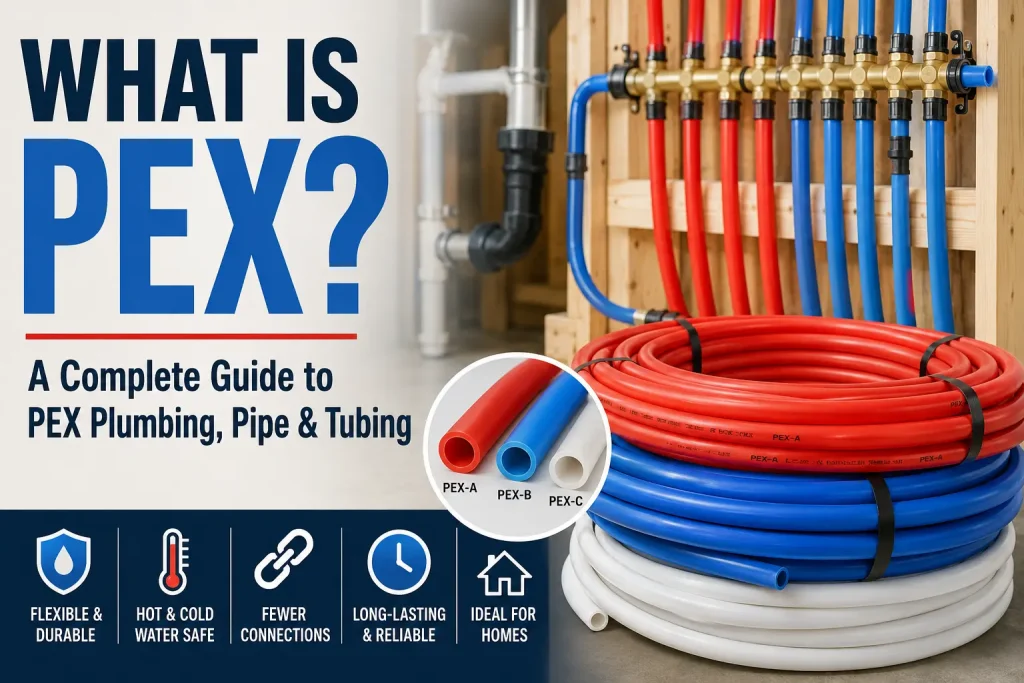
PEX stands for cross-linked polyethylene.
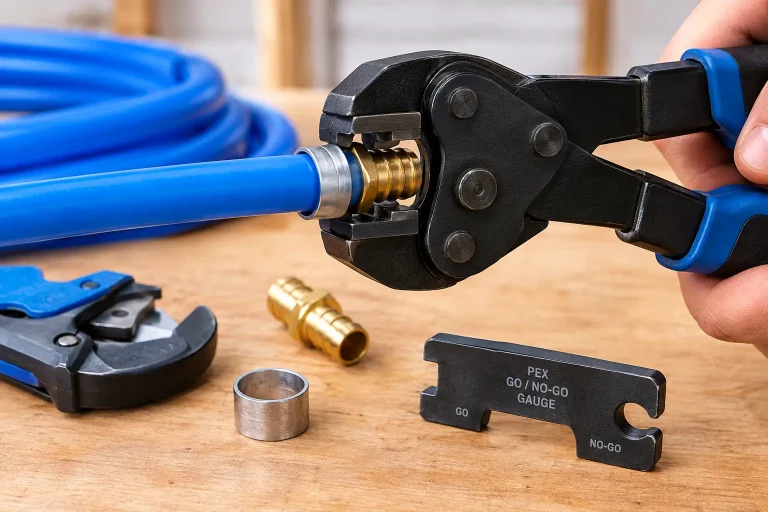
Unlike rigid plastic pipe, PEX is flexible tubing. You can bend it around many obstacles instead of cutting the pipe and installing an elbow at every turn.
PEX has become popular in residential construction, remodeling, and repiping because of this flexibility.
NSF notes that PEX is widely used because its flexibility allows it to make turns without requiring the same number of 90-degree fittings used with rigid piping. Approved PEX products can be used for hot and cold water supply and certain other applications.
PEX Pros
- Flexible
- Lightweight
- Easy to route through walls and floors
- Fewer fittings may be needed
- Good choice for many repiping projects
- Suitable for hot and cold water when properly rated
- Available with several connection systems
- Does not require solvent cement
- Useful in tight spaces
PEX Cons
- Not intended to replace DWV piping
- Must be protected from prolonged UV exposure
- Can be damaged by physical impact or rodents
- Connection systems require compatible fittings and tools
- Product temperature and pressure ratings must be followed
- Local code requirements still apply
PEX is especially attractive when you are opening walls for a remodel or replacing old water-supply lines.
What Is PVC?
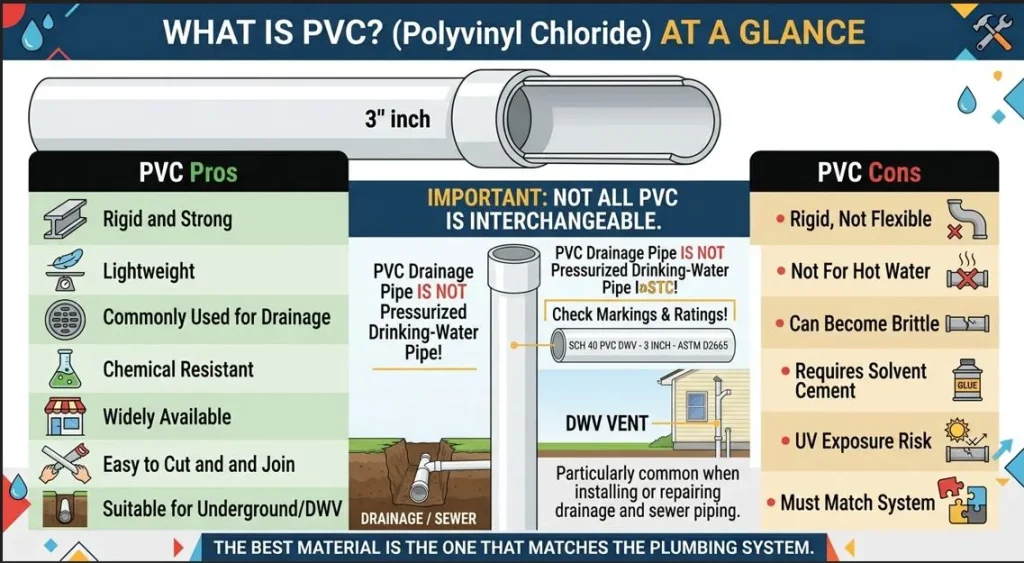
PVC stands for polyvinyl chloride.
PVC is a rigid plastic pipe that has been used in residential and commercial plumbing for decades.
It is commonly associated with drainage, sewer, waste, vent, and other applications. Certain PVC products are also manufactured and listed for water-service or water-distribution applications.
The important point is that not all PVC pipe is interchangeable.
A PVC pipe designed for drainage is not automatically suitable for pressurized drinking-water service.
The product’s markings, rating, standard, and intended application matter.
PVC Pros
- Rigid and strong
- Lightweight compared with many metal alternatives
- Commonly used for drainage
- Resistant to many common chemicals
- Widely available
- Relatively easy to cut and join
- Suitable for many underground and DWV applications
PVC Cons
- Rigid rather than flexible
- Not generally the first choice for hot-water distribution
- Can become brittle under certain conditions
- Requires proper solvent-cement joining
- UV exposure can affect certain products
- Product type and application must match the plumbing system
PVC is particularly common when installing or repairing drainage and sewer piping.
What Is CPVC?
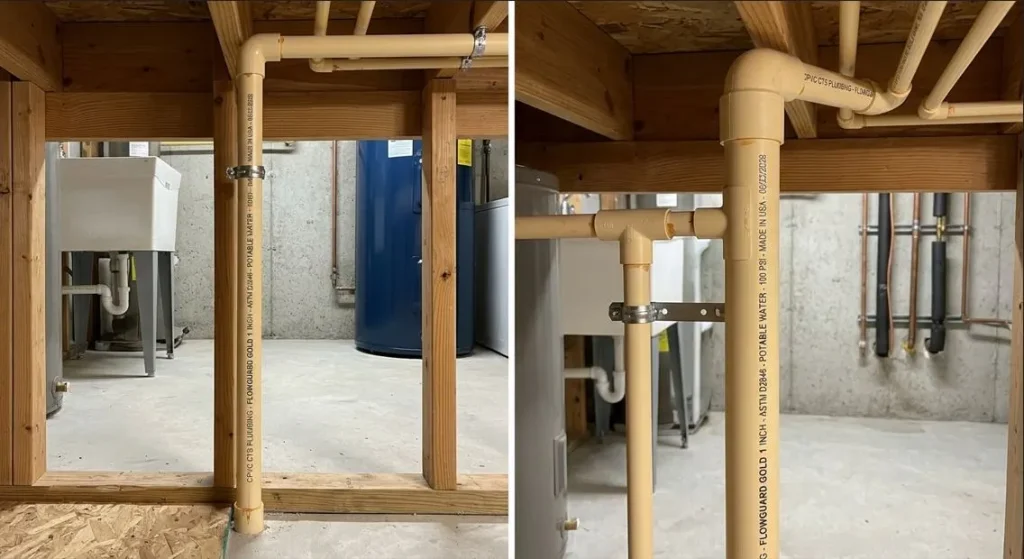
CPVC stands for chlorinated polyvinyl chloride.
It looks similar to PVC, but CPVC is chemically modified to handle higher temperatures than standard PVC products intended for cold-water or drainage applications.
CPVC is commonly used for residential hot and cold water distribution.
It is rigid, so installation generally involves more fittings and more precise routing than flexible PEX.
CPVC Pros
- Suitable for hot and cold water when properly rated
- Lightweight
- Corrosion resistant
- Does not require a torch
- Can be less expensive than some traditional plumbing materials
- Commonly used in residential water distribution
CPVC Cons
- Rigid
- More difficult to route around obstacles than PEX
- Can be damaged by impact
- Requires appropriate solvent cement
- Expansion and contraction must be considered
- Product and chemical compatibility matter
- Local code and manufacturer instructions must be followed
CPVC can make sense when you want a rigid water-supply system and the product is approved for your application.
What Is ABS?
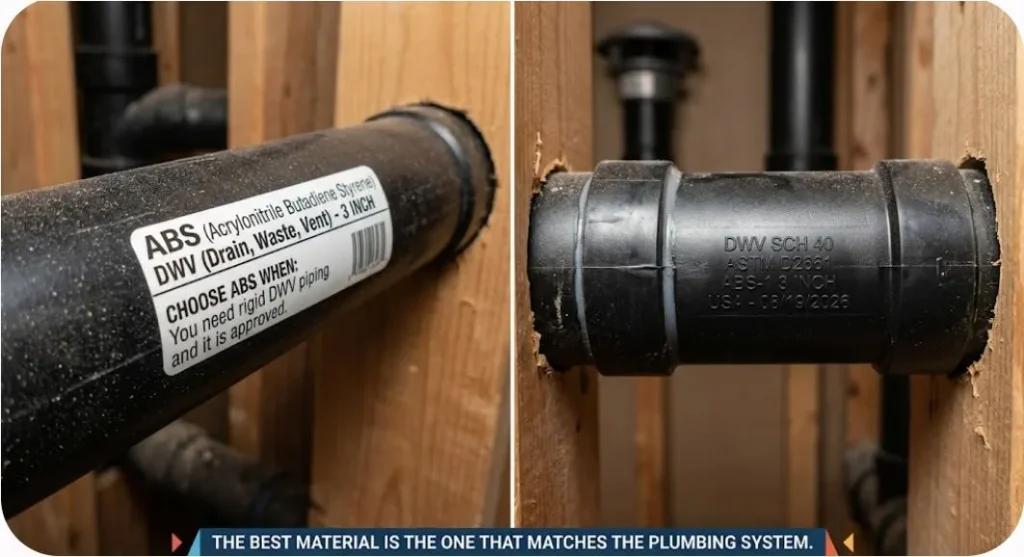
ABS stands for acrylonitrile butadiene styrene.
In residential plumbing, ABS is most commonly associated with drainage, waste and vent systems.
It is a rigid black plastic pipe that you will often see in drain and sewer installations.
The 2024 IPC lists ABS as an approved material for several sanitary drainage and vent applications.
ABS Pros
- Lightweight
- Rigid
- Commonly used for DWV
- Easy to cut
- Solvent-cement joints are relatively straightforward
- Good impact resistance compared with some other rigid plastics
- Widely used for drain and waste applications
ABS Cons
- Not a typical choice for residential hot and cold potable-water distribution
- Rigid
- Requires appropriate joining materials
- Outdoor exposure can require additional protection depending on the product
- Local requirements may determine whether ABS or PVC is preferred
If you are replacing a drain line, ABS may be one of the materials you encounter.
If you are repiping the water lines that feed your shower and kitchen faucet, PEX or CPVC is a much more relevant comparison.
PEX vs PVC
PEX and PVC are both plastic plumbing materials, but they are often used for different purposes.
PEX
PEX is flexible and is commonly used for hot and cold water distribution.
PVC
PVC is rigid and is widely used for drainage and other applications, although certain PVC products are approved for water-service or water-distribution use.
So asking:
“Is PEX better than PVC?”
does not have one universal answer.
For a whole-house water-supply repipe, PEX may be the more practical option because of its flexibility.
For a drain line, PVC may be the obvious choice because PEX is not a DWV pipe.
PEX vs PVC winner
For flexible residential water supply: PEX generally has the advantage.
For many drainage applications: PVC is the more appropriate material.
PEX vs CPVC
This is a much closer comparison because both can be used for hot and cold water distribution when properly rated and approved.
PEX
- Flexible
- Easier to route
- Often requires fewer fittings
- Good for remodeling and repiping
- Available with several connection systems
CPVC
- Rigid
- Requires more precise routing
- Uses solvent-cement connections
- Suitable for hot and cold water distribution when properly rated
For a complicated house with lots of corners, PEX can be easier to work with.
For a straightforward rigid installation, CPVC can still be a practical choice.
PEX vs CPVC winner
For flexibility and ease of routing: PEX.
For a rigid water-supply system: CPVC.
PEX vs ABS
This is where the comparison becomes misleading.
PEX and ABS usually perform different jobs.
PEX is commonly used for water distribution.
ABS is commonly used for drainage, waste, and vent piping.
So you generally would not choose between them for the same section of a residential plumbing system.
Example
If you are replacing the pipe that carries water from your main line to your bathroom faucet:
PEX may be an option.
If you are replacing the drain underneath that bathroom sink:
ABS or PVC may be an option, depending on the application and local requirements.
PEX vs ABS winner
There isn’t one.
PEX wins for water distribution.
ABS wins for the DWV applications for which it is approved.
PVC vs CPVC
PVC and CPVC are related materials, but they should not be treated as the same pipe.
The “C” in CPVC refers to chlorination, which changes the material’s characteristics and allows properly manufactured CPVC products to be used in higher-temperature applications than many standard PVC products.
PVC is widely used for drainage and other applications.
CPVC is commonly used for hot and cold water distribution.
PVC vs CPVC winner
For hot-water distribution: CPVC is generally the relevant choice when properly rated.
For drainage: PVC is commonly used.
Never select pipe based only on the similar appearance of the two materials.
Check the markings and intended application.
PVC vs ABS
This is one of the most legitimate head-to-head comparisons in this group.
Both PVC and ABS are commonly used for DWV systems.
The choice can depend on:
- Local plumbing code
- Local availability
- Material cost
- Installation practices
- Existing plumbing
- Contractor preference
- Temperature and environmental conditions
- Manufacturer requirements
Both materials are recognized for sanitary drainage and vent applications in the 2024 IPC.
PVC vs ABS winner
There is no universal winner.
For many homeowners, local availability and the existing plumbing system may matter more than choosing one polymer over the other.
CPVC vs ABS
CPVC and ABS are another example of materials that usually have different primary jobs.
CPVC is commonly used for hot and cold water distribution.
ABS is commonly used for DWV.
So:
CPVC → water supply
ABS → drainage
That makes the choice much easier when you know what the pipe needs to do.
PEX vs PVC vs CPVC vs ABS for Freezing Weather
Freezing temperatures are an important consideration in many parts of the United States.
All water-filled plumbing can be vulnerable to freezing.
However, flexible PEX has an advantage over rigid materials because it can expand and contract more readily.
That does not mean PEX cannot freeze or fail.
A frozen PEX system can still suffer damage, especially at fittings and other vulnerable points.
Rigid materials such as PVC, CPVC, and ABS do not have the same flexibility.
If your plumbing passes through an unheated crawl space, garage, exterior wall, or other cold area, insulation and proper installation matter regardless of the pipe material.
Which Pipe Is Safest for Drinking Water?
There is no simple answer such as:
“PEX is safe and PVC is unsafe.”
The specific product matters.
Plumbing components that contact drinking water should meet the applicable health and safety requirements for potable-water use.
NSF explains that NSF/ANSI/CAN 61 addresses health effects from materials and components that come into contact with drinking water. So when choosing pipe for potable water, look for the appropriate certification and application marking rather than relying solely on the generic name of the plastic.
Best Pipe for Different Plumbing Jobs
Here’s a practical way to think about the four materials.
| Plumbing job | Material to consider first |
|---|---|
| Whole-house water repipe | PEX |
| Hot-water distribution | PEX or CPVC |
| Cold-water distribution | PEX, CPVC, or approved PVC depending on application |
| Drain lines | PVC or ABS |
| Waste and vent piping | PVC or ABS |
| Tight spaces | PEX |
| Lots of bends | PEX |
| Rigid water-supply installation | CPVC |
| Residential DWV | PVC or ABS |
| Freezing-prone water lines | PEX may have an advantage |
| Potable-water supply | Approved/listed PEX, CPVC, PVC or other applicable material |
| Sewer/drain replacement | PVC or ABS, depending on application and local requirements |
Which Is Better: PEX, PVC, CPVC or ABS?
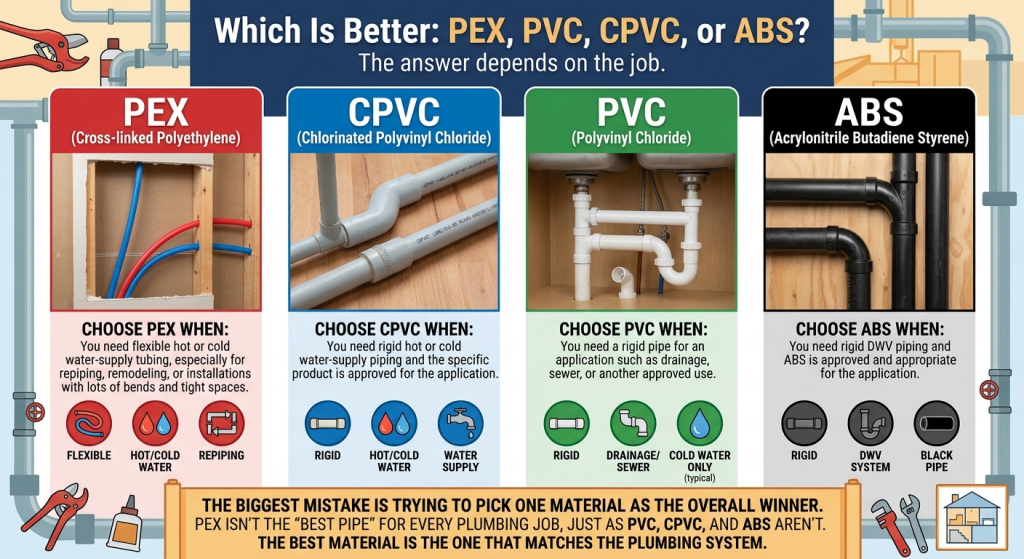
The answer depends on the job.
Choose PEX when:
You need flexible hot or cold water-supply tubing, especially for repiping, remodeling, or installations with lots of bends and tight spaces.
Choose CPVC when:
You need rigid hot or cold water-supply piping and the specific product is approved for the application.
Choose PVC when:
You need a rigid pipe for an application such as drainage, sewer, or another approved use.
Choose ABS when:
You need rigid DWV piping and ABS is approved and appropriate for the application.
The biggest mistake is trying to pick one material as the overall winner.
PEX isn’t the “best pipe” for every plumbing job, just as PVC, CPVC, and ABS aren’t.
The best material is the one that matches the plumbing system.
Final Verdict
If you’re choosing between PEX vs PVC vs CPVC vs ABS, start with the job rather than the material.
PEX is often a great water-supply choice. CPVC is a solid rigid water-supply option. PVC and ABS are common DWV choices. The right pipe depends on the job.