
How Much Does It Cost to Repipe a House With PEX? 2026 Cost Guide
If you are wondering how much to repipe a house with PEX, a realistic starting budget for a whole-house project is roughly $4,000 to $15,000 for many U.S. homes. Smaller, easy-access projects can cost less, while large homes, multi-story layouts, slab foundations, difficult pipe access, and extensive wall repairs can push the price higher.
The important part is this: PEX tubing itself is not the biggest cost. Labor, access, the number of plumbing fixtures, permits, and repairs after the work often have a much larger impact on the final bill.
Current cost guides show that whole-house repiping can range from about $1,500 to $15,000 overall, while PEX material commonly costs around $0.40 to $2 per linear foot before installation.
For a more personalized estimate, use our House Repiping Cost Calculator. It can give you a starting point based on your home’s characteristics instead of relying on one national average.
Quick Answer: What Is the PEX Repipe Cost?
The cost of repiping a house with PEX commonly falls somewhere around $4,000 to $15,000, although your actual quote can fall outside that range.
For comparison, Angi’s 2026 data puts the overall cost of professional house repiping at approximately $1,500 to $15,000, with an average of about $7,500. That figure covers different pipe materials and project types, so it should not be treated as a universal PEX-only average.
PEX is generally one of the more affordable choices for a whole-house repipe. Current cost data puts PEX tubing at roughly $0.40 to $2 per linear foot, compared with about $2 to $8 per linear foot for copper in the same Angi guide. Material prices, however, tell only part of the story.
Think of it like buying a car.
The price of the tires matters, but you still have to pay for the engine, labor, delivery, and everything else that makes the thing actually work.
PEX Repipe Cost by House Size
House size gives you a useful starting point, but square footage alone does not determine repiping cost.
A 2,000-square-foot house with two bathrooms and easy access can be considerably cheaper to repipe than a smaller house with a complicated layout, finished walls, and a slab foundation.
Here is a practical budgeting framework:
| Home size | Typical PEX repipe budget* |
|---|---|
| 1,000 sq. ft. | About $4,000–$7,000 |
| 1,500 sq. ft. | About $5,000–$9,000 |
| 2,000 sq. ft. | About $6,000–$12,000 |
| 2,500 sq. ft. | About $7,000–$14,000 |
| 3,000+ sq. ft. | About $9,000–$15,000+ |
These are planning ranges, not guaranteed prices. Local labor rates, fixture count, access, permits, foundation type, pipe layout, and restoration work can change the final quote substantially.
Existing published estimates also show wide variation. For example, one repiping specialist reports typical PEX repipe quotes from about $4,500 to $15,000 depending on home size and complexity.
That variation is exactly why a homeowner should treat online averages as a budgeting tool, not a contractor quote.
What Determines the Cost of Repiping a House With PEX?
Several factors can move your estimate by thousands of dollars.
1. Number of Bathrooms and Fixtures
The number of plumbing fixtures often matters more than homeowners expect.
A house may have:
- Sinks
- Toilets
- Showers
- Bathtubs
- Washing machines
- Dishwashers
- Water heaters
- Refrigerator ice makers
- Hose bibs
- Other water connections
Every fixture needs a properly routed water supply line.
More fixtures generally mean more tubing, fittings, connections, labor, and installation time.
A three-bathroom house will normally require more plumbing work than a similar-sized house with one bathroom.
2. Accessibility of the Existing Plumbing
This is one of the biggest factors in a repiping estimate.
If a plumber can easily access the existing water lines through an unfinished basement, crawlspace, attic, or other open areas, the job may require less demolition.
Finished walls are another story.
When plumbers need to open drywall, work around cabinets, remove sections of flooring, or navigate tight spaces, labor increases quickly.
Angi notes that labor can account for a large share of a house repiping project because accessing and installing new piping is time-intensive.
In other words, the PEX may be inexpensive.
Getting the PEX where it needs to go is where the money starts moving.
3. One-Story vs. Two-Story Homes
A two-story home can require more complicated routing than a single-story house.
Plumbers may need to run new supply lines between floors and work around additional structural obstacles.
That does not mean every two-story house will cost dramatically more. It simply creates more opportunities for labor and access costs to increase.
4. Foundation Type
Your foundation can have a major effect on the installation method.
Homes with accessible crawlspaces can sometimes provide relatively straightforward access to water lines.
Slab-foundation homes can be more challenging because plumbing may run beneath or through areas that are difficult to reach.
The solution is not always to break up the slab. A plumber may use alternative routing depending on the home’s design and local requirements.
This is an important question to ask when comparing quotes:
How will the new PEX lines be routed?
Do not compare two estimates only by their final dollar amount. Compare what each contractor plans to do.
5. Local Labor Rates
A PEX repipe in a high-cost metropolitan area can have a very different price from the same project in a lower-cost market.
Labor rates vary by location, demand, licensing requirements, travel, business overhead, and project complexity.
Angi’s city-level data illustrates this variation, with some markets running above national averages because of higher labor and operating costs.
That is another reason a national “average PEX repipe cost” should never be treated as a guaranteed price.
6. Permits and Inspections
Some repiping projects require permits and inspections.
Requirements and fees depend on your local jurisdiction and the scope of the work.
Do not assume a quote includes permit fees unless the contractor says so.
Ask:
“Does this estimate include permits and inspection fees?”
That one question can prevent an unpleasant surprise later.
7. Drywall and Finish Repairs
Replacing the plumbing is only one part of the project.
If walls or ceilings need to be opened, someone may need to repair them afterward.
That can include:
- Drywall patching
- Texture matching
- Priming
- Painting
- Flooring repairs
- Cabinet or trim repairs
Some plumbers include basic patching in their estimates. Others leave restoration to the homeowner or a separate contractor.
Get this clarified before signing anything.
What Is Involved in Repiping a House?
Repiping is more than simply pulling old pipe out and pushing PEX through the walls.
A typical whole-house repipe can involve several stages.
Step 1: Inspect the Existing Plumbing
The plumber first evaluates the existing water-supply system.
They may identify the existing pipe material, inspect accessible sections, locate problem areas, and determine how new lines can be routed.
Step 2: Plan the New Pipe Layout
The contractor determines where the new PEX lines will run and how they will connect to fixtures.
The layout may use a trunk-and-branch design, a home-run system with a manifold, or another code-compliant configuration appropriate for the property.
Step 3: Shut Off and Isolate the Water
The existing water supply must be shut off before work begins.
The plumber then prepares the system for removal or abandonment of the old supply lines.
Step 4: Install the New PEX
The plumber routes the PEX tubing to the required fixtures and makes the appropriate connections.
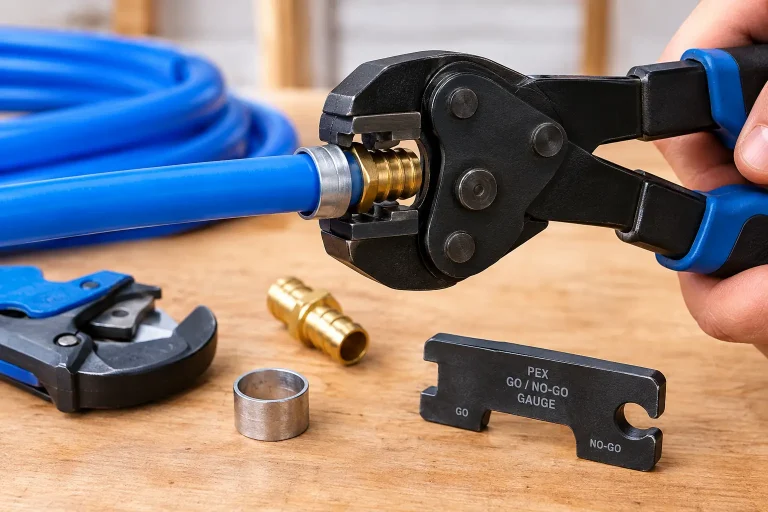
PEX systems can use approved connection methods such as crimp, clamp, or expansion fittings depending on the tubing and fitting system.
The International Residential Code recognizes PEX and specifies applicable standards and installation requirements; local codes may also apply.
Step 5: Connect Fixtures
The new supply lines are connected to sinks, toilets, showers, appliances, water heaters, hose bibs, and other required outlets.
Step 6: Test the System
The system should be tested for leaks and proper operation before walls or other finished surfaces are closed.
Testing requirements can vary according to the applicable code and installation.
Step 7: Restore Opened Areas
Finally, opened walls, ceilings, floors, or other areas may need restoration.
This step may be included in the plumbing contract or handled separately.
PEX-A vs. PEX-B for a Whole-House Repipe
If you are already spending thousands of dollars on a repipe, it is reasonable to ask which type of PEX your plumber plans to install.
The two commonly discussed options are PEX-A and PEX-B.
PEX-A is generally more flexible and can be installed using expansion-style connection systems designed for compatible tubing and fittings.
PEX-B commonly uses insert fittings with crimp or clamp-style connections, depending on the system.
Neither label alone tells you whether an installation will be good or bad.
The quality of the tubing, fittings, installation method, support, routing, protection, and workmanship all matter.
The safest approach is to make sure the products and connection system are compatible and installed according to the manufacturer’s instructions and applicable code requirements.
Does PEX Cost Less Than Copper to Repipe a House?
In many cases, yes.
PEX generally costs less than copper for a whole-house repiping project because the material is less expensive and its flexibility can simplify installation.
Current Angi data lists PEX at approximately $0.40–$2 per linear foot and copper at approximately $2–$8 per linear foot for the material.
But don’t make the decision based solely on the price of the pipe.
Copper has a long history in residential plumbing and offers characteristics that some homeowners value. PEX, meanwhile, offers flexibility, corrosion resistance, and easier routing in many retrofit situations.
The right choice depends on the home, local code, budget, water conditions, installation design, and homeowner priorities.
When Should You Repipe a House With PEX?
Repiping becomes worth considering when your existing water-supply system repeatedly causes problems.
Common warning signs include:
- Frequent leaks
- Corroded pipes
- Rust-colored water
- Poor water pressure
- Repeated plumbing repairs
- Aging supply piping
- Deteriorating pipe materials
- A major renovation that requires changing plumbing routes
The specific pipe material matters too.
For example, older galvanized steel systems can develop internal corrosion and restrict water flow over time. Polybutylene systems are another older material that homeowners may encounter and may need replacement depending on their condition and circumstances.
However, not every old pipe automatically needs a whole-house repipe.
A professional inspection can help determine whether you need a complete replacement or a more targeted repair.
How Much Does It Cost to Repipe a House With PEX Compared With Repairing One Pipe?
A whole-house repipe is a major project.
If only one accessible pipe has failed, replacing that section may be far less expensive than replacing the entire water-supply system.
The bigger question is whether the failed pipe is an isolated problem or the first sign of a larger system issue.
If you are repeatedly paying for emergency repairs, it makes sense to compare the long-term cost of continuing repairs with the cost of replacing the aging system.
For example, replacing one leaking section today may be sensible if the rest of the system is in good condition.
If leaks keep appearing in different areas, however, a whole-house repipe may deserve serious consideration.
How to Get an Accurate PEX Repiping Estimate
Online cost guides are useful, but your house does not live on the internet.
To get a realistic estimate, gather these details first:
- Approximate home size
- Number of bathrooms
- Number of stories
- Foundation type
- Existing pipe material
- Number of plumbing fixtures
- Whether walls are finished
- Whether you have a crawlspace or basement
- Your location
- Whether drywall repair is included
Then ask at least two or three qualified plumbing contractors for detailed estimates.
Your quote should clearly explain:
- PEX type
- Tubing size
- Fittings and connection method
- Number of fixtures
- Pipe-routing method
- Labor
- Permit costs
- Inspection
- Removal or abandonment of old piping
- Drywall or finish repairs
- Cleanup
- Warranty
A low bid is not automatically the best bid.
A quote that leaves out permits, restoration, or important connections can look cheap until the missing pieces arrive with their own invoices.
Use a Repipe Cost Calculator Before Calling a Plumber
If you want to estimate the project before requesting contractor quotes, use our House Repiping Cost Calculator.
Instead of relying on a single national average, a calculator can help you think through the variables that actually affect the project, such as home size and the scope of the repipe.
It is not a substitute for an on-site plumbing estimate, but it can give you a useful budget range and help you understand whether a contractor’s quote looks broadly reasonable.
It also gives you better questions to ask.
And honestly, that is half the battle.
You don’t need to become a plumber overnight. You just need enough information to know what you are paying for.
Is Repiping a House With PEX Worth It?
For homeowners dealing with recurring leaks, aging supply lines, corrosion, poor water pressure, or problematic older plumbing, a PEX repipe can be a practical long-term upgrade.
PEX offers several advantages for retrofit work, including flexibility and relatively low material cost. Its installation can also require less cutting and fitting than rigid piping in some layouts.
But repiping is not a small repair.
You should consider the condition of the existing plumbing, the expected cost of continued repairs, your home’s layout, the installation method, and your long-term plans for the property.
If the existing system works well and has no meaningful signs of deterioration, there may be no reason to rush into a complete repipe.
Bottom Line:
So, how much does it cost to repipe a house with PEX?
For many U.S. homeowners, $4,000 to $15,000 is a reasonable planning range for a whole-house PEX repipe, but the actual price depends heavily on the property and local labor market.
The biggest cost factors are usually:
- Home size
- Number of bathrooms and fixtures
- Accessibility
- Foundation type
- Number of stories
- PEX and fitting system
- Labor rates
- Permits
- Wall and ceiling repairs
- Complexity of the existing plumbing
PEX itself is only one piece of the budget.
Before accepting a quote, make sure you know exactly what the contractor includes and excludes. Then compare detailed estimates rather than comparing one big number to another.
For a quick starting point, try our House Repiping Cost Calculator to estimate your potential project cost before contacting a plumber.