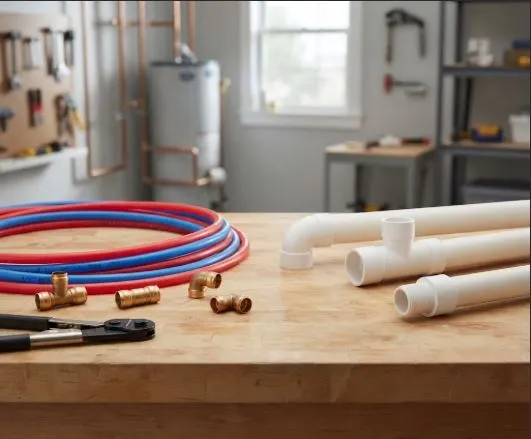
PEX vs PVC: Which Pipe Is Better for Plumbing?
If you’re comparing PEX vs PVC, there isn’t one universal winner. The better pipe depends on what you’re using it for.
For residential plumbing, PEX is commonly used for hot- and cold-water distribution because it is flexible and relatively easy to route through walls and around obstacles. PVC is a rigid plastic pipe commonly used for drainage, waste and vent systems, as well as certain water-service applications when the specific pipe is approved for that use.
So before choosing between PEX and PVC, ask a more useful question:
What job does the pipe need to do?
This guide compares PEX and PVC by installation, temperature, flexibility, cost, durability, freezing conditions, fittings and common plumbing applications.
Quick Answer
PEX is commonly used for residential water distribution because it is flexible, easy to route, and suitable for hot and cold water when properly rated. PVC is rigid and is widely used for drainage, waste, vent, sewer, irrigation, and certain water-service applications.
The right choice depends on the application, temperature, pressure, location, product rating, connection method, and local plumbing requirements. PEX and PVC are not interchangeable for every plumbing job.
PEX vs PVC at a Glance
| Feature | PEX | PVC |
|---|---|---|
| Material | Cross-linked polyethylene | Polyvinyl chloride |
| Flexibility | Flexible | Rigid |
| Hot-water supply | Common application when properly rated | Depends on the specific PVC product |
| Cold-water supply | Common application | Product and application specific |
| Drainage | Not a typical DWV material | Common application |
| Installation | Flexible routing and several connection systems | Rigid layout with fittings and approved joining methods |
| Freeze tolerance | More tolerant of expansion, but not freeze-proof | More vulnerable to cracking from freezing |
| Common strength | Water distribution and flexible installations | DWV and other rigid-pipe applications |
The key point is that PEX and PVC are not simply two interchangeable versions of the same pipe.
What Is PEX?
PEX stands for cross-linked polyethylene.
PEX tubing is a flexible plastic piping material widely used for residential water distribution. Unlike rigid pipe, it can bend around many obstacles, which can reduce the number of fittings needed on some installations.
PEX is commonly found in:
- Hot-water supply lines
- Cold-water supply lines
- Whole-house repiping
- Fixture supply lines
- Manifold plumbing systems
- Some radiant-heating applications
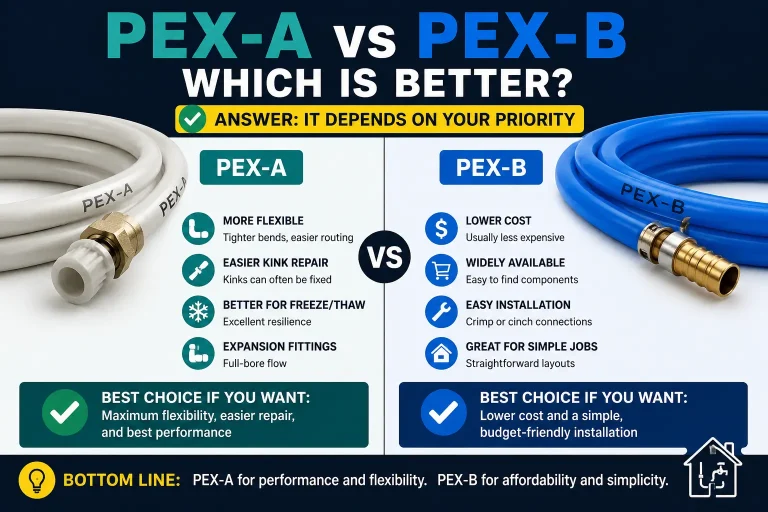
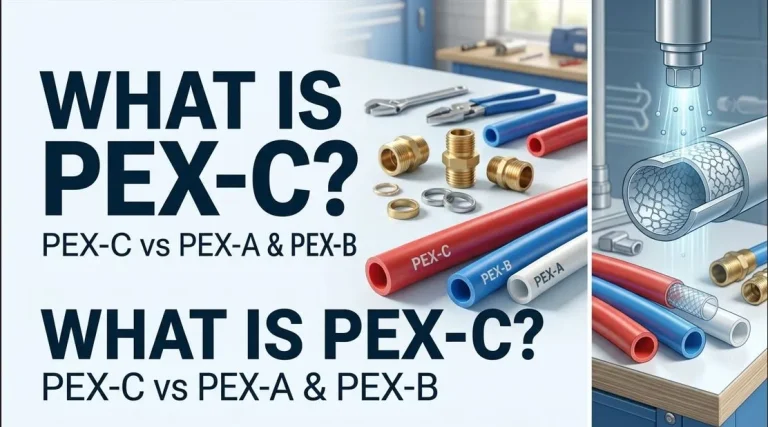
PEX is available in different types, including PEX-A, PEX-B and PEX-C. They are all PEX, but their manufacturing processes, flexibility and compatible joining systems can differ.
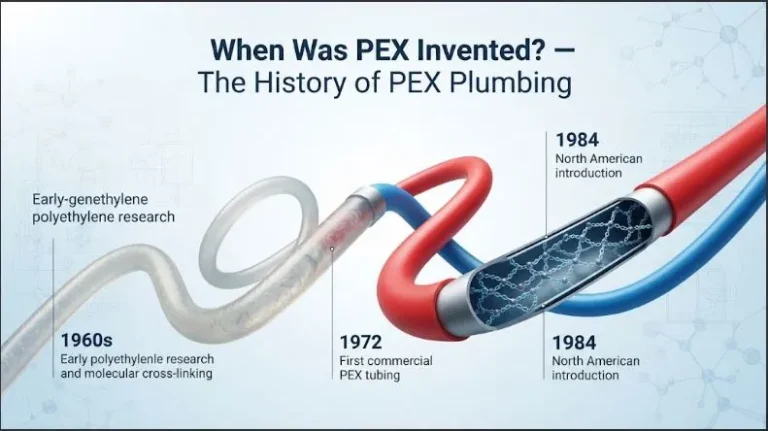
If you want to understand the material itself before comparing it with other pipe types, see our guide to what PEX plumbing is.
What Is PVC?
PVC stands for polyvinyl chloride.
PVC is a rigid plastic pipe used in several plumbing and water-related applications. One important point is that “PVC” does not describe just one application.
Different PVC products are manufactured for different purposes.
PVC can be used in applications such as:
- Drainage
- Waste and vent piping
- Sewer piping
- Irrigation
- Certain water-service applications
- Other applications where the specific product is approved
That distinction matters because you shouldn’t assume that every PVC pipe is suitable for drinking-water distribution or hot water.
For example, a PVC product intended for drainage is not automatically interchangeable with a pressure-rated water-service product.
Always check the pipe’s markings, intended application, pressure/temperature rating and applicable local plumbing requirements.
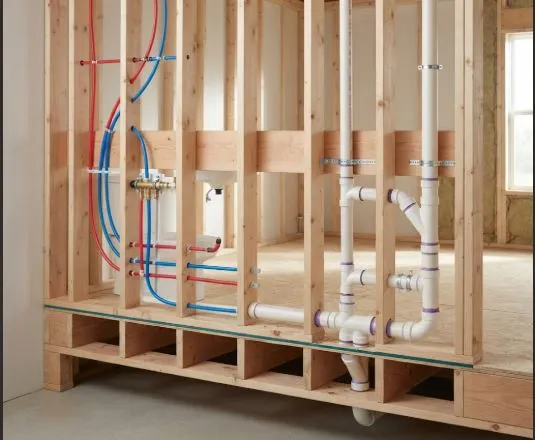
PEX vs PVC: The Biggest Differences
Which Pipe Is Better for Your Plumbing Project?
| Project or Application | Common Choice | Why |
|---|---|---|
| Indoor hot-water supply | PEX | Flexible and commonly used for hot-water distribution when properly rated. |
| Indoor cold-water supply | PEX or approved PVC | The correct choice depends on the product, application, and local requirements. |
| Whole-house repiping | PEX | Flexibility can make routing through existing walls and framing easier. |
| Drain, waste and vent | PVC | PVC products are widely used for residential DWV systems. |
| Sewer piping | PVC | Rigid PVC products are commonly used for sewer applications. |
| Tight retrofit space | PEX | Its flexibility can reduce the need for directional fittings. |
| Radiant-floor tubing | PEX | PEX is commonly used for hydronic radiant-heating applications. |
| Irrigation | PVC is common | Rigid PVC is widely used in irrigation systems, depending on the system design. |
Note: This table is a general application guide, not a substitute for local plumbing code or the manufacturer’s installation requirements. Always verify that the specific pipe and fittings are approved for the intended application.
1. Flexibility
This is one of the most obvious differences.
PEX is flexible enough to bend around many framing members, corners and obstacles. That can make it particularly useful when installing or replacing water lines inside an existing house.
PVC is rigid.
A PVC installation generally needs fittings when the pipe changes direction. That isn’t necessarily a disadvantage, but it means the layout and fitting count can become more important.
For a complicated retrofit, the flexibility of PEX can make routing water lines considerably easier.
2. Hot Water
PEX is commonly used for residential hot-water distribution when the particular tubing is rated and approved for that application.
PVC requires more care.
Don’t assume that ordinary PVC is suitable for hot-water distribution simply because it is plastic. The specific product’s temperature rating and intended application matter.
This is one reason you should always check the manufacturer’s specifications before using any pipe for hot water.
Bottom line: PEX is a common choice for hot-water supply, while PVC must be selected specifically for an application that permits the required temperature.
3. Cold Water
Both PEX and certain PVC products can be used in cold-water applications, but they are not automatically interchangeable.
PEX is commonly used for indoor cold-water distribution.
PVC is also used in various cold-water and water-service applications, depending on the pipe specification and local requirements.
The important distinction is:
Don’t choose based only on the word “PVC” on the pipe. Choose based on the actual product and its approved application.
4. Installation
PEX can be convenient because its flexibility allows long runs with fewer directional fittings.
Depending on the system, PEX connections may use:
- Crimp fittings
- Clamp fittings
- Expansion fittings
- Press fittings
- Approved push-fit fittings
The connection method must match the tubing and fittings being used.
PVC installation is different.
Rigid PVC generally requires accurate measuring and cutting, proper fitting preparation and an approved joining method appropriate to the application.
With solvent-welded PVC, joint preparation matters. A poorly prepared connection can eventually leak.
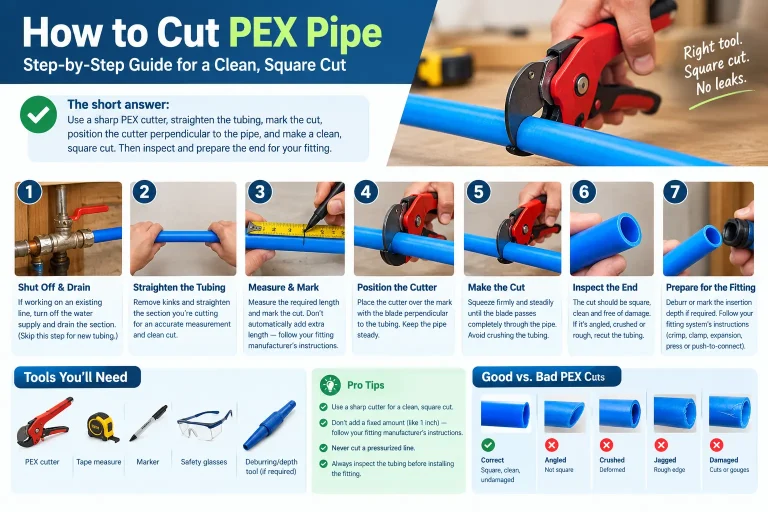
If you’re working specifically with PEX, see our step-by-step guide on how to crimp PEX.
PEX vs PVC for Repiping
For a whole-house repipe, PEX is often attractive because it can be routed through walls, floors and framing spaces with fewer directional fittings.
It can also work well with a manifold-style plumbing layout, where individual fixtures or groups of fixtures are supplied from a central manifold.
PVC is rigid, so planning the route is more important.
That doesn’t mean PVC is automatically unsuitable for every repiping project. The correct material depends on the application, existing system, local code and the specific product.
For homeowners planning a repipe, the real comparison should include:
- Pipe material
- Fitting requirements
- Labor
- Accessibility
- Number of connections
- Existing plumbing layout
- Local plumbing requirements
For a cost-focused project, don’t compare only the price per foot of pipe. The installed system cost is what matters.
PEX vs PVC Cost
The price difference between PEX and PVC depends on pipe size, product type, fittings, quantity, supplier and labor.
There is also a difference between material cost and installation cost.
A pipe may be inexpensive per foot but require more fittings or more labor to install.
PEX can reduce fitting requirements in some layouts because it bends around obstacles. However, PEX connection systems may require specialized tools and compatible fittings.
PVC can be economical for applications where rigid pipe is already the standard choice and the installation is straightforward.
So instead of asking:
“Which pipe is cheaper?”
ask:
“Which system will cost less to install correctly for my particular project?”
PEX vs PVC in Freezing Temperatures
Neither PEX nor PVC is freeze-proof.
If water freezes inside a plumbing system, pressure can build up and damage piping and fittings.
PEX has an important advantage here: its flexibility allows it to accommodate some expansion better than rigid piping.
PVC is rigid, so freezing water can place significant stress on the pipe and potentially cause cracking.
But PEX should never be installed with the assumption that it cannot freeze.
Proper installation still matters. Pipes in vulnerable areas should be protected from freezing wherever possible.
PEX vs PVC for Drain Pipes
This is where the difference between the two materials becomes especially important.
PEX water tubing is not a conventional substitute for PVC DWV piping.
Drain, waste and vent systems have different requirements from pressurized water-distribution systems.
PVC is widely used for residential drainage and vent applications because specific PVC products are manufactured and listed for those purposes.
So if you’re replacing a drain line, don’t assume that PEX can simply be substituted because it is flexible.
Use a pipe that is approved for the actual application.
PEX vs PVC for Drinking Water
The question isn’t simply whether “PEX” or “PVC” is safe.
The better question is:
Is this particular pipe and fitting system approved for potable-water use?
Plumbing requirements can include standards for materials, fittings and drinking-water contact. Product certification and labeling therefore matter.
When buying pipe for drinking-water plumbing, look for the appropriate potable-water approval and follow the manufacturer’s installation instructions.
Avoid making decisions based on broad claims such as “all plastic pipe is unsafe” or “all PEX is safer.”
The specific product and its intended use matter.
Can You Replace PVC With PEX?
Sometimes, but not automatically.
It depends on what the existing PVC pipe is doing.
PVC water line
A suitable PEX product may be an option if the application, pipe rating, connection system and local plumbing requirements allow it.
PVC drain line
PEX is not a direct replacement for conventional PVC DWV piping.
PVC irrigation line
Replacement depends on the irrigation system, pressure, location and product requirements.
PVC water service
PEX and PVC may both be available for certain water-service applications, but the specific product, installation conditions and local requirements must be checked.
The important lesson is:
You cannot determine whether PEX can replace PVC until you know what the PVC pipe is being used for.
Can You Connect PEX to PVC?
Yes, PEX and PVC can be connected using an appropriate transition fitting when the connection is allowed for the application.
The exact fitting depends on:
- Pipe size
- PEX connection system
- PVC type
- Threaded or mechanical connection
- Pressure requirements
- Manufacturer instructions
- Local plumbing requirements
Don’t improvise a connection just because two pipes have the same nominal size.
PEX and PVC are different materials with different joining systems.
Use a transition fitting designed for the connection and follow its installation instructions.
PEX vs PVC: Which Should You Choose?
The answer depends on the job.
| If you’re… | Consider |
|---|---|
| Installing indoor hot-water supply | PEX is commonly used |
| Installing indoor cold-water supply | PEX or an approved rigid water pipe, depending on the system |
| Repiping an existing house | PEX can be convenient because of its flexibility |
| Installing drain and vent piping | PVC is commonly used |
| Installing sewer piping | PVC is commonly used in many residential systems |
| Installing irrigation | PVC is a common choice, depending on the system |
| Working in a tight retrofit space | PEX can offer routing advantages |
| Installing radiant-floor tubing | PEX is commonly used for this application |
| Working outdoors | Check UV and environmental requirements for the specific product |
| Working underground | Verify the product’s approval, pressure rating and installation requirements |
There is no reason to force one material into every application.
Choose the pipe based on the job it has to perform.
PEX vs PVC: Pros and Cons
Important: “PEX” and “PVC” are broad material categories. Always verify the specific pipe, fittings, temperature rating, intended application, and local plumbing requirements before installation.
Remember This
- Choose PEX when flexibility and residential water distribution are important.
- Consider PVC for drainage, waste, vent, sewer, irrigation, and other applications where the specific PVC product is approved.
- For hot water, verify the pipe’s temperature rating and intended application rather than assuming any plastic pipe is suitable.
- For drinking water, verify that the specific pipe and fittings are approved for potable-water use.
- For freezing conditions, PEX has greater tolerance for expansion than rigid PVC, but neither material is freeze-proof.
- For connections, use fittings and joining methods specifically designed for the pipe system.
- For code compliance, always check your local plumbing requirements and the manufacturer’s instructions.
Final Takeaway
The PEX vs PVC debate becomes much easier when you stop treating them as direct substitutes.
PEX is a flexible tubing option commonly used for residential water distribution and repiping. PVC is a rigid pipe used across several applications, particularly drainage, waste, vent, sewer and certain water-service systems.
The right choice depends on the application, temperature, pressure, installation location, product rating, connection method and local plumbing requirements.
If you’re planning a PEX installation, start by learning what PEX plumbing is, then compare PEX-A vs PEX-B if you’re choosing between PEX types. If you’re planning a repipe, our repipe cost calculator can also help you estimate the project.
For PEX connections, see our guide to PEX pipe fittings and how to crimp PEX.
The goal isn’t to find one pipe that wins every comparison.
It’s to choose the right pipe for the job.