
Is PEX Plumbing Good? Pros, Cons, Lifespan & When to Use It
Yes, PEX plumbing is good for many residential water-supply systems. It is flexible, lightweight, resistant to corrosion, and usually easier to install than rigid copper pipe. Those advantages make PEX a practical choice for many new homes, remodeling projects, and whole-house repiping jobs.
But PEX is not a magic pipe.
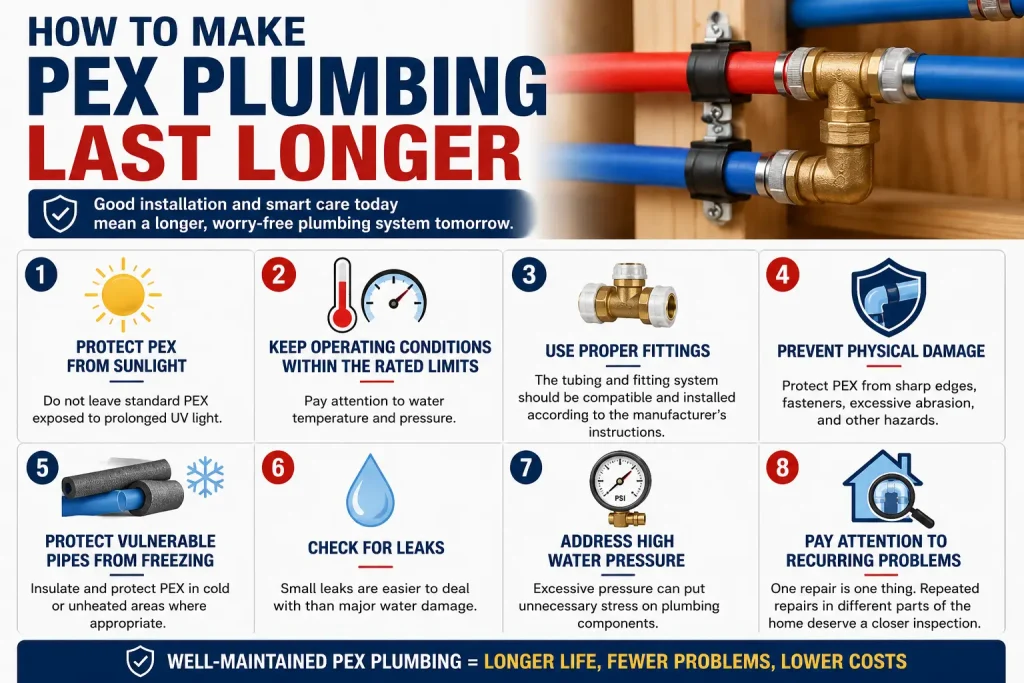
It has limits. Sunlight can damage it, fittings still need to be installed correctly, and the tubing must be used within its rated temperature and pressure limits. PEX also should not be intentionally exposed to freezing conditions simply because it handles freeze events better than many rigid pipes.
So, is PEX plumbing good? For many indoor residential applications, yes. The better question is whether it is the right material for your particular project.
What Is PEX Plumbing?
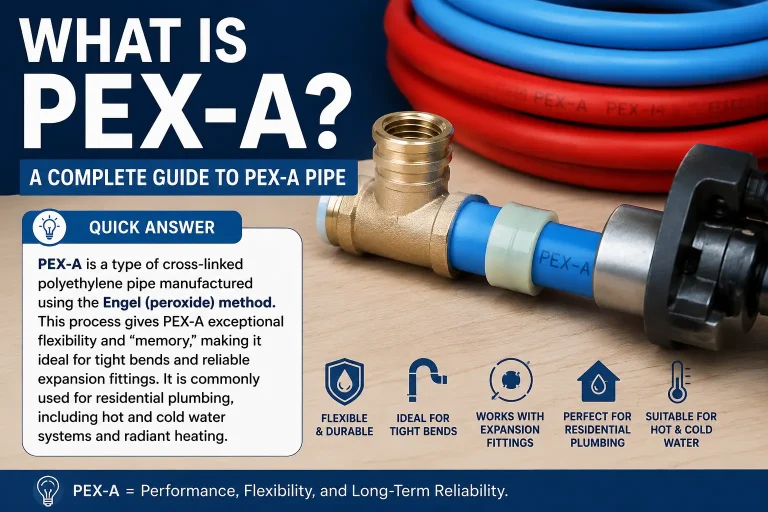
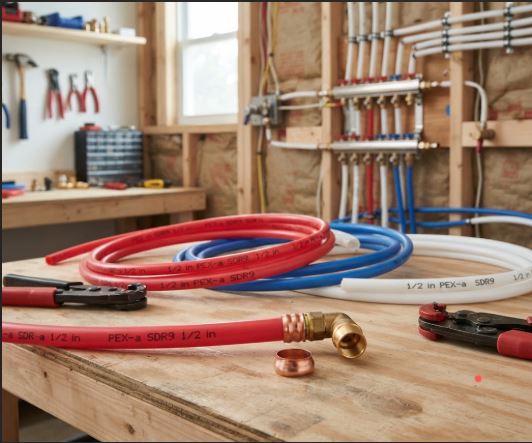
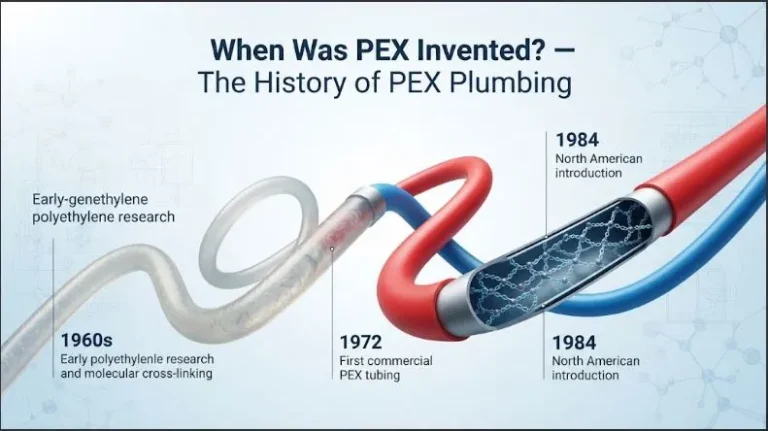
PEX stands for cross-linked polyethylene. It is a flexible plastic tubing used for hot- and cold-water distribution and other applications where the product is specifically approved.
Unlike rigid copper pipe, PEX can bend around many obstacles. That flexibility can allow longer runs with fewer connections in some plumbing layouts.
PEX tubing also comes in different types, including PEX-A, PEX-B, and PEX-C. These labels describe different manufacturing methods. They do not simply mean that one type is “good” and another is “bad.”
The current ASTM F876 specification covers PEX tubing for water service at different temperatures and includes testing for pressure performance, environmental stress cracking, oxidative stability in potable chlorinated water, and UV resistance. The standard also recognizes applications including residential and commercial hot- and cold-potable-water distribution when applicable code requirements are met.
Why Is PEX Plumbing Good?
PEX has become popular because it solves several practical problems that plumbers face with rigid piping.
1. PEX Is Flexible
This is probably its biggest advantage.
A plumber can bend PEX around many obstacles instead of cutting and joining multiple rigid sections. In a suitable layout, that can reduce the number of fittings and connections.
Fewer connections can also mean fewer places where an installation can develop a leak.
That does not mean PEX cannot leak. It means the flexibility of the tubing can simplify certain plumbing layouts.
2. PEX Does Not Rust Like Metal Pipe
PEX is not a metal pipe, so it does not rust or pit in the same way copper or steel piping can.
That makes it useful in water conditions where corrosion of metallic piping is a concern.
Manufacturers such as Uponor also identify resistance to corrosion, pitting, and scale buildup as major characteristics of their PEX-a systems.
Of course, “corrosion-resistant” does not mean “immune to every chemical.” The tubing, fittings, surrounding materials, and water conditions still need to be compatible with the installation.
3. PEX Is Easier to Route
Imagine trying to run rigid copper through a crowded wall cavity.
Now imagine being able to make a controlled bend and continue the run.
That is where PEX earns its keep.
Its flexibility can make remodeling and repiping easier, particularly when the installer has to work around framing, existing structures, or difficult access points.
4. PEX Can Be Faster to Install
PEX does not require soldering for common connection systems.
Depending on the system, installers can use approved crimp, clamp, expansion, or other connection methods.
That can reduce installation time compared with joining many sections of rigid copper pipe. The actual savings depend on the layout, connection system, labor rates, and local requirements.
5. PEX Is Lightweight
PEX tubing is much easier to carry and maneuver than long lengths of rigid metal pipe.
That sounds like a small benefit until someone has to move materials through an attic, crawlspace, or unfinished house.
For professional installers, lighter materials and flexible coils can make the physical installation easier.
6. PEX Handles Freeze Events Better Than Rigid Pipe
This point needs some careful wording.
PEX is not freeze-proof.
However, its flexibility gives it better freeze-break resistance than rigid piping in many situations. Research and technical work summarized by the Plastics Pipe Institute addresses the ability of PEX tubing to resist breakage when frozen. PPI also notes that PEX remains flexible at temperatures well below freezing.
That does not mean you should intentionally freeze a PEX plumbing system.
PPI specifically advises against intentionally subjecting PEX systems to freezing.
So if you live somewhere with harsh winters, think of PEX as more forgiving, not invincible.
What Are the Disadvantages of PEX Plumbing?
PEX has real advantages, but it also has limitations that matter.
1. PEX Is Sensitive to UV Exposure
Sunlight is one of the biggest things to watch.
The Plastics Pipe Institute says long-term PEX performance can be affected by ultraviolet radiation and advises against storing PEX outdoors in sunlight or installing it where it receives direct sunlight.
This is why you should not assume that ordinary indoor PEX is automatically suitable for an exposed outdoor installation.
The exact UV exposure allowance varies by product. For example, some manufacturer products are specifically tested for limited periods of UV exposure.
Always check the manufacturer’s instructions rather than assuming all PEX has the same UV rating.
2. The Fittings Matter
PEX tubing is only one part of the plumbing system.
A PEX installation also includes fittings, rings, valves, supports, and connection methods.
A poorly made connection can cause problems even if the tubing itself is excellent.
The installer must use compatible components and follow the connection manufacturer’s instructions. PPI also warns that some polymer fittings can have chemical-compatibility issues with certain construction materials, including spray polyurethane foam.
In other words, don’t blame the pipe for a bad connection.
3. PEX Has Temperature and Pressure Limits
PEX is suitable for hot and cold water when the specific product is properly rated for the application.
But its pressure rating changes with temperature. ASTM F876 explicitly addresses pressure ratings at different water temperatures, and the ratings decrease as temperature increases.
That means you should never select PEX based on pipe size alone.
Check:
- Temperature rating
- Pressure rating
- Tubing type
- Intended application
- Fitting compatibility
- Manufacturer instructions
- Local plumbing requirements
For example, one major PEX manufacturer lists different pressure ratings at 73°F, 180°F, and 200°F, illustrating why temperature matters when evaluating PEX performance.
4. Rodents Can Damage PEX
PEX is flexible plastic tubing, not a chew-proof barrier.
In areas where rodents can access plumbing, physical protection may be necessary.
This is especially relevant in exposed crawlspaces, attics, utility areas, and other locations where animals can reach the tubing.
Good installation means considering the environment around the pipe, not just the pipe itself.
Is PEX Safe for Drinking Water?
Approved PEX products can be used for potable-water applications when they meet the applicable requirements and are installed correctly.
This is an important distinction because “PEX” is a material category, not a blanket approval for every product or application.
NSF explains that potable-water piping products, including PEX tubing and fittings, are evaluated under NSF/ANSI/CAN 61, which addresses potential chemical extraction into drinking water.
ASTM F876 also includes requirements related to oxidative stability in potable chlorinated water applications.
When choosing PEX for drinking water, look for the appropriate product listings and markings rather than buying unidentified tubing simply because it says PEX on the package.
For a residential potable-water project, the complete system matters: tubing, fittings, valves, installation method, and applicable code requirements.
How Long Does PEX Plumbing Last?
This is where you should be skeptical of simple answers.
You may see websites claim that PEX always lasts exactly 40, 50, or 100 years. Real plumbing is not that simple.
PEX performance depends on factors such as:
- Temperature
- Pressure
- UV exposure
- Water chemistry
- Installation quality
- Chemical compatibility
- Product specifications
- Fittings and connections
ASTM’s current PEX specification includes testing related to sustained pressure, environmental stress cracking, oxidative stability, UV resistance, and other performance characteristics.
ASTM-related industry documentation also describes demanding testing used to evaluate long-term performance in potable-water applications.
So rather than promising a universal lifespan, the better answer is:
Quality PEX installed correctly and used within its intended conditions can provide long-term service, but its actual service life depends on the product and operating environment.
That is a much more useful answer than throwing one number at every house.
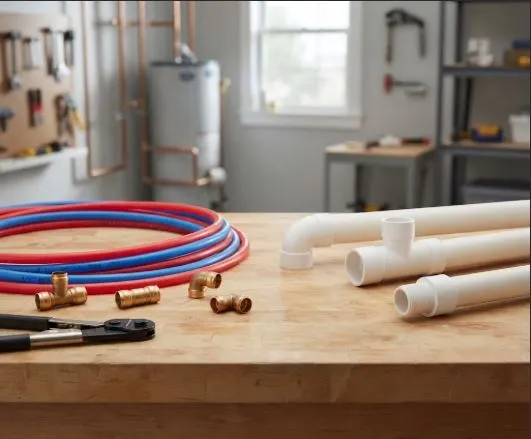
Is PEX Better Than Copper?
Not in every situation.
PEX and copper have different strengths.
| Factor | PEX | Copper |
|---|---|---|
| Flexibility | Excellent | Low |
| Corrosion resistance | Excellent against typical metal corrosion | Can corrode under some conditions |
| Installation | Generally easier | More labor-intensive |
| UV exposure | Limited | Excellent |
| Freeze-break resistance | More forgiving | More vulnerable |
| Rigidity | Low | Excellent |
| High-temperature capability | Good within its rating | Excellent |
| Weight | Lightweight | Heavier |
| Recyclability | More difficult | Excellent |
Current U.S. consumer guidance also generally finds PEX less expensive to install than copper, while copper offers advantages in durability, UV exposure, and temperature performance. Actual costs vary by location and project.
So the winner depends on what you need.
Choose PEX when flexibility, easier installation, and practical repiping are priorities.
Consider copper when rigid exposed piping, UV resistance, high-temperature performance, or other project-specific requirements matter more.
And if your existing copper plumbing is healthy, there may be no good reason to replace it just because PEX exists.
Is PEX Good for Whole-House Repiping?
Yes, PEX can be an excellent option for whole-house repiping.
Its flexibility makes it easier to route through walls, floors, and other areas that can make rigid-pipe installation difficult.
PEX can also work well when an older plumbing system needs extensive replacement.
But the decision should consider more than material price.
A repiping project may involve:
- Opening walls
- Accessing ceilings or floors
- Removing old pipe
- Installing new valves and fittings
- Permits
- Inspections
- Water pressure
- Pipe sizing
- Local code requirements
- Restoration work after installation
The cheapest tubing does not automatically produce the cheapest project.
The layout and labor can matter just as much.
When Is PEX Plumbing a Good Choice?
PEX is particularly attractive when you need:
- A flexible water-supply system
- New residential plumbing
- A whole-house repipe
- Easier routing through difficult spaces
- Resistance to typical metal corrosion
- Faster installation
- Fewer connections in suitable layouts
- A practical alternative to copper
It can also make sense in freeze-prone areas because its flexibility can make it more resistant to freeze-related breakage than rigid piping. But proper freeze protection remains important.
When Is PEX Plumbing Not a Good Choice?
PEX may not be the right choice when the installation involves conditions outside the tubing’s approved application.
Be especially careful with:
- Prolonged direct sunlight
- Unprotected outdoor exposure
- Temperatures or pressures beyond the product rating
- Areas with significant physical damage risk
- Rodent access
- Chemically incompatible materials
- Applications where local code does not permit the selected system
The important lesson is simple:
PEX should be selected for the application, not selected first and justified later.
Is PEX Plumbing Good? The Bottom Line
So, is PEX plumbing good?
For many residential water-supply applications, yes.
PEX combines flexibility, corrosion resistance, relatively simple installation, and good freeze-break resistance into one practical plumbing material. Those characteristics explain why it has become such an important option for residential construction and repiping.
But good plumbing is not just about choosing a pipe.
The tubing needs the right rating. The fittings need to be compatible. The installation needs to follow the manufacturer’s instructions. The system needs to comply with applicable plumbing requirements. And the pipe needs protection from conditions such as prolonged UV exposure.
Frequently Asked Questions
Is PEX plumbing good for a house?
Yes. PEX is widely used for residential hot- and cold-water distribution and can be a practical choice for new construction, remodeling, and repiping when the product and installation meet applicable requirements.
Is PEX better than copper?
Neither material is universally better. PEX usually has advantages in flexibility and installation, while copper has advantages in rigidity, UV resistance, and high-temperature performance.
Does PEX freeze and burst?
PEX can freeze, and freezing should not be treated as harmless. However, its flexibility gives it better resistance to freeze-related breakage than many rigid pipes. PPI advises against intentionally freezing a PEX system.
Is PEX safe for drinking water?
PEX products designed, certified, and approved for potable-water applications can be used for drinking-water systems. NSF/ANSI/CAN 61 addresses health effects and potential chemical extraction from drinking-water system components.
Does sunlight damage PEX?
Yes. Prolonged UV exposure can affect PEX. The permitted exposure period depends on the specific product, so always follow the manufacturer’s storage and installation instructions.
Can PEX plumbing leak?
Yes. PEX is not leak-proof. Connections, fittings, damaged tubing, improper installation, and other system components can cause leaks. Properly selected and installed components are essential.
Is PEX good for hot water?
PEX can be used for hot-water distribution when the specific tubing is rated for the application’s temperature and pressure. Always check the product’s specifications rather than assuming every PEX product has identical ratings.
Is PEX good for repiping a house?
It can be. PEX’s flexibility and ease of routing make it particularly useful for many whole-house repiping projects. However, the best material depends on the home’s layout, existing plumbing, water conditions, local requirements, and project goals.