
Kitec Plumbing Replacement Cost: What Homeowners Should Expect to Pay
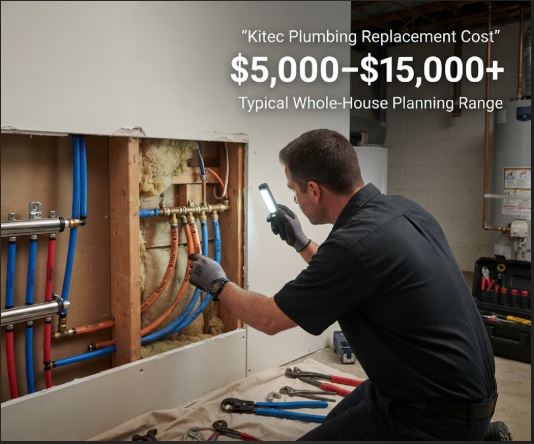
If your home has Kitec plumbing, you may be wondering how much it will cost to replace it before a leak turns into a larger repair. For budgeting purposes, many homeowners should expect a Kitec replacement project to cost several thousand dollars, with a whole-house repipe commonly falling around $5,000–$15,000+ and larger or more difficult projects potentially exceeding $20,000.
There is no single national Kitec replacement price. The final cost depends on the size of the home, number of bathrooms and fixtures, pipe routing, accessibility, local labor rates, permits, the replacement material, and how much drywall, tile, flooring, or concrete has to be opened and restored.
For example, replacing Kitec in an accessible attic or unfinished basement can be very different from replacing the same amount of piping behind finished walls or beneath a slab.
This guide explains what you can realistically budget for a Kitec repipe, what drives the price, how PEX compares with copper, what hidden costs to watch for, and how to compare plumbing quotes.
Kitec Plumbing Replacement Cost at a Glance
| Project | Rough planning range | What can change the price |
|---|---|---|
| Limited or localized replacement | $2,500–$6,000+ | Number of pipes/fittings and accessibility |
| Partial repipe | $3,000–$8,000+ | Bathrooms, fixtures and pipe routing |
| Typical whole-house repipe | $5,000–$15,000+ | Home size, layout, material and labor |
| Large or complex whole-house repipe | $15,000–$25,000+ | Multiple stories, difficult access and long pipe runs |
| Extensive restoration project | $20,000+ possible | Slab work, tile, drywall and other finish repairs |
These are budgeting ranges, not standardized U.S. prices or contractor quotes. Published estimates vary considerably because a Kitec replacement is a project rather than a standardized repair. One U.S. repiping company currently reports roughly $4,500 for smaller homes and up to $15,000 for larger, more complex repipes, while other recent cost guides report broader ranges.
The most important point is this: square footage alone does not determine the cost.
A 2,000-square-foot single-story house with two bathrooms and easy attic access may be considerably easier to repipe than a smaller two-story home with four bathrooms, finished walls, and difficult pipe access.
What Is Kitec Plumbing?
Kitec is a type of composite plumbing system that uses plastic and aluminum layers. The system was sold under several names, including Kitec, PlumbBetter, IPEX AQUA, WarmRite, Kitec XPA, AmbioComfort, XPA and KERR Controls. The official settlement information also identifies PEX-AL-PEX and related components within the Kitec system.
Kitec pipe is commonly blue for cold-water applications and orange for hot-water applications. Markings on the pipe or fittings can help identify it, and the official settlement FAQ recommends checking areas such as the water heater, mechanical room, under kitchen sinks, and bathroom vanities.
If you suspect you have Kitec, identification should come before deciding how much replacement work is necessary.
A licensed plumber can inspect the system and determine whether you have Kitec, which portions are affected, and whether a partial repair or broader repipe makes sense.
What Does It Cost to Replace Kitec Plumbing?
For a homeowner planning a replacement, $5,000–$15,000+ is a useful starting range for many whole-house projects, but the actual number can be lower or much higher depending on the scope.
The price generally comes from several components:
- Replacement pipe and fittings
- Labor
- Removing or abandoning existing Kitec
- Accessing pipes
- Permits and inspections
- Testing the new plumbing
- Reconnecting fixtures
- Drywall, tile, flooring, or cabinet restoration
- Cleanup and debris disposal
The plumbing itself is only part of the project.
This is why two contractors can quote very different prices for what appears to be the same house.
Kitec Replacement Cost by Home Size
Home size can affect the amount of piping required, but it should not be used as the only pricing factor.
| Approximate home size | General project complexity |
|---|---|
| 1,000 sq. ft. | Often smaller scope, depending on layout |
| 1,500 sq. ft. | Moderate for many homes |
| 2,000 sq. ft. | Moderate to higher depending on fixtures |
| 2,500 sq. ft. | More pipe runs and potentially more labor |
| 3,000+ sq. ft. | Larger system and potentially more complex routing |
A better way to estimate a project is to combine square footage + bathrooms + fixture count + stories + pipe access.
For example, a 1,500-square-foot house with one bathroom and an unfinished basement is not equivalent to a 1,500-square-foot house with three bathrooms, a finished basement, and plumbing routed through finished walls.
That is why a contractor should inspect the actual plumbing layout before giving you a final price.
What Factors Affect Kitec Replacement Cost?
1. The Amount of Kitec Being Replaced
A small section of damaged or accessible piping costs less than replacing the entire supply system.
The scope may involve:
- One fitting
- Several fittings
- A bathroom branch
- Kitchen and bathroom supply lines
- Part of the home’s plumbing
- The entire domestic water supply system
The official Kitec settlement documentation itself distinguishes between full and partial replacement and asks claimants to document the amount of pipe and number of fittings repaired or replaced.
2. Number of Bathrooms and Fixtures
Bathrooms, kitchens, laundry rooms, water heaters, hose bibs, and other fixtures all contribute to the complexity of a repipe.
More fixtures generally mean more branch lines and more connections.
This is one reason bathroom count can be more useful than bedroom count when discussing plumbing replacement costs.
3. Pipe Accessibility
Access is one of the biggest cost variables.
Replacing piping through an accessible attic or unfinished basement may require less demolition than reaching pipes inside finished walls.
Common access situations include:
- Attic
- Crawl space
- Unfinished basement
- Finished basement
- Interior walls
- Tile walls
- Concrete or slab
- Tight mechanical spaces
If the plumber has to remove and restore finished surfaces, the construction portion of the project can become a major part of the final bill.
4. Number of Stories
A two- or three-story house can require more complicated pipe routing than a single-story home.
Vertical runs, multiple bathrooms, access between floors, and longer horizontal branches can all increase labor.
5. Local Labor Rates
Kitec replacement prices are not identical across the United States.
Labor rates, permit fees, local building requirements, travel time, and contractor demand can all affect the final quote.
A price that is reasonable in one market may not be realistic in another.
6. Replacement Material
The material you choose also affects the project.
The two most common replacement discussions are PEX and copper.
Replacing Kitec With PEX vs. Copper
PEX is frequently considered for repiping because it is flexible and can simplify routing around corners and through existing spaces. Copper remains a widely used plumbing material and may be selected by homeowners who prefer its traditional construction and characteristics.
Material pricing is only part of the equation. Installation labor can also change the total project cost.
| Factor | PEX | Copper |
|---|---|---|
| Material cost | Generally lower | Generally higher |
| Flexibility | High | Rigid |
| Routing | Can be easier around obstacles | Requires more fittings and directional changes |
| Installation | Often faster | Can require more labor |
| Corrosion concerns | Generally resistant to many forms of corrosion | Water chemistry can affect copper |
| Appearance | Usually hidden | Can be exposed in some installations |
| Common repipe use | Very common | Long-established option |
Current U.S. plumbing cost guidance generally shows PEX material costing less per linear foot than copper, although the total installed price depends on labor, routing, fittings, access, and project scope.
For a Kitec replacement, the better material is not determined by price alone. Local plumbing code, installation conditions, water characteristics, homeowner preferences, and the plumber’s installation method all matter.
For a deeper comparison, see our guide to PEX vs. copper plumbing.
Does Replacing Kitec With PEX Cost Less Than Copper?
It can, but don’t assume the difference in material price equals the difference in the final quote.
A contractor may charge more or less depending on:
- How much pipe is required
- Number of fittings
- Access
- Labor hours
- Pipe routing
- Whether walls must be opened
- Existing plumbing configuration
- Local material prices
PEX’s flexibility can sometimes reduce installation complexity, while copper can involve different labor and connection requirements.
If you’re comparing quotes, ask each plumber to provide the same scope using the same replacement material. Otherwise, a $7,000 PEX quote and a $10,000 copper quote may not actually represent equivalent work.
Partial Kitec Replacement vs. Whole-House Repiping
This is an important distinction.
Partial replacement
A partial replacement addresses specific sections of the Kitec system.
It may make sense when:
- Only a limited area is affected
- The rest of the system is accessible and has been professionally evaluated
- A plumber identifies a localized issue
- Full replacement isn’t currently necessary or practical
Whole-house repipe
A whole-house repipe replaces the domestic water piping throughout the home with a new system.
This may involve:
- Removing or bypassing Kitec
- Installing new hot-water lines
- Installing new cold-water lines
- Connecting fixtures
- Replacing shutoff valves where needed
- Pressure testing
- Inspecting the completed system
- Restoring access openings
The right scope depends on the condition and configuration of your plumbing, so this is an area where an on-site professional inspection matters.
Can You Replace Only the Kitec Fittings?
Sometimes a fitting can be repaired or replaced without repiping the entire house, but replacing one fitting is not the same as removing the Kitec system.
The official Kitec settlement FAQ says that if a problem occurs with Kitec pipes or fittings, homeowners should have a licensed plumber inspect the system and replace defective pipes or fittings. It also says homeowners with suspected defective Kitec should have the system inspected even if a problem has not yet occurred.
Look for warning signs such as:
- White residue around fittings
- Bulging pipe
- Blackening or discoloration of the pipe
- Visible deterioration
- Leaks
The settlement administrator specifically identifies white buildup around fittings and blackening or bulging of the pipe as signs that can indicate failure.
Do not assume that a clean-looking fitting proves the entire system is problem-free.
Does Kitec Replacement Require Opening Walls?
Not always.
The amount of demolition depends on where the pipes are installed.
If supply lines are accessible through an attic, crawl space, basement, or other unfinished area, a plumber may be able to complete much of the work without extensive wall removal.
Finished walls, tile, concrete, and other inaccessible areas can make the project more expensive.
Your quote should clearly state whether wall access and restoration are included.
Hidden Costs of Kitec Replacement
The plumbing quote you receive may not include every construction expense.
Potential additional costs include:
Permits and inspections
Some jurisdictions require permits and inspections for repiping work. Requirements and fees vary by location.
Drywall repair
If walls or ceilings must be opened, ask whether patching and finishing are included.
Painting
A plumbing contractor may repair the drywall but leave painting to another contractor.
Tile
Replacing a water line behind tile can create significantly more restoration work.
Flooring
Access through floors can result in additional repair or replacement costs.
Cabinets
Kitchen and bathroom cabinets may sometimes limit access to plumbing.
Concrete or slab work
Accessing pipes installed beneath concrete can be considerably more involved than reaching accessible supply lines.
Debris removal
Ask whether the contractor handles removal and disposal of old piping and construction debris.
Fixture reconnection
Confirm that sinks, toilets, appliances, water heaters, and other affected fixtures will be properly reconnected.
Does a Slab Foundation Increase Kitec Replacement Cost?
It can.
A slab foundation can make pipe routing and access more complicated because plumbing may run beneath or through concrete.
Depending on the home’s layout and the replacement strategy, a contractor may be able to reroute new water lines through accessible areas instead of reproducing the original route.
That decision can affect:
- Labor
- Demolition
- Concrete cutting
- Restoration
- New pipe length
- Project duration
If your home is built on a slab, ask the plumber to explain where the new lines will run rather than simply assuming the old route will be reused.
Does Homeowners Insurance Cover Kitec Replacement?
Do not assume that homeowners insurance will automatically pay for proactive Kitec replacement.
Insurance coverage depends on the policy, insurer, cause of loss, and circumstances surrounding the damage.
There is an important distinction between:
Replacing old plumbing before it leaks
and
repairing covered water damage after a plumbing failure.
If you’re dealing with Kitec, ask your insurer specifically:
- Is Kitec excluded from my policy?
- Is water damage caused by a Kitec failure covered?
- Is proactive replacement covered?
- Does the insurer require replacement before renewing the policy?
- Are resulting drywall, flooring, or structural repairs covered?
- Is there a deductible or special limitation?
Get the answer in writing and compare it with your policy language.
Is the Kitec Lawsuit Settlement Still Available?
The original Kitec settlement created a $125 million settlement fund for eligible claims involving Kitec systems in the United States and Canada. However, the original claim-filing deadline was January 9, 2020, and that deadline has passed.
The official settlement website currently states that the case is in the administration stage and that settlement payments have been issued. Its July 9, 2025 update says the stale date for payments has also passed.
Therefore, an article published today should not tell homeowners that they can simply submit a new claim for the old settlement.
If you previously submitted a valid claim and have questions about its status, use the official settlement administrator information rather than relying on an outdated blog post.
What About Buying or Selling a Home With Kitec?
Kitec can become an important issue during a home inspection, insurance review, or property sale.
If you’re buying a house with Kitec, ask for:
- The location of the Kitec piping
- Previous leak history
- Repair records
- Previous repiping work
- Plumbing inspection results
- Any insurance requirements
- Any documentation relating to previous settlement claims
If you’re selling a property, disclosure requirements vary by state.
The official Kitec settlement FAQ specifically advises sellers with Kitec to consult a real estate lawyer about disclosure requirements because those laws vary by state or province.
A buyer may also use the existence of Kitec when negotiating the purchase price or requesting repairs.
How Long Does a Kitec Repiping Project Take?
The timeline depends heavily on the size and layout of the house.
A straightforward project with accessible plumbing can be completed much faster than a complex multi-story home requiring extensive wall, tile, or concrete access.
The project generally involves:
- Plumbing inspection and estimate
- Planning the new pipe routes
- Permit work where required
- Preparing the home
- Removing or bypassing Kitec
- Installing new supply piping
- Connecting fixtures
- Pressure testing
- Inspection where required
- Wall or surface restoration
- Final cleanup
Ask your contractor for both the plumbing timeline and the full project timeline.
A plumber may finish the new piping before the drywall contractor, painter, or tile installer finishes the restoration.
Can You Live in Your House During a Kitec Repipe?
Often, homeowners can remain in the property during a repipe, but expect some disruption.
You may temporarily lose access to:
- Water
- One or more bathrooms
- The kitchen sink
- Laundry
- Certain fixtures
The plumber may also need access to multiple rooms.
Before work begins, ask:
- How long will the water be shut off?
- Which bathrooms will be unavailable?
- Can the kitchen remain usable?
- Which rooms need to be cleared?
- Will walls or ceilings be opened?
- Who handles restoration?
For larger projects, planning for temporary accommodation may be worthwhile even if it isn’t technically required.
What Should a Kitec Replacement Quote Include?
Never compare quotes based only on the final dollar amount.
A detailed quote should explain what is included.
Plumbing scope
- Kitec removal or abandonment
- New PEX or copper
- Fittings
- Shutoff valves
- Hot and cold supply lines
- Fixture connections
- Water heater connections
- Pressure testing
Construction scope
- Wall access
- Ceiling access
- Drywall repair
- Painting
- Tile repair
- Flooring repair
- Cabinet access
Compliance
- Permit
- Inspection
- Code-required work
Cleanup
- Removal of old material
- Construction debris
- Final cleanup
Warranty
Ask whether the warranty covers:
- Pipe
- Fittings
- Labor
- Workmanship
- Future leaks
- Transfer to a future homeowner
The more detailed the scope, the easier it is to compare quotes accurately.
How to Compare Three Kitec Replacement Quotes
Suppose you receive these estimates:
| Contractor | Quote | What to check |
|---|---|---|
| Contractor A | $7,500 | Is restoration included? |
| Contractor B | $9,000 | Is the entire house being repiped? |
| Contractor C | $11,500 | What additional scope explains the difference? |
The lowest number is not automatically the lowest total project cost.
For example, a $7,500 quote may exclude drywall, painting, permits, or certain fixture connections, while a $9,000 quote may include them.
Before choosing a contractor, compare:
Same pipe material + same fixtures + same pipe scope + same restoration + same permits + same warranty.
That gives you a much more meaningful comparison.
What Replacement Pipe Should You Choose?
For many homeowners, the decision comes down to PEX versus copper.
PEX is attractive for repiping because of its flexibility and installation characteristics. Copper remains a proven plumbing material and may be preferred for specific applications or homeowner preferences.
If PEX is being considered, understand the different types and connection systems before approving the work.
You can learn more in our guides:
- What Is PEX Plumbing?
- PEX-A vs. PEX-B
- PEX Pipe Fittings
- Why Is PEX Plumbing Bad?
- PEX vs. Copper: Which Is Better for Plumbing?
The goal is not simply to choose the cheapest pipe. You want a properly designed system installed with compatible fittings and connection methods.
Is Kitec Replacement Worth the Cost?
There isn’t one answer for every house.
The decision depends on the condition of the existing system, evidence of deterioration or leaks, accessibility, insurance requirements, property plans, repair history, and the cost of addressing the system now versus later.
A homeowner with accessible, deteriorating Kitec and a major plumbing repair ahead may approach the decision differently from someone with no visible problems who is evaluating a house before purchase.
The most useful first step is a professional inspection that establishes:
- Whether the home actually has Kitec
- Where it is installed
- Its current condition
- Whether there are signs of failure
- Whether partial replacement is practical
- What a complete repipe would involve
From there, you can compare the cost and disruption of different options.
Kitec Plumbing Replacement Cost: Bottom Line
For many U.S. homeowners, a whole-house Kitec replacement is a several-thousand-dollar project, with roughly $5,000–$15,000+ being a reasonable planning range for many homes. Larger houses, difficult access, slab work, multiple stories, extensive demolition, and restoration can push the project above $15,000 or even $20,000.
The biggest mistake is treating square footage as the only pricing factor.
Before accepting a quote, look at the number of fixtures, bathrooms, pipe access, replacement material, labor, permits, demolition, restoration, testing, and warranty.
And if you’re comparing PEX with copper, compare complete installed project costs rather than material prices alone.
Finally, if you suspect Kitec in your home, have the system professionally identified and inspected before deciding whether you need a localized repair or a full repipe.